

There is a particular kind of loneliness that can happen even when two people love each other.
You share a home, exchange messages throughout the day, remember important dates and ask how work went. From the outside, everything looks fine. Yet one person feels increasingly unseen, while the other cannot understand what has changed.
Sometimes the problem is not a lack of love. It is a gap between how love is expressed and how it is received.
That gap is worth understanding, especially when talking about what women want from their partners.
The internet is full of confident claims about women’s needs, as though half the world’s population could be understood through a single set of rules. Real relationships are more complicated. Women differ in their personalities, experiences, cultural backgrounds, expectations and preferences. The same woman may also need different kinds of support at different stages of her life.
Still, relationship research offers some useful insights.
Studies on partner responsiveness, communication, gratitude and emotional connection suggest that feeling understood and appreciated can matter enormously to relationship satisfaction. These findings are not exclusively about women, and they should never be treated as a substitute for asking an individual partner what she wants.
Here are 15 things worth understanding, not as secrets to winning someone’s affection, but as invitations to build a relationship in which both people feel valued.
1. Feeling Understood Can Matter More Than Receiving Advice
Imagine your partner comes home after a difficult day and tells you about an upsetting conversation at work.
You immediately offer a solution.
She becomes quieter.
You wonder why your attempt to help has made things worse.
Sometimes, when someone shares a difficult experience, they are looking for understanding before problem solving. They may want reassurance that their feelings make sense, or simply the chance to explain what happened without interruption.
That does not mean women never want solutions. It means the kind of support a person needs can change from one conversation to another.
The NHS guidance on healthy relationships recommends active listening, including checking that you have understood what the other person is saying.
A useful question is: “Would you like me to help you think through this, or would you rather I just listen?”
It is a small distinction, but it removes the guesswork.
2. Emotional Intimacy Is Built in Ordinary Moments
When people think about romance, they often picture elaborate dinners, expensive holidays or dramatic declarations of love.
But emotional intimacy is frequently shaped by much quieter experiences.
It can grow when someone remembers a detail from an earlier conversation, asks about an important appointment or notices that their partner seems unusually tired.
Relationship researcher John Gottman uses the idea of bids for connection to describe the small attempts people make to receive attention, affection or support.
According to the Gottman Institute’s explanation of emotional bids, responding positively to these moments can help strengthen connection.
Consider two people sitting together after dinner.
One points out something amusing in a book. The other looks up, smiles and asks about it.
Nothing extraordinary has happened.
Yet the interaction communicates something meaningful: your interests matter to me.
Emotional intimacy often grows through these repeated moments of attention.

3. Being Heard Is Different From Being Agreed With
Healthy couples do not agree about everything.
They may have different opinions about spending, family responsibilities, careers or how much time to spend with friends.
The goal is not to eliminate those differences.
It is to create an environment where disagreement does not automatically become disrespect.
A partner can say, “I see why that upset you,” without agreeing with every interpretation of the situation.
That response acknowledges the feeling without surrendering the right to have another perspective.
The National Institutes of Health’s healthy relationships checklist encourages listening without judgment, sharing feelings honestly and disagreeing respectfully.
This matters because feeling dismissed can be painful even when the original disagreement seems minor.
Understanding is not the same as agreement.
It is a willingness to take another person’s experience seriously.
4. Appreciation Should Not Disappear When a Relationship Becomes Comfortable
Early in a relationship, people often notice everything.
A thoughtful message. A favorite meal. The effort someone makes to look after the other person.
Years later, many of those gestures become part of the daily routine.
They are still happening, but they are no longer acknowledged.
Research suggests that gratitude deserves more attention than it often receives.
A 2024 study of 163 romantic couples examined how gratitude relates to couples’ ways of coping with stress and their relationship satisfaction. Its findings supported the importance of feeling appreciated within the relationship.
That does not mean every expression of thanks will produce a measurable improvement. Gratitude needs to be sincere, and relationships are influenced by many other factors.
But appreciation can be specific.
Instead of saying only, “Thanks for everything,” you might say, “I noticed you took care of that difficult task even though you were exhausted. I really appreciate it.”
The difference is attention.
It tells someone that their effort has not become invisible.
5. Affection Should Not Always Come With Expectations
Affection can take many forms.
A reassuring hug, holding hands during a walk, sitting close together or offering a comforting touch after a stressful day may all communicate warmth.
But affection should be welcome, not assumed.
Some people enjoy frequent physical closeness. Others prefer more personal space, especially when tired, overwhelmed or upset.
Preferences can also change over time.
The important question is not how much affection a relationship is supposed to contain.
It is whether both partners feel comfortable expressing what they enjoy and what they do not.
A hug should be an invitation to connection, not a test someone must pass.

6. Emotional Safety Makes Honest Conversations Easier
It takes trust to admit that something is wrong.
A person may hesitate to say they feel neglected, lonely or disappointed if previous conversations have ended in ridicule, shouting or accusations.
Emotional safety does not mean avoiding difficult subjects.
It means being able to discuss them without fearing humiliation, threats or punishment.
In a healthy relationship, both people should be able to express concerns, disagree and set limits.
The American College of Obstetricians and Gynecologists’ healthy relationships guidance identifies respect, honesty, equality, independence and communication as important qualities.
It also distinguishes healthy boundaries from controlling behavior.
A partner who feels safe enough to say “That hurt me” is offering an opportunity for understanding.
What happens next matters.
Listening, asking questions and accepting responsibility where appropriate are more constructive than immediately treating the conversation as an attack.
7. Consistency Can Be More Meaningful Than Grand Romantic Gestures
A surprise weekend away can be wonderful.
So can an expensive gift or a beautifully planned anniversary.
But a grand gesture cannot reliably compensate for months of broken promises, dismissive conversations or emotional absence.
Trust develops through repeated experiences.
Does your partner follow through on what they say?
Can you rely on them during stressful periods?
Do they treat you respectfully when they are frustrated?
Consistency does not require perfection.
Everyone forgets something, makes a mistake or has an unproductive day.
What matters is the broader pattern and the willingness to repair problems.
Someone who regularly shows up, keeps reasonable promises and communicates when plans change may offer more security than someone whose affection appears only during special occasions.
8. Personal Space Is Not a Sign of Rejection
Two people can love each other deeply and still need time apart.
One might enjoy quiet evenings alone. The other may need time with friends, family or a personal hobby.
Neither preference automatically signals a problem.
Healthy relationships make room for individuality.
The ACOG guidance emphasizes that independence, outside interests and the freedom to make personal decisions are compatible with a caring relationship.
Problems arise when personal space is interpreted as disloyalty or used as a reason for surveillance and control.
Being close to someone should not require abandoning your identity.
Sometimes the healthiest thing partners can do is support each other’s lives beyond the relationship.

9. Sharing Responsibilities Is Also a Form of Care
There is an important difference between helping occasionally and sharing responsibility.
In many relationships, practical work extends beyond the tasks everyone can see.
Someone has to remember appointments, notice when supplies are running low, organize family plans, manage bills and keep track of everyday commitments.
When one partner becomes responsible for remembering and coordinating almost everything, resentment can grow even if the other partner believes they are being helpful.
A more useful conversation is not simply, “What do you need me to do?”
It is, “Which responsibilities should I take ownership of?”
The answer will depend on the couple’s circumstances, working hours, health, finances and preferences.
Equality does not always mean dividing every task exactly in half.
It means finding an arrangement that both people consider fair and revisiting it when circumstances change.
10. A Genuine Apology Includes a Willingness to Change
Most relationships involve mistakes.
A forgotten commitment, an insensitive comment or a poorly handled disagreement can leave someone feeling hurt.
An apology can help, but its meaning depends on what follows.
“I’m sorry you feel that way” may sound like an apology while avoiding responsibility.
A more useful response acknowledges the behavior, recognizes its effect and explains what will change.
For example: “I interrupted you repeatedly when you were trying to explain something important. I can see why that was frustrating. Next time, I’ll let you finish before responding.”
An apology does not automatically erase hurt.
Nor does forgiveness have to happen immediately.
Repair takes patience, accountability and behavior that supports the words.
11. Curiosity Should Continue After the Early Stages of Love
At the beginning of a relationship, people often ask endless questions.
What music do you love?
What frightened you when you were younger?
What kind of life would you like to build?
As time passes, those conversations can be replaced by practical updates.
Did you pay the bill?
What time will you be home?
What should we have for dinner?
Those questions are necessary, but they do not tell you much about how someone is changing.
People continue developing new interests, worries, hopes and opinions throughout their lives.
A partner who knew you well five years ago may still have much to discover about who you are now.
Try asking a question that has nothing to do with managing the household.
“What has been making you happy lately?”
“Is there something you’ve been wanting to try?”
“What do you wish we had more time for?”
Curiosity tells someone that knowing them remains important.

12. Different Intimacy Needs Are Normal, but They Need Honest Communication
Intimacy does not look identical in every relationship.
For some couples, it is closely connected to affectionate conversation and quality time. Others place greater importance on physical closeness, shared activities or expressions of appreciation.
Even within one relationship, preferences can change because of stress, illness, parenthood, aging or personal circumstances.
These differences do not automatically mean that one partner cares more than the other.
Research supports the importance of communicating about intimate needs rather than relying on assumptions.
A meta-analysis involving 48 studies found positive associations between couples’ sexual communication and aspects of sexual wellbeing.
A separate study on perceived partner responsiveness found that feeling understood and valued was associated with desire, with a stronger association among women in that research.
Neither study provides a universal formula for intimacy.
The practical lesson is that partners benefit from discussing what makes them feel connected, what has changed and what feels comfortable.
Such conversations should be mutual and free from pressure.
13. Conflict Does Not Have to Become a Competition
During an argument, it is tempting to focus on proving who is right.
You recall an earlier mistake.
Your partner responds with another example.
Soon, the conversation has moved far away from the original problem.
The objective becomes winning rather than understanding.
A more constructive approach is to identify the issue without attacking the person’s character.
Instead of “You never care about what I say,” try explaining the specific experience: “When I was interrupted earlier, I felt as though my point didn’t matter.”
The other partner may remember the conversation differently.
That is an opportunity to clarify what happened, not necessarily a reason to dismiss the feeling.
If a discussion becomes heated, taking a mutually understood break can be better than continuing while angry.
The NHS recommends regular communication and honest discussion to prevent difficult feelings from accumulating.
However, ordinary conflict should never be confused with intimidation, threats or abuse. In those circumstances, safety and outside support take priority over improving argument techniques.
14. Feeling Chosen Should Not Require Competing With a Phone
Technology has made it easier to stay connected with almost everyone.
It has also made it easier to be distracted while sitting beside someone.
A person may be physically present but mentally absorbed in messages, videos or work notifications.
The problem is not that couples should never use their phones together.
It is that repeated distraction can leave someone feeling as though they must compete for attention.
Consider the difference between listening to your partner while scrolling and setting your phone aside for a few minutes to hear what they are saying.
The second response communicates availability.
That does not require an elaborate digital detox.
A simple agreement about device free meals, regular check-ins or time together without interruptions may be enough to create more opportunities for connection.
The goal is not to control each other’s screen time.
It is to protect moments when attention matters.

15. Love Should Feel Like a Partnership, Not a Test
Perhaps the most important thing to understand is that a healthy relationship is not a continuous examination.
A woman should not have to prove that she is deserving of kindness by meeting every expectation.
Neither should her partner.
Both people bring needs, vulnerabilities, habits and limitations into the relationship.
Some days, one person will need more support. On other days, the balance may reverse.
A strong partnership allows room for those changes while maintaining mutual respect.
That means being willing to discuss problems, share responsibilities, respect boundaries and acknowledge each other’s contributions.
It also means accepting that no relationship can meet every emotional need at every moment.
A partner is a person, not a complete solution to loneliness, insecurity or every difficulty in life.
The healthiest relationships make room for two individuals to support one another without losing themselves.

What Relationship Research Actually Tells Us
The 15 ideas above are not the results of a survey asking women to rank their wishes.
They are practical interpretations of themes supported by relationship research and public health guidance.
Here is a useful distinction between what the evidence suggests and what it cannot establish.
| Research area | What the evidence suggests | What it does not prove |
|---|---|---|
| Partner responsiveness | Feeling understood and valued is associated with relationship and intimate wellbeing | Every woman responds identically |
| Communication | Open, respectful communication is associated with healthier relationship outcomes | A single conversation technique guarantees happiness |
| Gratitude | Feeling appreciated can be associated with greater satisfaction | Saying thank you fixes serious relationship problems |
| Emotional bids | Responding to everyday attempts at connection may strengthen closeness | Every missed interaction damages a relationship |
| Boundaries and respect | Safety, equality and independence are important characteristics of healthy relationships | Healthy couples never disagree |
One particularly useful finding comes from research on gratitude among 316 African American couples. The study found that perceived gratitude from a partner could help buffer some negative associations between relationship stressors and relationship quality.
That finding is meaningful, but it comes from a specific study population and should not be generalized to every couple without qualification.
The broader lesson is that feeling appreciated and supported deserves attention alongside more visible expressions of romance.
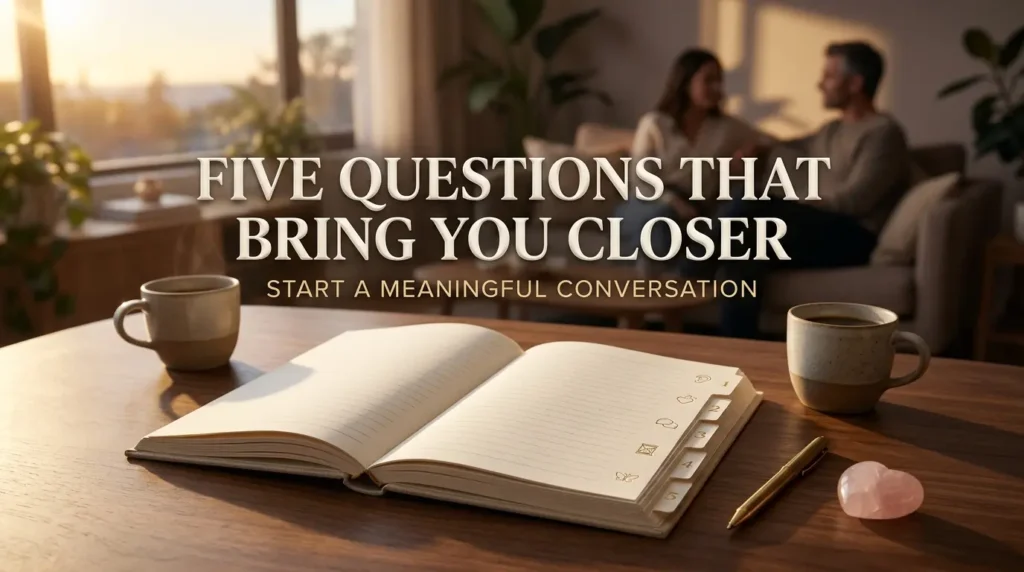
Five Questions Worth Asking Your Partner This Week
Reading relationship advice can help, but the most useful information about your partner will come from your partner.
Consider making time for a calm conversation built around five questions.
- When do you feel most understood by me?
- Is there something I do that makes you feel appreciated?
- What could we change to make difficult conversations easier?
- Do you feel we have enough quality time and personal space?
- What is one small thing we could do differently this month?
These are conversation starters, not a diagnostic test.
Both partners should have the opportunity to answer.
If one person shares something uncomfortable, the immediate goal should be understanding rather than defending past behavior.
You may discover that a small change matters more than an elaborate romantic gesture.
Or you may find that a longstanding problem needs more time, professional guidance or a serious conversation about the future.
Either outcome is more useful than guessing.
When Relationship Advice Is Not Enough
Not every relationship difficulty can be solved through better communication.
Persistent contempt, repeated dishonesty, coercion, intimidation or controlling behavior may require more than a thoughtful conversation.
The ACOG healthy relationships resource identifies pressure, controlling behavior and threats as warning signs of unhealthy relationships.
If someone feels unsafe, their priority should be personal safety and support from trusted people or appropriate local services.
Couples counseling can help some partners work through communication problems when both participate willingly and the setting is safe.
However, counseling is not a substitute for safety planning when abuse is present.
A healthy relationship should never require someone to tolerate harm in the name of commitment.
Frequently Asked Questions
What do women want most in a relationship?
There is no single answer. Many people value trust, respect, affection, communication and emotional support, but individual preferences differ. Asking your partner directly is more useful than relying on gender stereotypes.
How can I make my partner feel emotionally connected?
Listen attentively, respond to their concerns, express appreciation and create regular opportunities for meaningful conversation. Ask which forms of connection matter most to them.
Why is emotional intimacy important?
Emotional intimacy can help partners feel understood, accepted and comfortable sharing personal thoughts. It is one part of a healthy relationship, alongside respect, practical cooperation and individual independence.
Can a relationship survive without constant romance?
Romantic gestures are not the only measure of connection. Everyday reliability, affection, mutual respect and shared effort can also be meaningful. Couples differ in how much romance they want and how they express it.
What makes a woman feel appreciated?
That depends on the individual. Some people value verbal recognition, while others notice practical support, quality time or thoughtful gestures. Specific, sincere appreciation is generally more meaningful than assumptions.
How do you rebuild emotional intimacy after growing apart?
Begin with an honest conversation about what has changed. Make room for listening, discuss unmet needs and agree on realistic steps. Persistent problems may benefit from qualified professional support.
Is physical affection necessary for a healthy relationship?
Preferences for physical affection vary. What matters is that both partners can express their needs and boundaries freely, without pressure.
How do you communicate with a partner who shuts down during arguments?
Choose a calm moment, explain your concern without accusations and ask what makes difficult conversations easier for them. A mutually agreed break can help when emotions are high. Repeated intimidation or coercion requires a different response focused on safety.
Can small gestures really strengthen a relationship?
Small gestures can create opportunities for connection and appreciation. Their value depends on the relationship and the broader pattern of behavior. They cannot compensate for persistent disrespect or harm.
What is the difference between emotional intimacy and emotional dependence?
Emotional intimacy involves closeness, trust and openness while respecting individuality. Unhealthy dependence can involve fear, control or an inability to tolerate reasonable independence. These patterns may require additional support.
The Bottom Line
Understanding a partner is not about memorizing a list of what women supposedly want.
It is about paying attention to the person in front of you.
That means noticing when she needs support, respecting her independence, appreciating her effort and making room for conversations that are not always easy.
It also means expecting the same consideration in return.
Relationships are rarely strengthened by one perfect gesture.
They are shaped by the ordinary choices people make repeatedly: whether to listen, whether to show kindness, whether to take responsibility and whether to remain curious about someone they think they already know.
Perhaps the most useful question is not, “What do women want?”
It is, “What helps my partner feel loved, respected and understood, and have I taken the time to ask?”

Editorial note: This article is an evidence-informed relationship guide, not a survey of women’s personal wishes or a substitute for professional counseling. It draws on published relationship research and guidance from the NHS, NIH, ACOG and the Gottman Institute. TrendOutsider has not conducted original interviews for this feature. Read our Editorial Policy for more information about our approach to research, accuracy and corrections.







Leave a Reply