
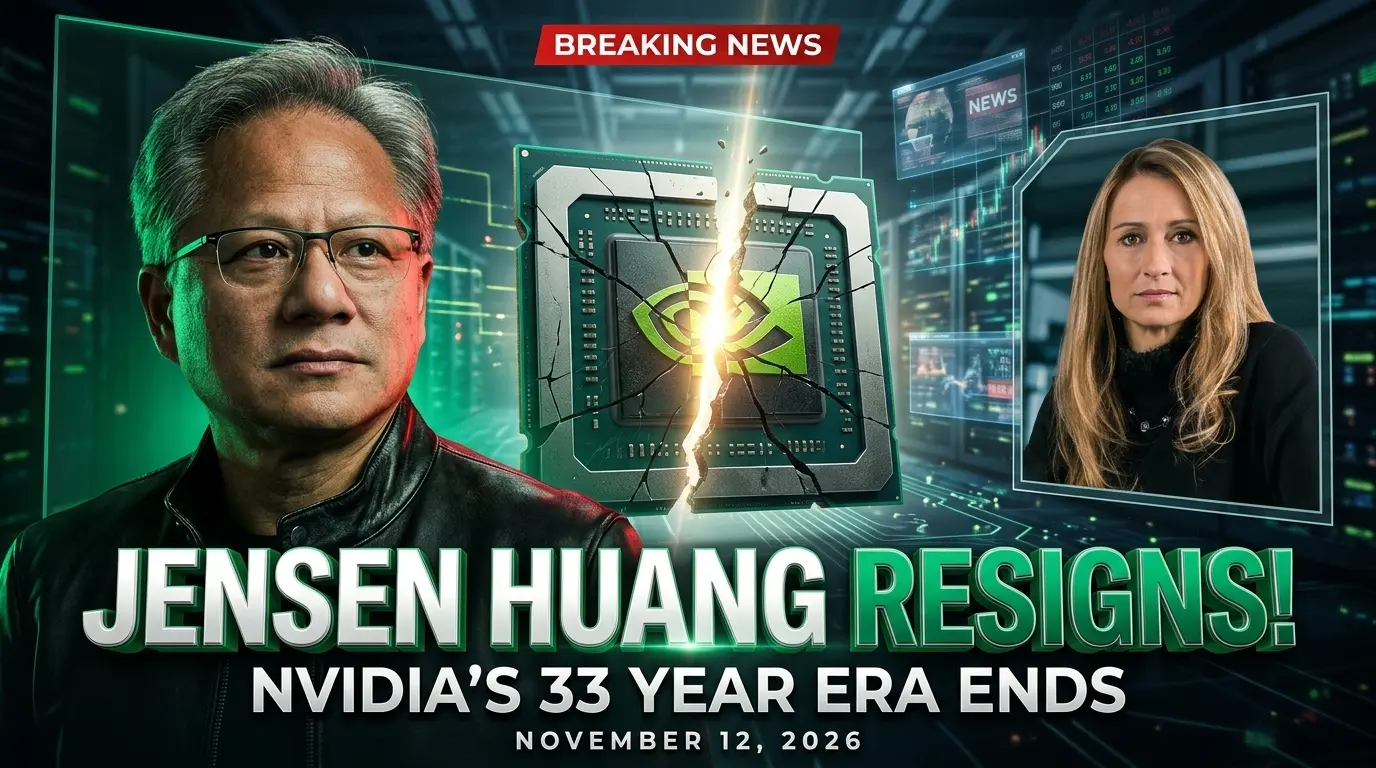
For 33 years, Jensen Huang was the face of Nvidia. He helped build the company from a graphics chip startup into one of the most influential businesses in artificial intelligence. His black leather jacket became instantly recognizable. His product launches could move markets. And his decisions helped determine how the world’s biggest technology companies built their AI systems.
Now, Nvidia is entering a future without him as its chief executive.
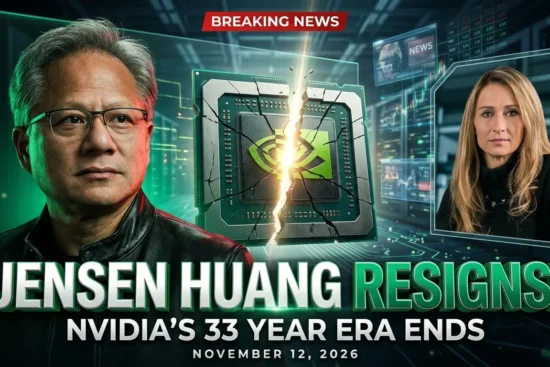
On November 12, 2026, Nvidia announced that Huang had resigned as president, CEO and a member of its board of directors, effective immediately. The company appointed longtime chief financial officer Colette Kress as interim CEO while its board begins searching for a permanent successor.
The announcement followed days of extraordinary scrutiny surrounding Huang’s admitted infidelity, reported relationships and allegations involving a possible foreign intelligence operation. Those allegations have raised questions about corporate governance, sensitive semiconductor technology and the security of one of America’s most important AI companies.
But there is an essential distinction: Huang’s resignation is confirmed. The allegations of espionage and improper disclosure of company secrets are not established facts.
The consequences of his departure extend far beyond one executive’s reputation. Nvidia supplies critical hardware for the global AI industry, and its leadership transition arrives at a moment when investors, governments and technology companies are making enormous decisions about the future of computing.
Here is what happened, what Nvidia has confirmed, who is taking charge and why this story matters.
Did Jensen Huang resign from Nvidia?
Yes. Nvidia confirmed Huang’s resignation on November 12, 2026.
According to the company’s official CEO transition announcement, Huang stepped down from three positions: president, chief executive officer and board director.
His resignation took effect immediately.
Nvidia appointed Colette Kress, its executive vice president and chief financial officer, as interim chief executive. Kress will retain her finance responsibilities during the transition.
The company also named Harvey C. Jones as its first board chair, creating a new leadership structure as it begins considering both internal and external candidates for the permanent CEO position.
The announcement thanked Huang for his contributions and emphasized that the company’s operations, customer commitments and technology roadmap are expected to continue.
That reassurance matters. Nvidia is not simply replacing a senior manager. It is replacing the person who helped create the company and guided its strategy for more than three decades.
Nvidia leadership changes at a glance
| Position | Latest confirmed development |
|---|---|
| Jensen Huang | Resigned as president, CEO and board member |
| Colette Kress | Appointed interim CEO while remaining CFO |
| Harvey C. Jones | Appointed chair of Nvidia’s board |
| Permanent CEO | Search underway, with internal and external candidates |
| Next scheduled earnings | November 17, 2026 |
These changes come directly from Nvidia’s corporate announcement, rather than speculation about who might take control.
Why did Jensen Huang resign?
The resignation followed a controversy that began with reporting about Huang’s personal relationships and grew into a wider investigation of possible national security concerns.
On November 8, Huang issued an unusually personal public apology to his family, colleagues and shareholders.
In his message published by Nvidia, Huang acknowledged that he had been unfaithful to his wife and accepted responsibility for the hurt caused by his conduct.
He also addressed the national security concerns raised in news reports, saying he supported the independent investigation initiated by Nvidia’s board and would cooperate with it.
The apology established that Huang had acknowledged infidelity. It did not establish that he had disclosed confidential information, knowingly assisted a foreign intelligence service or violated export laws.
That distinction is particularly important because some of the most serious allegations remain disputed.
Reporting from Reuters described the board’s deliberations over Huang’s future as the controversy intensified.
By November 12, Nvidia had moved from publicly supporting its founder to announcing his immediate departure.
The company did not provide a detailed public finding establishing every allegation or specify a single proven act as the cause of his resignation in its transition announcement.
The most accurate explanation is therefore that Huang resigned amid an escalating leadership and security controversy, while important questions remained under investigation.
For readers seeking the earlier history of the allegations, TrendOutsider has already published a detailed report on the Jensen Huang and Alice Huang investigation.
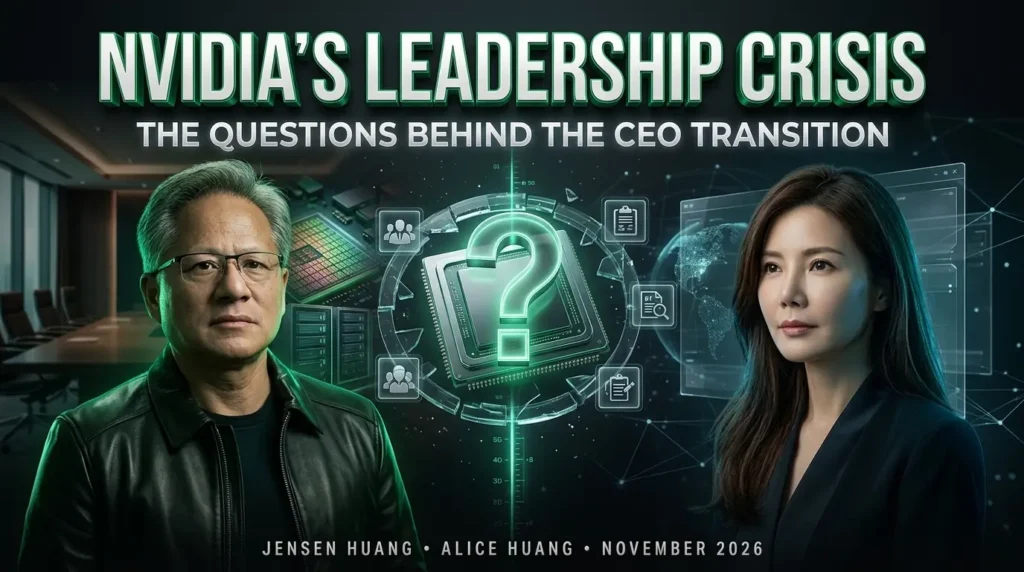
Who is Alice Huang, and why is her name involved?
Alice Huang is a business executive whose reported relationship with Jensen Huang became central to the developing controversy.
News reports have associated her with Megaspeed, a Singapore based business operating in the AI infrastructure sector.
According to reporting summarized by the Associated Press, allegations emerged that she may have been connected to a Chinese intelligence effort. China’s Foreign Ministry rejected the spying allegations.
These are serious claims, but they must not be confused with a publicly established finding of espionage.
The available reporting does not justify describing Alice Huang as a convicted spy or asserting that she obtained Nvidia trade secrets.
Nvidia’s board announced an independent investigation into whether Huang had been targeted by a foreign intelligence operation. The company previously said it had no reason to believe that its confidential information or United States national security had been compromised.
An investigation can uncover evidence, clear concerns or identify additional questions. Its existence alone does not establish guilt.

Why the allegations attracted so much attention
Nvidia’s advanced processors have become strategically important because they are used to train and operate powerful AI systems.
Access to certain high performance chips is subject to United States export restrictions, including controls affecting some transactions involving China.
This creates a sensitive environment for companies that buy, sell or operate advanced computing hardware.
When reporting connects a technology executive’s private relationships with businesses operating in that environment, questions naturally arise about access, influence and corporate oversight.
But those questions still require evidence.
A personal relationship is not proof of espionage. A commercial connection is not proof of illegal chip shipments. And an allegation involving a third party does not automatically establish misconduct by Nvidia’s former CEO.
Jensen Huang resignation timeline: How the crisis unfolded
The pace of events helps explain why Nvidia’s leadership changed so quickly.
October 2026: Intelligence concerns enter public reporting
Reports began examining Alice Huang’s business relationships, her reported connection to Jensen Huang and concerns raised about potential intelligence activity.
The claims drew attention because of Nvidia’s central role in supplying advanced AI hardware.
November 8: Huang apologizes
Nvidia published Huang’s message acknowledging infidelity and apologizing to his family and colleagues.
The board also announced an independent investigation into the reported security concerns.
At that stage, the company expressed confidence in Huang’s leadership.
November 9 to 10: Pressure intensifies
Further reporting focused on the possible implications for Nvidia’s corporate governance, export controls and investor confidence.
Questions expanded beyond Huang’s personal conduct to how the company would assess security risks and maintain public trust.
November 11: Nvidia’s board considers Huang’s future
Reuters reported that Nvidia directors were meeting to consider whether Huang should remain CEO.
The report followed growing concern about the company’s leadership and the possibility of a transition.
November 12: Nvidia confirms the resignation
Nvidia announced that Huang had resigned from his executive and board positions, effective immediately.
Colette Kress became interim CEO, and Harvey C. Jones became board chair.
The company began the process of finding a permanent successor.
November 17: Nvidia’s next major financial event
Nvidia is scheduled to report its third quarter fiscal 2027 results on November 17.
The company has said the earnings announcement and accompanying call will proceed as planned.
This event will provide an early opportunity for investors to hear how the new leadership intends to manage the business.

Caption: Key events leading from the public controversy to Nvidia’s confirmed CEO transition on November 12, 2026.
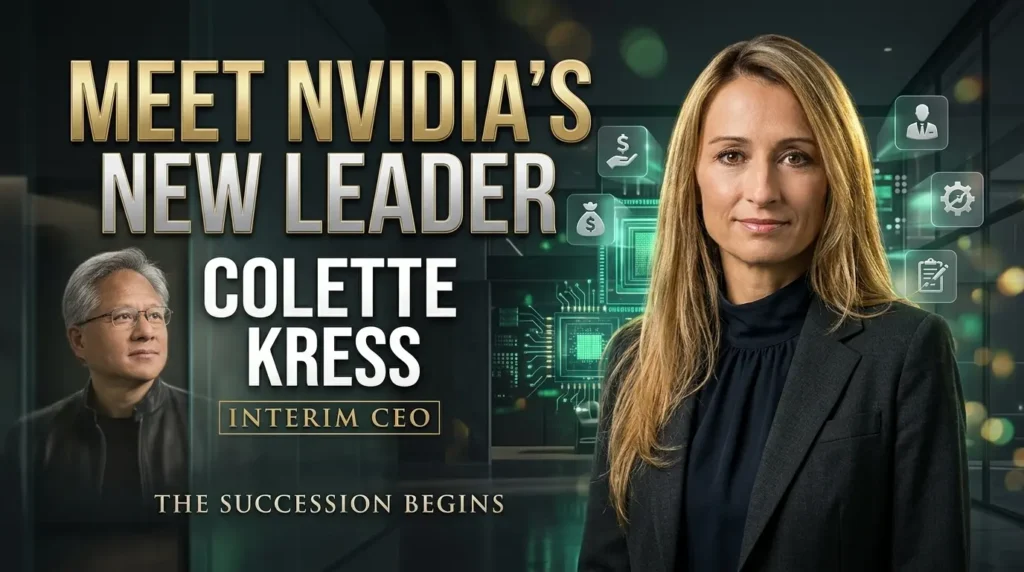
Who is Colette Kress, Nvidia’s new interim CEO?
Colette Kress is not an outsider arriving during a crisis.
She has been part of Nvidia’s senior leadership for more than a decade and has played a central role in the company’s financial management during its transformation into an AI infrastructure leader.
Kress joined Nvidia in September 2013 and has served as executive vice president and chief financial officer.
Before Nvidia, she held senior roles at Cisco, Microsoft and Texas Instruments.
Her experience includes financial planning, capital allocation, investor relations and managing the financial demands of a rapidly growing technology business.
Nvidia’s own 2026 annual report identifies Kress as a senior executive and describes the company’s management structure before the leadership transition.
The decision to appoint her interim CEO gives Nvidia a leader who already understands its operations, customers and financial position.
That familiarity could help provide continuity while the board searches for a permanent replacement.
Can Colette Kress permanently replace Jensen Huang?
Possibly, but Nvidia has not announced that she will become its permanent CEO.
The board says it will consider candidates from inside and outside the company.
Kress offers experience and continuity. The permanent position, however, also requires decisions about product strategy, engineering priorities, software development, international relationships and the company’s long term competitive position.
Huang’s influence was unusually broad. He was involved in technology direction, product launches, partnerships and the company’s public identity.
The challenge for Nvidia is not simply to appoint another capable executive. It is to ensure that the responsibilities concentrated around its founder can be managed effectively by a broader leadership team.
What happens to Nvidia stock after Jensen Huang’s resignation?
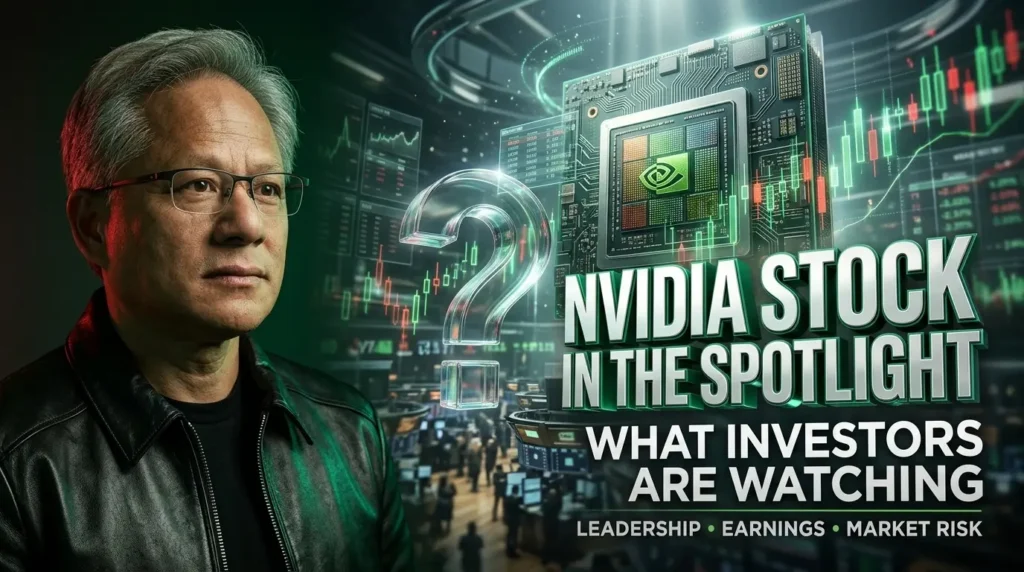
Nvidia’s leadership crisis has already created substantial market uncertainty.
Reuters reported that Nvidia shares fell more than 8 percent in extended trading after earlier reports that the board was preparing to remove Huang.
Other reports described additional declines as the resignation became public.
Those figures should not be treated as interchangeable. Extended trading, regular market sessions and cumulative changes over several days measure different periods.
The most reliable way to understand the financial impact is to examine Nvidia’s stock performance alongside the precise timing of each announcement.
A falling share price does not mean Nvidia’s processors suddenly became less capable or its customer contracts disappeared.
Instead, investors may be reassessing several risks at once.
1. Leadership uncertainty
Huang’s personal influence over Nvidia’s strategy was unusually significant.
Investors must now evaluate how effectively the company can execute its plans without him.
2. The ongoing investigation
The outcome of the independent investigation remains important.
New findings could affect corporate governance, public confidence or future regulatory scrutiny.
3. Customer and partner confidence
Nvidia works with major cloud providers, AI developers, enterprise customers and hardware partners.
Those relationships depend on reliable product supply, engineering execution and long term planning.
4. Expectations surrounding AI investment
Nvidia’s valuation reflects expectations about future demand for AI computing.
Even when demand remains strong, uncertainty about leadership can affect how investors value the company.
For readers examining Nvidia or other technology stocks, our guide to the best AI tools for investment research explains how to review financial statements, earnings transcripts and company risks without relying solely on headlines.
Why Jensen Huang’s departure matters to the entire AI industry
Nvidia occupies a position that few companies have ever held in a major technology transition.
Its graphics processors are used to train and run advanced AI models. Its networking products connect large computing systems. Its software ecosystem helps developers use its hardware efficiently.
This means Nvidia influences far more than the sale of individual chips.
It affects the economics of data centers, the infrastructure choices of cloud providers and the computing resources available to AI companies.
Huang helped shape that position.
Under his leadership, Nvidia expanded from its gaming roots into accelerated computing, scientific research, enterprise technology and artificial intelligence.
The company’s hardware and software ecosystem became a foundation for many modern AI workloads.
Its importance is also reflected in the broader market for AI infrastructure.
As TrendOutsider explains in its guide to AI hardware startups and the companies building the future of AI, the industry depends on an interconnected network of chip designers, manufacturers, data center operators and specialized technology businesses.
A leadership change at Nvidia therefore has implications across an entire supply chain.
Will Nvidia’s AI products be delayed?
There is no confirmed announcement in the reviewed corporate transition statement that Nvidia is canceling its technology roadmap or delaying specific products because of Huang’s resignation.
The company has emphasized continuity in its operations, customer commitments and product plans.
Still, leadership changes can affect how businesses make decisions over time.
Investors and customers will be watching for evidence that Nvidia continues to meet its announced milestones.
The important questions concern execution rather than speculation: Are products shipping as planned? Are customers receiving the systems they ordered? Are engineering priorities consistent? And is the company maintaining the software support that makes its platform valuable?
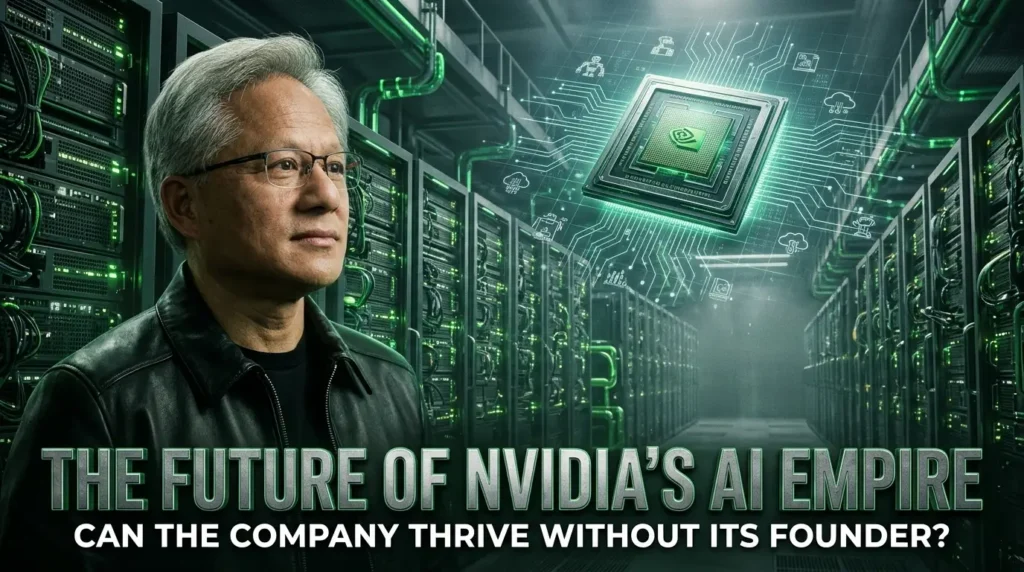
Nvidia’s biggest challenge is bigger than finding a new CEO
A founder’s departure can reveal how much an organization depends on one person.
For Nvidia, that dependence was particularly visible.
Huang had led the company since its founding in 1993. He became closely associated with its engineering culture, long term strategy and willingness to invest in technologies before they became mainstream.
Replacing him requires more than a new name on an executive biography.
Nvidia must show that its systems of decision making, product development and accountability can function independently of its founder.
That includes clear responsibility for technology strategy, customer relationships, regulatory compliance and communication with shareholders.
There is also a governance question.
When a company becomes closely identified with a charismatic leader, the board must still be able to evaluate risks, investigate concerns and make difficult decisions.
The present controversy illustrates why governance matters even at companies with extraordinary commercial success.
TrendOutsider’s analysis of why AI transformation is a problem of governance explores the broader principle: advanced technology cannot replace clear accountability, responsible oversight and effective management.
For Nvidia, those principles now apply at the highest level.
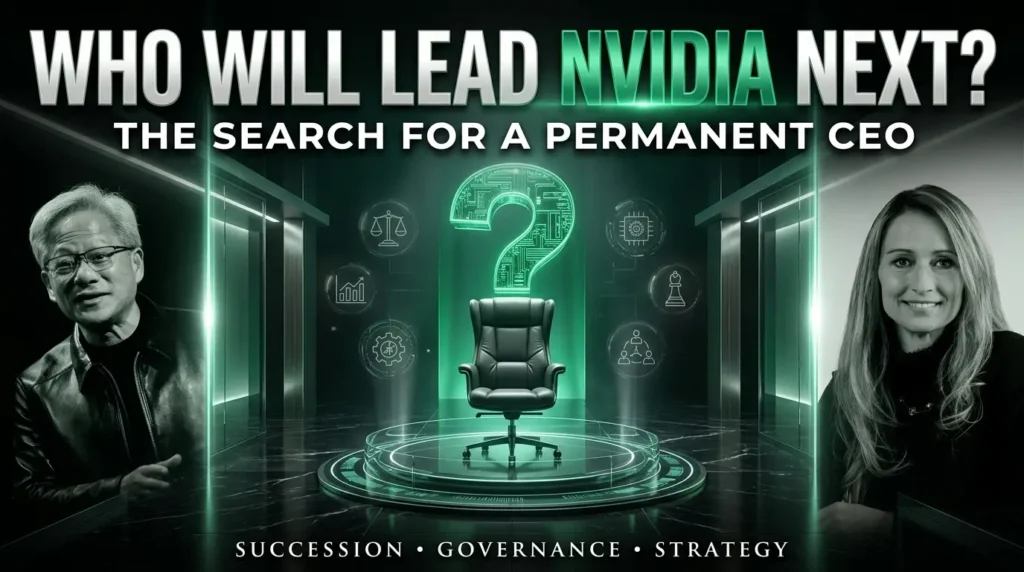
What happens next for Nvidia?
The immediate future will be shaped by several developments.
First, the board must determine who will permanently lead the company.
An internal candidate may offer continuity and familiarity with Nvidia’s engineering culture. An external candidate may bring different experience or a new strategic perspective.
Neither approach guarantees success.
Second, the independent investigation will remain a major source of attention.
Its findings may help resolve questions that cannot be answered responsibly through speculation or anonymous claims alone.
Third, Nvidia’s upcoming earnings announcement will test how confidently its new leadership can communicate with investors.
Financial results will matter, but so will management’s explanation of its priorities.
Fourth, Nvidia must continue serving customers whose AI infrastructure projects depend on reliable technology and delivery schedules.
These are practical tests. They will reveal more about the company’s future than any single dramatic headline.
What should investors watch on November 17?
Nvidia’s scheduled third quarter fiscal 2027 earnings announcement is likely to draw unusual attention.
Readers should focus on the company’s official financial results, forward guidance, customer demand, product delivery commentary and any statements about leadership continuity.
A useful question is whether the business fundamentals have changed or whether investors are primarily reacting to uncertainty surrounding the transition.
The answer may not be obvious from one trading session.
Frequently asked questions
Has Jensen Huang officially resigned as Nvidia CEO?
Yes. Nvidia announced on November 12, 2026, that Huang had resigned as president, CEO and board director, effective immediately.
Who is Nvidia’s CEO now?
Colette Kress is Nvidia’s interim CEO. She is also continuing in her position as chief financial officer while the company searches for a permanent successor.
Why did Jensen Huang leave Nvidia?
His resignation followed a controversy involving acknowledged infidelity, reported personal relationships and an independent investigation into potential national security concerns. Nvidia’s transition announcement did not establish every reported allegation as fact or provide a single detailed finding explaining his departure.
Is Alice Huang confirmed to be a Chinese spy?
No publicly established finding reviewed for this article proves that allegation. Reports have described intelligence concerns, while China has rejected the allegations. The claims should be treated as disputed rather than proven.
Is Jensen Huang still on Nvidia’s board?
No. Nvidia’s official announcement says he resigned from the board as well as his executive positions.
Will Colette Kress become Nvidia’s permanent CEO?
That has not been announced. Nvidia’s board is considering both internal and external candidates.
Will Nvidia stock recover?
No one can reliably guarantee how the stock will perform. Its future price will depend on business results, investor expectations, leadership developments and wider market conditions.
Will Nvidia’s AI chips and products be affected?
Nvidia says it expects operations, customer commitments and its technology roadmap to continue. There is no confirmed product cancellation in the corporate transition announcement reviewed for this article.
When is Nvidia’s next earnings report?
Nvidia has scheduled its third quarter fiscal 2027 financial results for November 17, 2026.
The bottom line
Jensen Huang’s resignation closes one of the longest and most consequential leadership chapters in modern technology.
He helped create Nvidia in 1993 and guided it through changes that transformed computing, from gaming graphics to the infrastructure powering today’s AI systems.
His departure is significant because of that history. But it is also significant because Nvidia has become deeply connected to the future plans of companies, governments and researchers around the world.
The investigation surrounding his departure deserves careful scrutiny. So do the serious allegations that have circulated during the controversy.
Yet allegations should never be presented as established facts simply because the subject is famous or the story is moving quickly.
For Nvidia, the questions ahead are practical and substantial.
Can Colette Kress maintain stability? Who will become the permanent CEO? Will the company’s technology roadmap remain on track? And can its board demonstrate that the business is bigger than the individual who built it?
The answers will emerge through official findings, leadership decisions, financial results and the company’s performance over time.
For now, one thing is certain: Nvidia’s next chapter has begun, and the AI industry will be watching closely.
Sources and reporting methodology
This article was prepared using official Nvidia materials, regulatory documents and reporting available on November 12, 2026.
- Nvidia: Official CEO Transition Announcement
- Nvidia: A Message to Our Company, November 8
- Associated Press: Who Is Colette Kress, Nvidia’s Interim CEO?
- Reuters: Nvidia Board Meets to Decide Huang’s Future
- Nvidia: Fiscal 2026 Annual Report
- Yahoo Finance: Nvidia CEO Transition Reporting
Editorial disclosure: TrendOutsider has not independently verified confidential intelligence allegations or conducted its own investigation into the private relationships discussed. The article distinguishes official company statements, independently reported developments and unresolved allegations. AI generated visuals are conceptual editorial illustrations and should not be interpreted as photographs of actual events.
Financial disclaimer: This article is for news and educational purposes only. It is not personalized investment advice or a recommendation to buy or sell Nvidia shares.
Developing story notice: This article reflects information available on November 12, 2026. Significant new findings or leadership announcements should be incorporated with a clearly displayed update time.





Leave a Reply