
Imagine asking an AI assistant to find a birthday gift, compare prices, choose a retailer and get everything ready for checkout.
Until recently, the final payment was where the experience usually returned to you. You had to enter your card details or move through a conventional checkout process yourself.
Now OpenAI wants to make that last step part of the assistant’s job too.
On November 13, 2026, the company introduced ChatGPT Wallet, a new payment feature that allows eligible users to authorize purchases completed by AI agents through OpenAI’s dots service.
The idea is straightforward: your assistant can help complete a purchase without seeing your actual payment card details. You review what it intends to buy, approve the transaction with a security check, and the wallet supplies a substitute payment credential.
But there are important limits. ChatGPT Wallet is not available to everyone, not every retailer supports agent purchases, and an approved payment does not automatically mean an order has been accepted.
Here’s what the new wallet does, how it works, who can use it and what shoppers should understand before trusting an AI assistant with a purchase.
What Is ChatGPT Wallet?
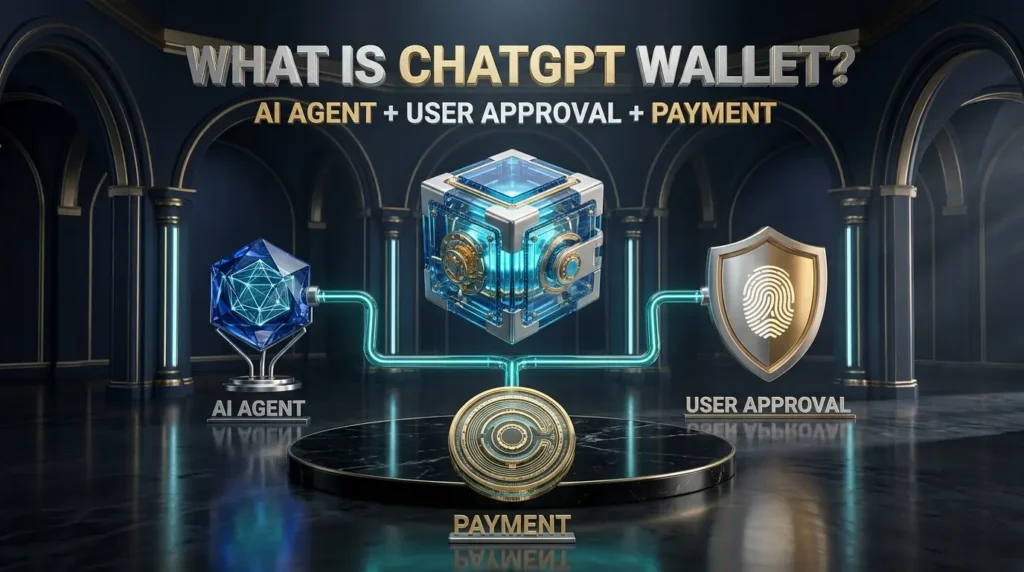
ChatGPT Wallet is a payment feature designed to let an AI agent complete a purchase on behalf of an eligible user.
Rather than giving the agent direct access to the user’s real card number, the system uses a substitute payment credential supplied through payment infrastructure.
According to OpenAI’s official November 13 announcement, the wallet was developed in partnership with American Express, Mastercard and Visa.
The initial experience works through dots, OpenAI’s personal AI agents that can carry out tasks for users.
That distinction matters. ChatGPT Wallet is not simply a new button that every person can press in an ordinary ChatGPT conversation. It is part of a more restricted agent experience, with eligibility requirements and a gradual rollout.
The wallet also is not a bank account or a place to store money. Under OpenAI’s Wallet terms, it facilitates payments using an eligible card rather than creating a separate balance or extending credit.
In practical terms, the wallet connects three activities that were previously more separate: discovering something to buy, deciding whether to buy it, and authorizing payment.
How Does ChatGPT Wallet Work?
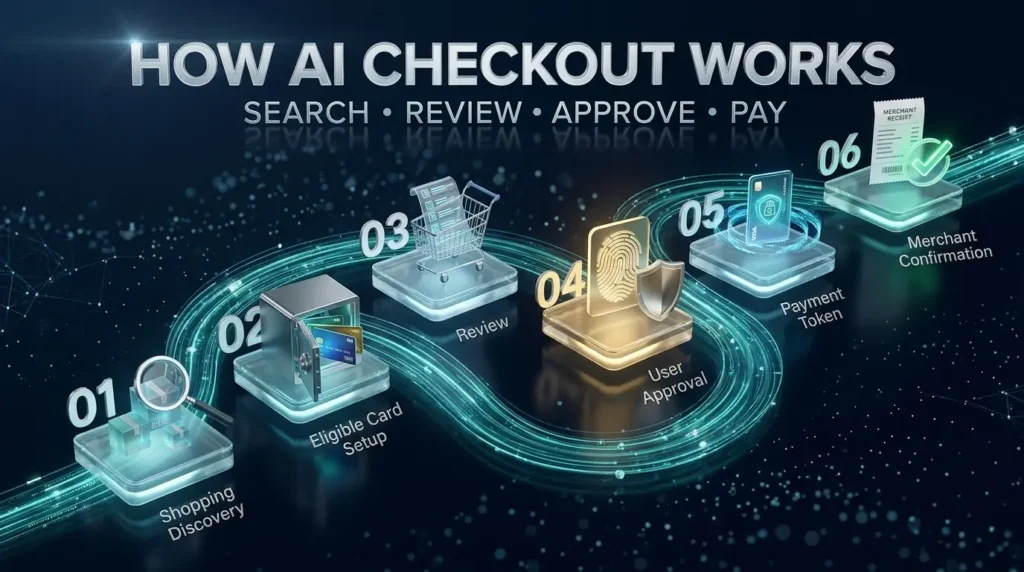
The most useful way to understand the new system is to follow a purchase from the first request to the final order confirmation.
Step 1: Ask your AI agent to help you shop
An eligible user can ask their dot to research a product, compare options or help arrange a purchase.
For example, someone might want a sweater within a particular budget or help booking a hotel.
OpenAI identifies both shopping and hotel booking as examples in its November 13 ChatGPT release notes.
The assistant can help navigate the shopping process, but its recommendations should still be checked against the merchant’s actual listing.
Step 2: Add an eligible payment card
Users who have access to the feature can ask their dot to add a card to Wallet.
The card is saved for future eligible purchases, reducing the need to repeatedly enter payment information.
The feature does not make every card eligible. Card support depends on the rollout and the user’s account and billing details.
Step 3: Review the purchase
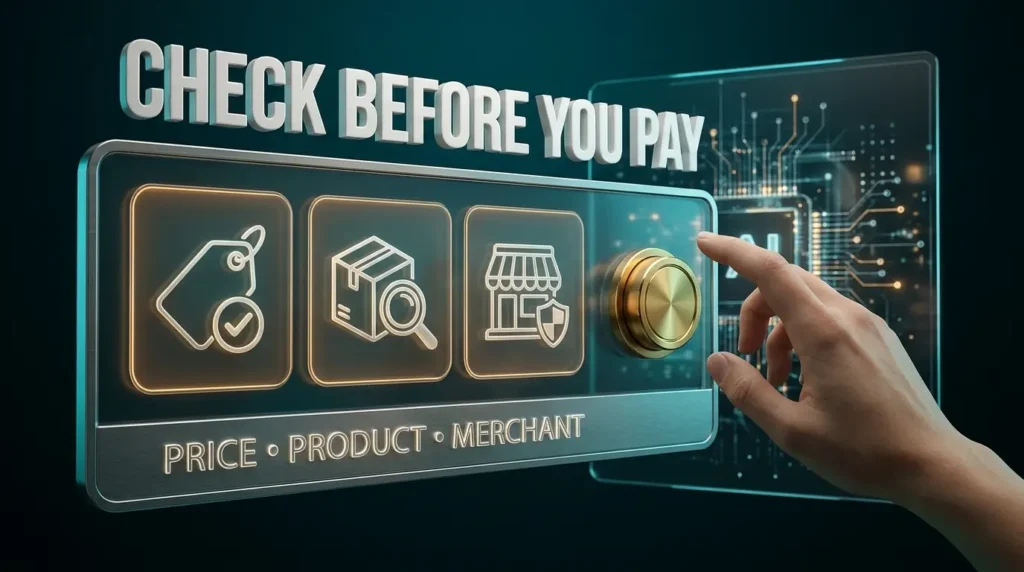
Before payment, the user is shown the merchant, the items being purchased, the total amount and the selected card.
This is the point where the user should verify that the agent has chosen the correct product, quantity, price and seller.
An AI assistant can misunderstand a preference, select the wrong product variation or encounter outdated information. The approval screen is therefore a meaningful checkpoint, not a formality.
Step 4: Approve with a security check
The user authorizes the purchase using a security measure such as Face ID or a fingerprint scan.
OpenAI says this approval creates a record of what the user authorized.
The important detail is that the current rollout still requires explicit approval for each purchase. A future system in which an agent can spend within preapproved limits is part of OpenAI’s stated direction, not a reason to assume today’s wallet has unrestricted purchasing authority.
Step 5: The wallet provides a payment token
After approval, the payment network supplies a substitute credential with payment details that can be used at checkout.
The agent and merchant do not receive the user’s actual card number through this process.
The purchase is charged to the selected underlying card.
Step 6: Check the merchant’s confirmation
This final step is easy to overlook.
OpenAI explicitly warns that approving a purchase does not itself confirm that the order succeeded.
A retailer may decline the transaction, reject an automated checkout or encounter another problem.
Users should look for a real order confirmation from the merchant before assuming that a product has been purchased or a reservation completed.
Who Can Use ChatGPT Wallet Right Now?
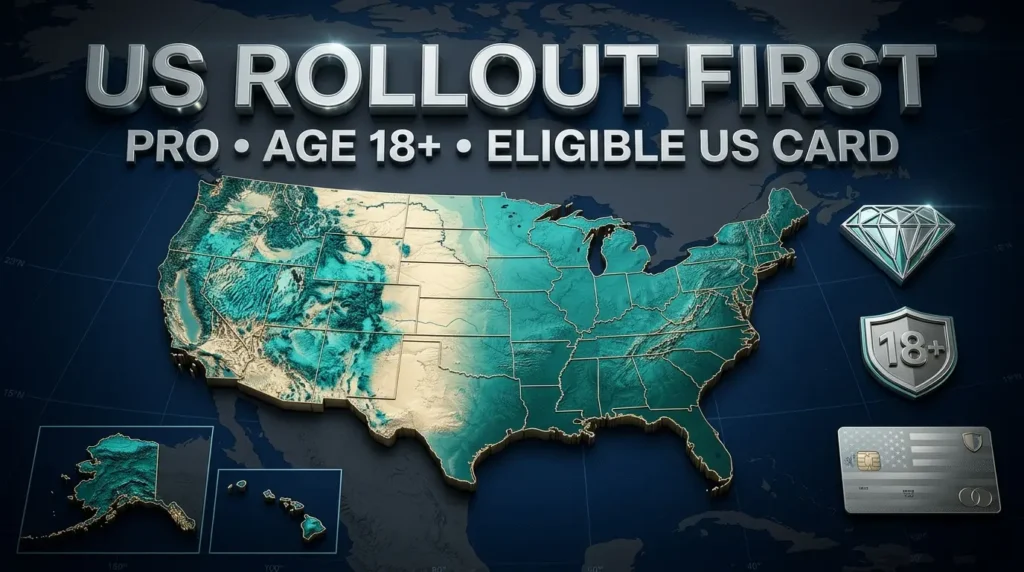
As of November 14, 2026, ChatGPT Wallet is beginning a gradual rollout with strict eligibility requirements.
OpenAI says the initial availability is for:
- ChatGPT Pro subscribers.
- Users aged 18 or older.
- People in the United States.
- Users with an eligible card issued in the United States.
- Users with a US billing address.
- People with access to the supported dots experience.
Meeting these requirements does not guarantee that the feature has already appeared in an account, because the rollout is gradual.
If you use ChatGPT Free, Plus or Go, or live outside the United States, you should not assume that ChatGPT Wallet is available to you.
OpenAI has said it intends to learn from the initial rollout and expand availability, but it has not provided a verified worldwide launch date.
The distinction is particularly important for international readers. A feature being announced globally does not mean it is accessible in every country.
Is ChatGPT Wallet Safe?
ChatGPT Wallet has several security protections designed to address one of the most obvious concerns about AI shopping: what happens if an assistant can initiate payments?
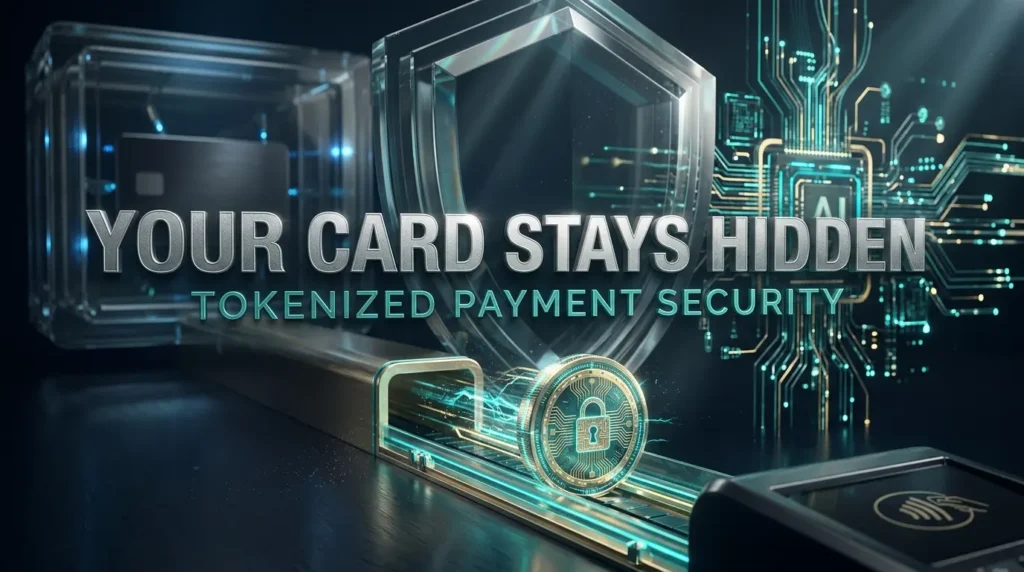
The central protection is that the agent does not receive the user’s actual payment card details.
Instead, the wallet uses tokenized credentials. The payment system can process an authorized transaction without exposing the underlying card number to the shopping agent.
The user must also review the transaction and pass a security check before the purchase proceeds under the initial model.
These are meaningful safeguards, but they do not eliminate every possible problem.
Payment security is not the same as purchase accuracy
A protected card number does not guarantee that an agent has selected the right item.
Imagine asking for a particular laptop configuration. The agent might find a similarly named model with less storage or a different processor.
The payment could be securely authorized even though the purchase itself was a mistake.
The user therefore still needs to check the merchant, item description, quantity, total price, delivery details and applicable return policy.
What if the retailer rejects the purchase?
Some websites are not yet prepared for transactions initiated by AI agents.
OpenAI acknowledges that merchant websites and fraud prevention systems may block or decline legitimate agent purchases.
A failed checkout does not necessarily indicate fraud. It may mean the retailer’s systems do not recognize the automated transaction as acceptable.
What about refunds and disputes?
OpenAI says eligible purchases retain the existing card rewards and protections for qualifying disputes.
However, that does not mean every refund request will automatically succeed.
The merchant remains responsible for matters such as fulfillment, returns and customer service, while applicable card protections depend on the issuer, payment network and transaction circumstances.
If an order is wrong or an item arrives damaged, users should preserve the order confirmation and contact the merchant or card issuer through the appropriate process.
Does ChatGPT Wallet Store Your Card Number?
The wallet’s privacy design deserves a closer look because there is a difference between storing a payment method securely and exposing it to an AI agent.
According to OpenAI’s ChatGPT Wallet Privacy Notice, users enter their card information through a secure form handled by a service provider.
That process can involve the card number, expiration date, security code, billing address and verification information.
OpenAI says it receives a tokenized payment credential and limited card information, such as the payment network, issuer, card type, last four digits and relevant eligibility information.
That means it would be inaccurate to say that no payment information is collected or processed.
The more precise statement is that the agent and merchant are not given the user’s actual underlying card details through Wallet’s tokenized payment process.
Users should still review the privacy notice before adding a card, especially if they are uncomfortable allowing an AI service to participate in shopping and payment workflows.
ChatGPT Wallet vs Apple Pay and Google Wallet
At first glance, ChatGPT Wallet sounds similar to existing digital wallets.
There is some overlap. All three approaches can reduce the need to share actual card details directly during a transaction.
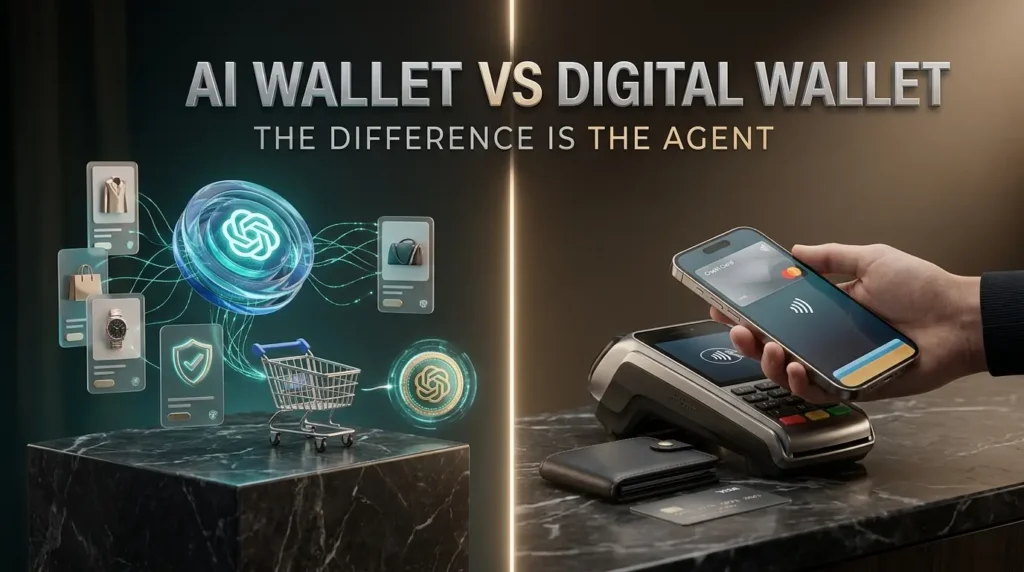
The difference is the role of the assistant.
With a conventional digital wallet, the person generally chooses what to buy and initiates payment through a supported checkout experience.
With ChatGPT Wallet, an AI agent can perform more of the shopping task before the user authorizes payment.
| Feature | ChatGPT Wallet | Conventional digital wallets |
|---|---|---|
| Main purpose | Support purchases initiated through AI agents | Help users pay through supported devices and checkouts |
| Product research | Agent can assist with discovery and comparison | Usually handled separately |
| Payment authorization | User approves the agent’s proposed purchase | User authorizes payment |
| Actual card details | Hidden from agent and merchant through substitute credentials | Often protected through tokenization |
| Availability | Initially limited to eligible US Pro users through dots | Depends on wallet, device, bank and region |
| Merchant support | Agent access and payment compatibility can be obstacles | Depends on supported checkout and payment infrastructure |
This is a comparison of the basic purchasing models, not a claim that one system is universally safer or better.
The most important change is the workflow: an AI assistant can now participate more directly in the path from choosing a product to completing payment.
Can ChatGPT Wallet Book Hotels and Buy Other Services?
OpenAI’s release notes specifically mention using dots to shop for a sweater or book a hotel.
That suggests the intended experience goes beyond ordinary physical products.
However, it would be misleading to claim that every hotel, airline, ticket seller or online service supports ChatGPT Wallet today.
A booking can involve more than a payment.
Hotels may require guest information, cancellation terms, deposits, identification or additional confirmation. Travel reservations may also have conditions that are not obvious from a simple price comparison.
The same principle applies to online shopping.
A successful payment authorization does not prove that the merchant has accepted the booking or agreed to fulfill the order.
Before relying on an agent for a reservation, verify the provider, dates, total price, cancellation policy and final confirmation.
For fashion shoppers, the new payment feature also fits into a broader shift in how ChatGPT is being used to discover products. TrendOutsider previously examined ChatGPT’s virtual try-on feature, which lets users explore how clothing might look before buying.
Virtual try-on addresses the question of appearance. ChatGPT Wallet addresses the payment stage.
Neither removes the need to verify the actual product and the merchant’s terms.
What Does ChatGPT Wallet Cost?
There is an important difference between the cost of accessing the feature and any separate fee for using it.
The initial rollout requires an eligible ChatGPT Pro subscription.
That makes it incorrect to describe ChatGPT Wallet as a feature currently available to every free ChatGPT user.
The official launch materials reviewed for this article do not establish a universal, separate consumer Wallet fee that can be quoted confidently for every transaction.
Users should check the current subscription terms, payment details and any charges disclosed during checkout.
Ordinary merchant charges, taxes, delivery fees, currency conversion charges or card issuer fees may still apply depending on the purchase.
Do not assume that an AI agent automatically finds the cheapest offer or removes normal shopping costs.
Why OpenAI Is Moving Into AI Payments
For years, AI assistants have been useful at answering questions and organizing information.
Shopping introduced a different challenge.
A person might ask an assistant to compare three laptops, explain their differences and recommend one within a budget. The assistant could help narrow the options, but completing the purchase often required moving to a retailer’s website.
ChatGPT Wallet attempts to connect those steps.
The significance is not merely that a chatbot can initiate a payment. It is that product research, decision support and checkout can become parts of one continuous agent workflow.
This approach is often called agentic commerce.
The term describes shopping and purchasing processes in which software agents act on a user’s instructions rather than simply presenting information.
It is still an emerging model, and important questions remain about trust, merchant access, error handling and consumer expectations.
What changes for retailers?
OpenAI’s Commerce Partner Playbook and its launch announcement outline several areas businesses may need to address.
Retailers should make accurate product information available, ensure legitimate AI agents are not unnecessarily blocked, and work with payment providers to recognize valid agent transactions.
Some merchants may also choose to offer tools that help agents check availability, manage shopping carts or complete other supported actions.
But none of this means every retailer must immediately build a special ChatGPT integration.
OpenAI says existing checkout systems can support Wallet payments, although compatibility issues may still arise.
The company also emphasizes that merchants retain their relationships with customers and remain responsible for pricing, fulfillment, returns and support.

What Could Go Wrong When AI Agents Shop for You?
The biggest risks are not limited to someone stealing a card number.
They also involve whether the agent understands the task, whether the information it uses is accurate and whether the retailer accepts the transaction.
1. Buying the wrong product
Similar names and product variations can create confusion.
An assistant might choose a different storage configuration, size, color or model year from the one the shopper intended.
2. Trusting an outdated price
Online prices change.
A recommendation generated earlier may no longer reflect the final checkout total.
3. Missing an important merchant condition
Shipping charges, return restrictions, subscription renewals and cancellation rules can materially change the value of a purchase.
4. Assuming an authorization means success
The payment process can fail or the merchant can reject an automated checkout.
Users need the merchant’s confirmation.
5. Giving an agent too much authority in the future
OpenAI has described a future in which people could preapprove purchases within spending limits, product categories or time windows.
That could be convenient, but it also raises questions about mistakes, unclear instructions and how users would revoke permission.
For now, the announced model requires user approval for individual purchases.
The safest shopping habit is therefore familiar: use AI to reduce research time, but verify the final details before spending money.
That advice also applies during major sales events. TrendOutsider’s guide to using AI to find real Black Friday deals in 2026 explains why price history, merchant verification and skepticism about advertised discounts remain essential even when an assistant helps with research.
What Happens Next for ChatGPT Wallet?
OpenAI’s immediate challenge is turning a promising payment concept into a reliable experience across different retailers and payment systems.
The company has already identified merchant access and fraud detection as areas that need work.
It also plans to explore broader delegation, including the possibility of letting users approve certain categories of purchases in advance.
That would represent a more significant shift than today’s individual approval process.
A shopper might eventually authorize an assistant to buy specific household essentials within a monthly budget, for example.
But that is an illustration of the direction OpenAI has discussed, not a confirmed capability available to everyone today.
Expansion beyond the initial US rollout is another open question.
OpenAI has not announced a specific date for worldwide availability.
For now, the feature should be understood as an early, restricted introduction rather than a universal replacement for ordinary online checkout.
The wider trend is clear, however: AI companies increasingly want assistants to do more than answer questions.
They want them to help complete tasks.
The difference between a useful assistant and a trustworthy purchasing agent will depend on how well these systems handle authorization, accuracy, accountability and mistakes.
Frequently Asked Questions
What is ChatGPT Wallet?
ChatGPT Wallet is an OpenAI payment feature that allows eligible users to authorize purchases completed by AI agents through dots, using substitute payment credentials rather than exposing their actual card details to the agent.
When was ChatGPT Wallet launched?
OpenAI announced ChatGPT Wallet on November 13, 2026.
Is ChatGPT Wallet free?
The initial rollout is restricted to eligible ChatGPT Pro subscribers. The official materials reviewed do not establish a universal separate Wallet transaction fee.
Can anyone use ChatGPT Wallet?
No. The initial rollout is limited to eligible users aged 18 or older in the United States who have ChatGPT Pro, a qualifying US-issued card, a US billing address and access through dots.
Is ChatGPT Wallet available outside the United States?
Not in the initial rollout described by OpenAI. The company has not confirmed a worldwide launch date.
Does ChatGPT Wallet see my real card number?
OpenAI says the agent does not receive the user’s actual card details. The wallet uses tokenized credentials, while card information is collected through a secure service provider as described in the Wallet Privacy Notice.
Does ChatGPT Wallet require Face ID?
Purchases require a security check such as Face ID or fingerprint verification. The exact method depends on the supported experience and device.
Can ChatGPT buy things without asking me?
The initial rollout requires approval for each purchase. OpenAI has discussed future preapproved purchasing arrangements, but those should not be confused with the current experience.
Can ChatGPT Wallet book hotels?
OpenAI identifies hotel booking as a potential use case through dots. Actual booking support depends on the merchant and checkout compatibility.
Can I get a refund?
Merchants remain responsible for returns and customer service, and eligible transactions retain applicable card dispute protections. Refund eligibility depends on the merchant’s policies and relevant payment rules.
Does approval guarantee that my order was placed?
No. OpenAI specifically advises users to confirm that the merchant accepted the order after checkout.
The Bottom Line
ChatGPT Wallet brings AI shopping closer to a complete transaction.
An eligible user can ask an agent to help find something, review the proposed purchase and approve payment without handing the agent their actual card details.
That is a meaningful development, especially for people who already use AI to compare products or organize shopping decisions.
But the launch is deliberately limited. It is available only to a restricted group of US users, and retailers are still adapting to purchases initiated by agents.
The bigger question is not whether AI can press the checkout button.
It is whether people can trust an assistant to understand what they want, recognize when something is wrong and keep them in control of their money.
For now, the smartest approach is to let AI help with the work while keeping the final decision firmly in human hands.

Editorial note: This article is based on OpenAI’s November 13, 2026 announcement, official product documentation, payment terms and privacy notice, with independent reporting from Reuters and Bloomberg. TrendOutsider has not independently tested ChatGPT Wallet or verified availability across individual accounts. Features and eligibility may change after publication.
Further reading: TrendOutsider’s guide to Dessa AI and natural voice assistants explores a different part of the move toward AI systems that interact with people more naturally. Voice interaction and payment authorization are separate capabilities, but both illustrate why dependable human oversight matters as assistants become more capable.







Leave a Reply