
For much of the artificial intelligence boom, the companies building the physical foundations of AI looked like some of the safest beneficiaries of the technology revolution.
The thinking was simple. Whether ChatGPT, Google’s AI systems or the next generation of powerful models succeeded, someone would still need to supply the electricity, construct the data centers, manufacture the cooling equipment and install the machinery that keeps thousands of computers running.
That conviction helped send the valuations of industrial and infrastructure companies soaring.
Now Wall Street is confronting a much less comfortable possibility: what if the enormous infrastructure investment is real, but investors have already paid too much for the businesses supporting it?
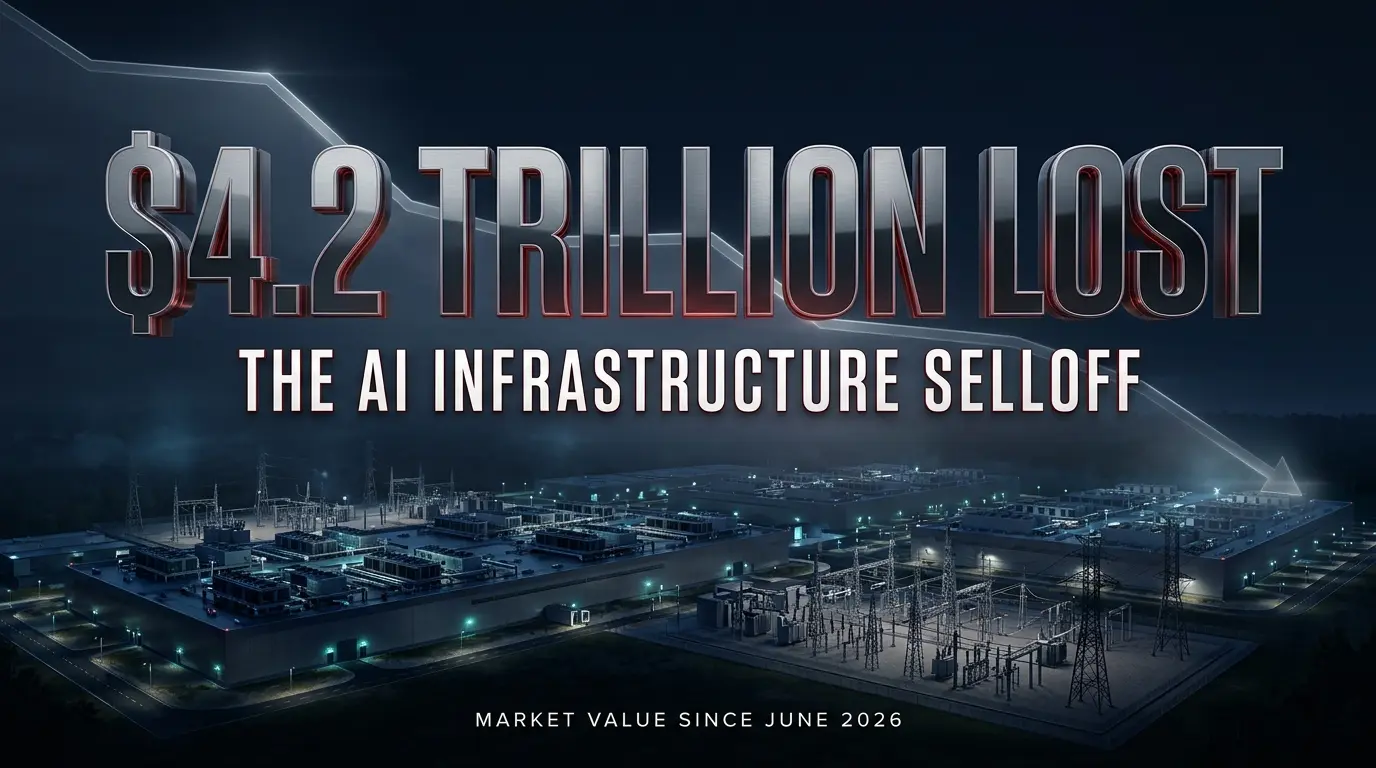
A Financial Times investigation published on November 15, 2026 reports that companies associated with data center construction have collectively lost approximately $4.2 trillion in market value since June, reversing nearly half of the $9.4 trillion in gains accumulated during the preceding year.
The decline has spread beyond semiconductor companies to industrial suppliers, electrical equipment manufacturers and businesses that had become closely associated with the AI construction boom.
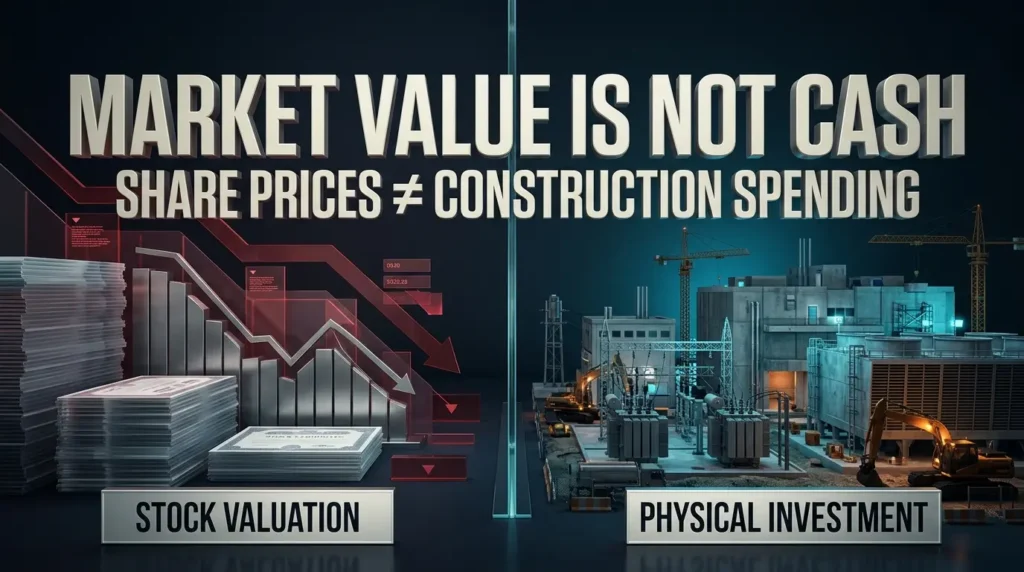
But the headline number requires an important distinction. This is a fall in stock market valuations across a group of companies, not $4.2 trillion in cash lost by data center operators or money spent on abandoned projects.
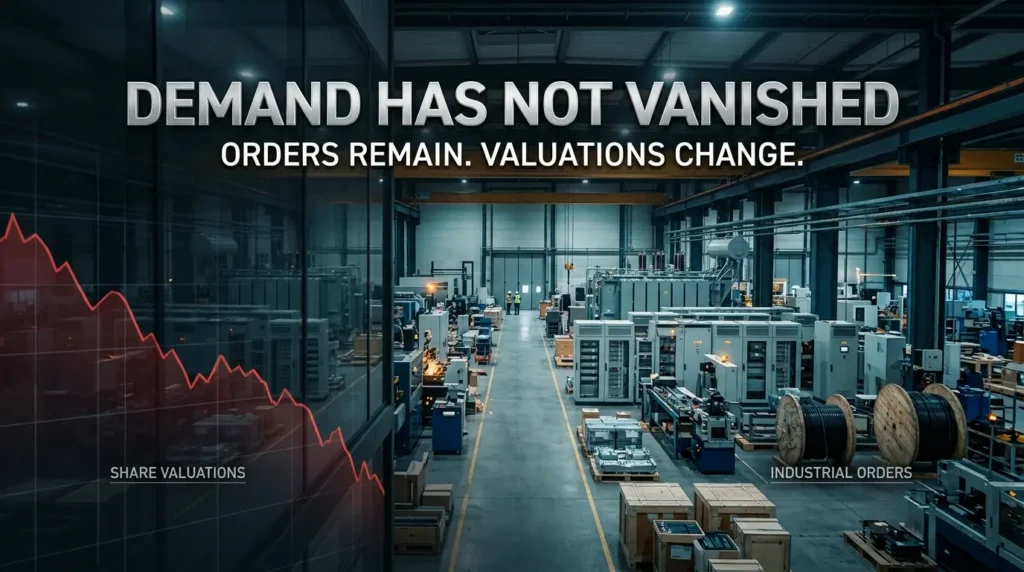
The infrastructure is still being built. Orders are still arriving. Companies are still investing heavily in AI computing.
What has changed is how much investors are willing to pay today for profits they expect these investments to generate tomorrow.
What Happened to AI Infrastructure Stocks?
The latest selloff marks a dramatic reversal for companies whose shares benefited from the expectation that artificial intelligence would require years of extraordinary construction spending.
According to the Financial Times, the selected group of businesses connected to data center construction gained approximately $9.4 trillion in market capitalization over the previous year before losing $4.2 trillion of that value since June 2026.
Those figures describe a substantial reversal in market expectations. They do not represent a single trading session, nor do they establish that every company in the group has suffered equally.
The losses have reached businesses across several industries.
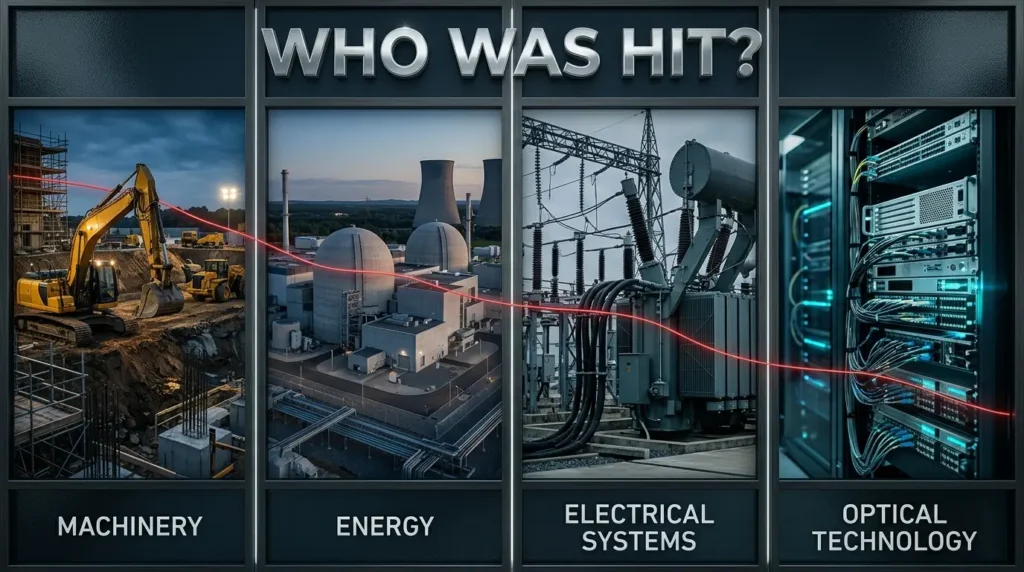
Construction machinery manufacturers supply the heavy equipment needed to develop enormous facilities. Electrical engineering firms provide systems that distribute power. Cooling specialists make it possible to operate densely packed computing hardware. Energy companies are involved in supplying electricity to facilities that may require extraordinary amounts of power.
For investors, all of these businesses became part of the same broad investment story.
If AI infrastructure spending kept accelerating, their order books, profits and market valuations were expected to benefit.
The problem emerged when investors began questioning the pace of construction, the availability of financing and whether the profits of traditional industrial companies could justify valuations resembling those of rapidly expanding technology businesses.
A $4.2 trillion reversal does not mean $4.2 trillion was spent and lost
Market capitalization is calculated by multiplying a company’s share price by the number of its outstanding shares.
When share prices fall, the total market value of those shares declines. That does not mean the company has transferred an equivalent amount of money out of its bank accounts.
It also does not mean that investors collectively realized exactly that amount in cash losses.
The distinction matters because an alarming stock market headline can otherwise create a misleading impression about the underlying economy.
A company may continue building factories, receiving orders and generating revenue even while its share price falls sharply.
That is one of the central contradictions in the current AI selloff.
Which Companies Have Been Hit by the AI Infrastructure Selloff?
The Financial Times identifies several striking examples of companies whose market valuations have fallen as enthusiasm for the data center construction trade has weakened.
Caterpillar, best known for construction and mining equipment, has experienced a particularly sharp reversal. The FT reports that its market value has declined by approximately 44% over the period examined.
Shares of Oklo, Comfort Systems and Corning have also lost roughly half their value, according to the report.
These are very different businesses.
Caterpillar supplies industrial machinery and power generation equipment. Oklo is developing advanced nuclear energy technology. Comfort Systems operates in mechanical and electrical contracting. Corning manufactures specialized materials and optical technologies used in several industries.
Yet all four became exposed, in different ways, to expectations surrounding the expansion of AI infrastructure.
The selloff shows how a compelling investment theme can connect companies that otherwise have little in common.
| Company | Role or connection to the AI infrastructure boom | Market development reported by FT |
|---|---|---|
| Caterpillar | Construction machinery and power generation | Market value down approximately 44% |
| Oklo | Advanced nuclear energy development | Market value roughly halved |
| Comfort Systems | Mechanical and electrical contracting | Market value roughly halved |
| Corning | Optical technologies and specialized materials | Market value roughly halved |
These are approximate changes described in the November 15 Financial Times analysis, not live stock quotations. Their business activities extend beyond AI data centers.
The figures also illustrate an important difference between investment narratives and company fundamentals.
A business can have genuine exposure to a growing industry without every dollar of its revenue depending on that industry.
When investors begin treating all AI related businesses as though they will enjoy the same growth, valuations can become vulnerable to sudden reassessment.
Why Are AI Stocks Falling in November 2026?
The selloff cannot be explained by one disappointing product launch or a sudden disappearance of interest in artificial intelligence.
Several pressures have developed at the same time.
1. Investors are questioning the return on enormous AI spending
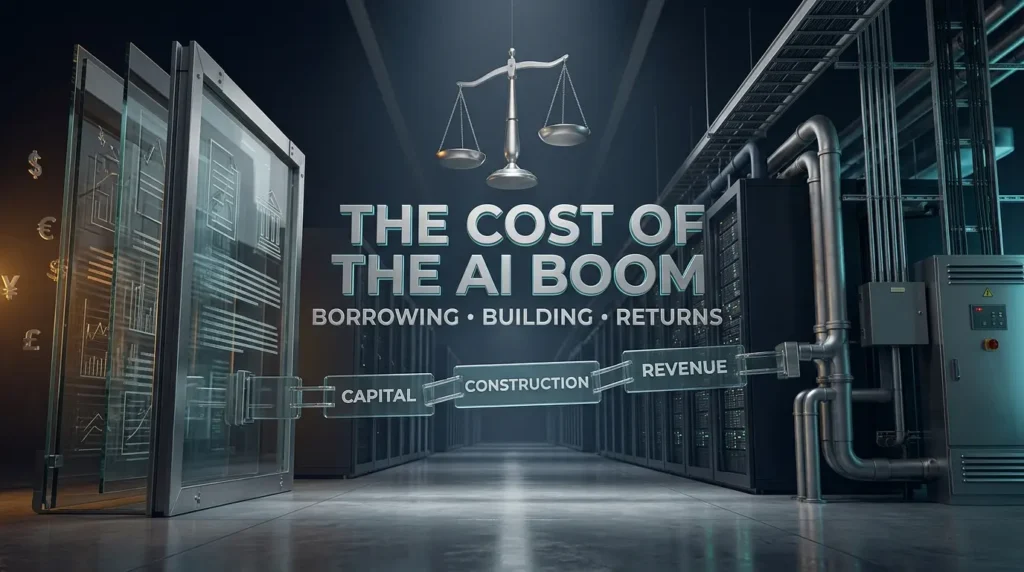
Building modern AI infrastructure requires extraordinary upfront investment.
Companies must acquire land, obtain electricity connections, purchase high performance chips, install cooling systems and finance facilities long before the full economic return becomes clear.
Some of the largest technology companies can fund these investments through substantial operating cash flow.
Smaller infrastructure developers may depend much more heavily on debt, leasing arrangements or external capital.
That distinction has become increasingly important.
In an October 15 Reuters analysis, rising financing costs and falling investor confidence were already complicating fundraising plans across the data center industry.
For companies that require continuous access to capital, a decline in share prices can make expansion more difficult.
The concern is not simply whether artificial intelligence will be useful.
It is whether the revenue generated by AI services will eventually justify the money required to build and operate their infrastructure.
2. Debt and financing risks have become harder to ignore
AI data centers are expensive assets with long construction schedules.
A project may require billions in funding before generating steady cash flow.
That creates risks when interest rates remain elevated, completion dates slip or customers reconsider their requirements.
Research published by J.P. Morgan Asset Management in November examined substantial AI related borrowing and contractual commitments, including financial obligations that are not captured entirely by conventional balance sheet debt figures.
The figures require careful interpretation. Future purchase commitments, leases and borrowing are not interchangeable, and they should not automatically be described as unpaid loans.
Still, they highlight how much future financial activity is tied to the assumption that AI computing demand will remain strong.
That is where investor anxiety becomes understandable.
If construction takes longer than expected, companies may face financing expenses before their facilities produce meaningful revenue.
If customers negotiate lower prices or delay orders, projected returns may weaken.
And if credit markets become less willing to fund ambitious projects, developers may be forced to reconsider expansion plans.
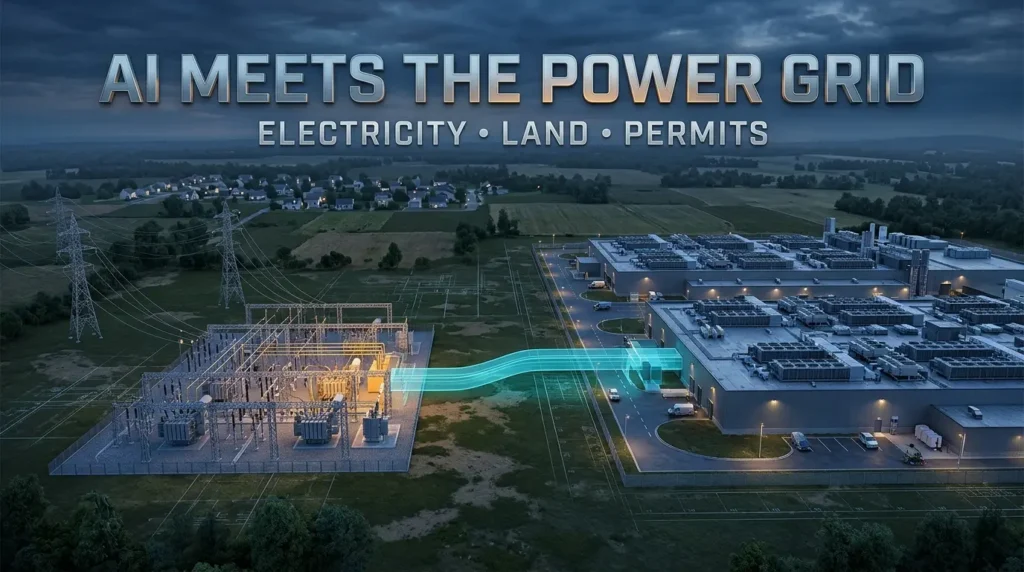
3. Political opposition is threatening the pace of data center construction
The AI boom has become an increasingly local political issue.
Large data centers need access to electricity, water, land and transmission infrastructure. Their construction can raise concerns about utility bills, environmental effects and competition for local resources.
Those concerns became financially significant following the United States midterm elections.
On November 5, Reuters reported that technology shares had fallen sharply as investors assessed the possibility of tighter restrictions and greater scrutiny of data center construction.
The Nasdaq Composite fell approximately 5.5% in that trading session, according to the report.
The political concern extends beyond national legislation.
Local governments and state authorities can influence zoning, construction permits, water use, electricity connections and the costs imposed on developers.
UBS investment research published on November 5 argued that state and local decisions were likely to have greater immediate consequences for data center development than sweeping federal construction prohibitions.
This distinction matters.
A proposal to restrict new data centers is not the same as a completed nationwide ban.
Existing projects may also be treated differently from facilities that have not yet received permits.
The financial impact will depend on which projects are affected, how much construction has already been completed and whether developers can move future investments to more supportive locations.
4. The wider technology selloff has intensified the pressure
The infrastructure correction is unfolding alongside turbulence in semiconductor stocks and other businesses associated with the AI investment cycle.
Reuters reported that the early November selloff affected chipmakers, specialized computing providers and companies supplying equipment to new facilities.
Some heavily financed computing infrastructure businesses suffered particularly sharp declines.
CoreWeave, for example, became a prominent illustration of investor worries about financing costs and the sustainability of ambitious expansion plans.
The wider market was already questioning how quickly the enormous amounts invested in AI would translate into profitable commercial activity.
Nvidia, whose processors remain central to advanced AI computing, has also faced separate leadership and governance uncertainty.
TrendOutsider has covered Nvidia’s November 12 leadership transition, including the appointment of Colette Kress as interim chief executive.
The company faces questions about continuity at a time when investors are already examining the cost and profitability of AI infrastructure.
However, these issues should not be confused with the entire cause of the $4.2 trillion sector decline. The construction related valuation reversal began months before Nvidia’s November leadership changes.
Readers seeking the separate corporate background can review TrendOutsider’s coverage of the Nvidia resignation and governance controversy.
Is the AI Data Center Boom Actually Collapsing?
Not necessarily.
This is where the story becomes more interesting than a simple headline about trillions disappearing from the stock market.
The Financial Times reports that US data center construction spending reached approximately $96 billion over the year through September 2026.
It also identifies strong operating indicators at several major industrial suppliers.
Caterpillar reported a record $78 billion order backlog, while its power generation sales grew by approximately 75%.
Siemens’ backlog for data center electrical equipment rose about 60% to €7 billion, according to the FT, while Eaton experienced a doubling of relevant orders.
These figures do not guarantee that every order will become revenue on the original timetable.
Orders can be delayed, revised or canceled. In some markets, customers may also place orders with multiple suppliers while deciding how much capacity they ultimately need.
Nevertheless, the numbers suggest that the underlying investment cycle has not simply stopped.
The market can be wrong about valuations even when it is right about demand
Consider two possibilities.
In the first, demand for AI infrastructure continues growing rapidly, but the share prices of suppliers had previously risen much faster than their realistic future earnings.
A decline in valuations would then represent a correction in how investors price the businesses rather than a collapse in demand.
In the second, some planned projects are delayed or abandoned because of financing costs, electricity constraints or changing customer requirements.
That would affect the amount and timing of revenue businesses eventually receive.
The current market turmoil may reflect elements of both scenarios.
And different companies will experience them differently.
A well funded supplier with diversified customers may be able to withstand a slowdown that creates serious difficulties for a developer relying on borrowed money and a small number of large contracts.
This is why broad claims that the AI boom is either finished or completely unaffected are difficult to defend.
Is the AI Bubble Bursting?
The phrase “AI bubble” has become increasingly common as investors reconsider valuations throughout the technology industry.
But identifying a bubble requires more than observing that share prices have fallen.
A speculative bubble generally involves asset prices rising substantially beyond what underlying economic expectations can reasonably support.
Artificial intelligence is producing real products, genuine computing demand and significant investment in physical infrastructure.
At the same time, real technological progress does not guarantee that every company associated with it will generate the earnings investors anticipated.
The internet offers a familiar historical lesson.
The development of the internet fundamentally changed business and society, yet many companies that attracted enormous enthusiasm during the dot com boom failed to justify their valuations.
That historical comparison is useful because it separates the long term importance of a technology from the short term attractiveness of a particular investment.
It is not proof that the current AI industry will follow the same trajectory.
The relevant question is whether the price investors pay for future growth is supported by realistic expectations of profitability, competition and financing costs.
Why analysts disagree about the selloff
Not every major financial institution believes the correction signals a lasting collapse.
On November 9, Reuters reported that analysts at Morgan Stanley and UBS considered aspects of the market reaction excessive.
Their argument was that political restrictions might delay some infrastructure projects rather than fundamentally destroy the AI expansion cycle.
On November 10, Wells Fargo upgraded its view of US AI infrastructure stocks from negative to neutral, citing valuations that had become more reasonable following the sharp decline.
That is not a guarantee of a rebound.
It shows that analysts can agree about the existence of risks while disagreeing about how much of those risks stock prices already reflect.
Market valuations depend on expectations. Those expectations can change quickly, in either direction.
What Happens Next for AI Infrastructure Stocks?
The next phase of the AI investment cycle will depend less on ambitious announcements and more on measurable business results.
Several indicators deserve particular attention.
Actual construction and equipment deliveries
Large project announcements do not always translate into completed facilities.
Investors will increasingly want to know whether proposed sites receive permits, secure electricity, obtain financing and progress toward commercial operation.
Revenue from AI services
Infrastructure spending ultimately depends on customers willing to pay for computing capacity.
The strongest evidence of sustainable demand will come from actual revenue, utilization rates and profitable customer relationships rather than headline spending commitments alone.
Borrowing costs and debt refinancing
Companies dependent on external financing may remain vulnerable if lenders demand higher returns or if the value of their shares and bonds continues declining.
Financing conditions could become a more important factor than technological demand for some developers.
Electricity and local approval
Even well funded companies cannot construct new facilities instantly.
Grid connections, generation capacity, local permits and community concerns will influence where new facilities can be built and how quickly they become operational.
Nvidia and the semiconductor outlook
Investors will also watch developments at Nvidia and other major semiconductor suppliers.
TrendOutsider’s earlier reporting on the Nvidia investigation and related governance concerns provides background on one of the separate uncertainties affecting the industry’s most important hardware suppliers.
Nvidia’s scheduled November 17 financial results could provide more information about AI chip demand and management’s outlook.
But no single earnings announcement can establish the long term profitability of the entire AI infrastructure industry.
What Does the Selloff Mean for Ordinary Investors?
The central lesson is that a promising technology and a promising investment are not automatically the same thing.
A company can participate in a rapidly growing industry while still carrying significant financial risk.
Investors examining AI related businesses should consider how much revenue actually comes from AI infrastructure, whether the company depends on a small number of customers, how expansion is financed and whether projected profits justify the valuation.
A business with predictable cash flow and a diversified customer base may face very different risks from a developer relying on borrowed funds to complete facilities that are not yet earning revenue.
It is also important to avoid treating a large percentage decline as automatic evidence of a bargain.
Share prices can fall substantially and remain expensive if the market’s previous growth assumptions were unrealistic.
Equally, a sharp correction does not prove that a financially strong company has become a poor business.
Those distinctions matter more than dramatic predictions about the next market rally or crash.
Frequently Asked Questions
How much market value have AI infrastructure stocks lost?
The Financial Times reported on November 15, 2026, that a group of companies connected to data center construction had lost approximately $4.2 trillion in market value since June. This is an aggregate stock valuation decline, not an equivalent amount of actual infrastructure spending lost.
Why are AI infrastructure stocks falling?
Investors are reassessing high valuations, heavy construction spending, financing risks, electricity constraints and the possibility of stricter data center permitting. Wider weakness in technology and semiconductor stocks has added pressure.
Which companies were affected by the $4.2 trillion selloff?
The FT highlights Caterpillar, Oklo, Comfort Systems and Corning among affected businesses. Their connections to AI infrastructure differ, and the reported declines should not be interpreted as identical operating problems.
Has AI infrastructure construction stopped?
No. Substantial spending, construction activity and equipment orders remain. However, financing conditions, local opposition and infrastructure constraints may delay or alter some planned projects.
Does this mean the AI bubble has burst?
The decline shows that investors are questioning the price of expected future growth. It does not by itself prove that artificial intelligence lacks commercial value or that the entire industry is experiencing a speculative collapse.
Why does electricity matter so much for AI data centers?
Large facilities require reliable power for computing equipment, cooling and supporting infrastructure. Electricity availability, grid upgrades and local approval can determine whether facilities are commercially viable and how quickly they can operate.
Could AI infrastructure stocks recover?
They could, but a recovery is not assured. Future performance depends on earnings, construction activity, financing costs, demand and the valuations investors are willing to accept.
The Bigger Picture: The AI Boom Is Facing Its Hardest Financial Questions
For years, the market rewarded companies associated with the physical expansion of artificial intelligence.
The argument seemed compelling. AI needs computing power, computing power needs data centers, and data centers need everything from construction machinery to electricity.
That chain of demand remains real.
But the $4.2 trillion valuation decline reveals how easily enthusiasm for a powerful technology can become enthusiasm for almost anything connected to it.
Investors are now separating the companies that may benefit sustainably from AI infrastructure spending from those whose share prices relied on extraordinarily optimistic expectations.
The shift may prove painful for businesses with expensive financing, uncertain projects or valuations built around growth that takes longer to arrive.
It may also create opportunities for financially stronger companies to demonstrate their value through genuine earnings and continued customer demand.
The decisive question is no longer simply how much money the AI industry intends to spend.
It is how much economic value that spending will ultimately produce, who will capture the profits and how long investors must wait.
Artificial intelligence may continue transforming the global economy.
Wall Street is discovering that betting on that transformation is not the same as guaranteeing a return.
Editorial disclosure: This article is based on publicly available financial reporting and investment research as of November 15, 2026. The $4.2 trillion aggregate figure is attributed to the Financial Times and has not been independently reconstructed from company by company market data. Accompanying AI generated graphics are editorial illustrations, not authentic photographs of stock exchanges, corporate events or construction projects.
Financial disclaimer: This article is provided for news and educational purposes. It is not personalized investment advice or a recommendation to buy, sell or hold any security. Market conditions and prices can change rapidly.







Leave a Reply