
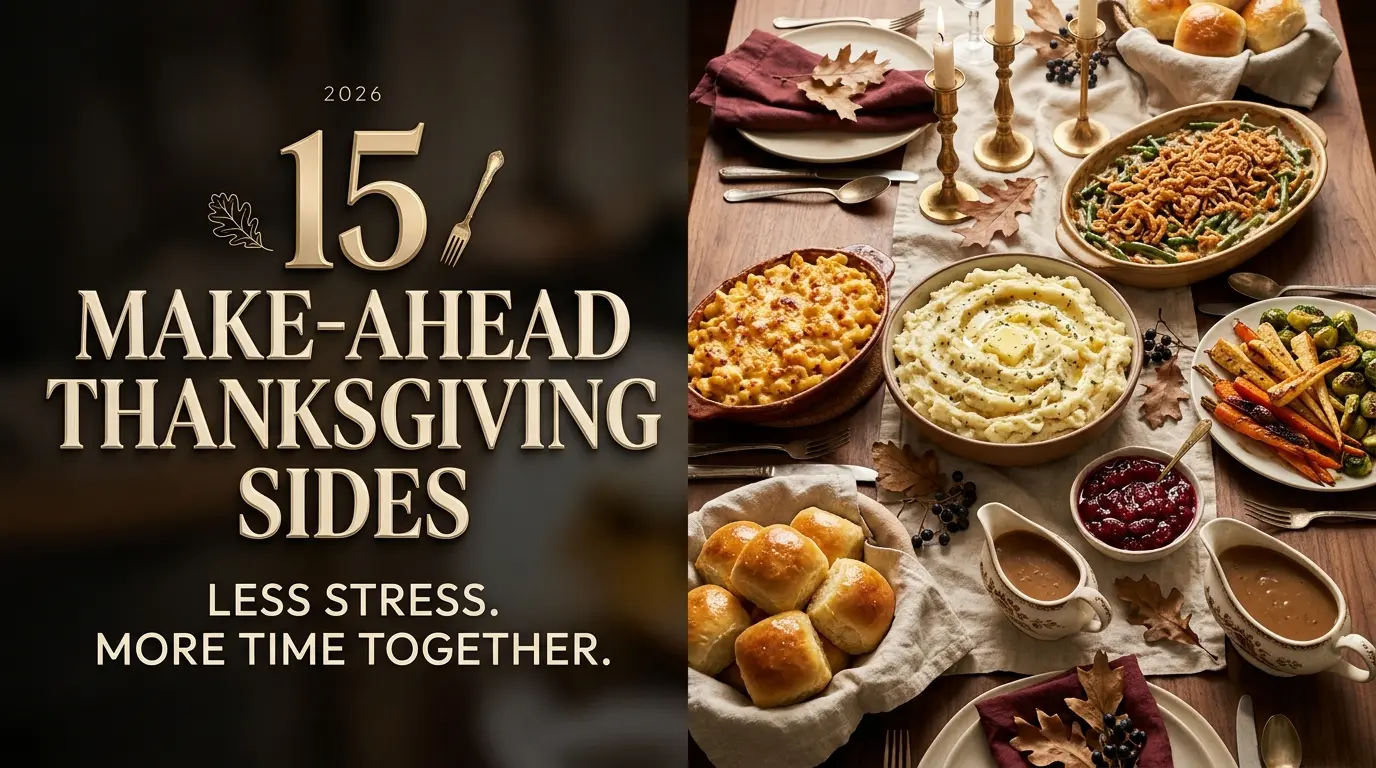
Thanksgiving dinner has a way of making every dish seem urgent at exactly the same moment.
The turkey needs the oven. The potatoes are cooling on the stove. Someone wants the green bean casserole with a properly crisp topping, and the dinner rolls still need warming.
Meanwhile, the gravy hasn’t been made.
If you’ve ever tried to pull everything together in the last hour before a holiday meal, you’ll understand why preparing a few side dishes early can make such an enormous difference.
The answer isn’t necessarily cooking everything days in advance.
Some foods, particularly cranberry sauce and gravy, are well suited to being cooked and stored before Thanksgiving. Other dishes, including casseroles, can be prepared in stages. Roasted vegetables often taste best when you do the chopping ahead but save the actual roasting until the day you’re serving them.
Knowing the difference is what makes the plan work.
This year, Thanksgiving falls on Thursday, November 26, 2026. And there’s plenty of reason to pay attention to the side dishes.
In its November 2026 feature on make-ahead Thanksgiving recipes, Allrecipes highlights several familiar favorites that can take pressure off the holiday cooking schedule, including mashed potatoes, gravy, sweet potatoes and green bean casserole.
The Food Network Kitchen team has also developed and tested approaches for preparing holiday dishes ahead of time, including freezer-friendly options.
Our guide takes a slightly different approach.
Instead of simply naming dishes you might prepare early, we’ve organized 15 make-ahead Thanksgiving side dishes around practical recipes, suggested preparation windows, safe storage, cooking instructions and a plan for getting everything ready without needing three ovens.
You’ll find classic creamy potatoes, vegetable sides, stuffing, mac and cheese, homemade rolls and gravy.
The recipes are original editorial formulations based on familiar cooking techniques. They have not been independently kitchen-tested by TrendOutsider, so treat the timings as estimates, pay attention to texture and use a food thermometer for temperatures that matter.
Most importantly, you don’t have to make all fifteen.
Choose four or five that your family actually enjoys, and give yourself a little more time to enjoy Thanksgiving.
Which Thanksgiving Side Dishes Can You Make Ahead?
Start here if you’re deciding what to put on the menu.
| Dish | Best preparation approach | Recommended final step |
|---|---|---|
| 1. Creamy mashed potatoes | Fully cook 1–2 days ahead | Reheat gently |
| 2. Green bean casserole | Prepare sauce and beans ahead | Combine and bake, add crispy topping late |
| 3. Baked mac and cheese | Assemble or fully bake ahead | Bake or reheat until hot |
| 4. Sweet potato casserole | Prepare cooked base and topping separately | Assemble and bake |
| 5. Cranberry orange sauce | Fully cook 1–3 days ahead | Serve chilled or gently warm |
| 6. Herb and onion stuffing | Prepare wet and dry ingredients separately | Mix and bake promptly |
| 7. Honey glazed carrots | Peel and portion ahead | Cook and glaze close to serving |
| 8. Brussels sprouts | Trim and dry ahead | Roast on Thanksgiving |
| 9. Garlic Parmesan potatoes | Wash and cut closer to serving | Roast for crispy edges |
| 10. Creamed spinach | Fully cook 1–2 days ahead | Reheat on the stove |
| 11. Corn casserole | Prepare components or fully bake ahead | Bake or reheat to temperature |
| 12. Butternut squash gratin | Roast squash and prepare sauce ahead | Combine and bake |
| 13. Maple roasted root vegetables | Peel and chop ahead | Roast close to serving |
| 14. Fluffy dinner rolls | Fully bake and freeze ahead | Thaw safely and warm |
| 15. Make-ahead turkey gravy | Fully cook ahead | Refrigerate or freeze, then reheat to a boil |
The preparation windows are conservative planning recommendations, assuming promptly chilled food in a refrigerator at 40°F (4°C) or below.
The USDA advises refrigerating perishable prepared food within two hours, using refrigerated leftovers within three to four days and reheating cooked leftovers to 165°F (74°C). For more details, see the USDA’s November 2026 Thanksgiving food safety guidance.
Creamy and Cheesy Thanksgiving Sides You Can Prepare Early
These are the dishes that tend to generate the biggest questions before Thanksgiving.
Will mashed potatoes dry out in the refrigerator? Can you assemble macaroni and cheese ahead? What happens to the crunchy topping on green bean casserole?
A little planning solves most of those problems.
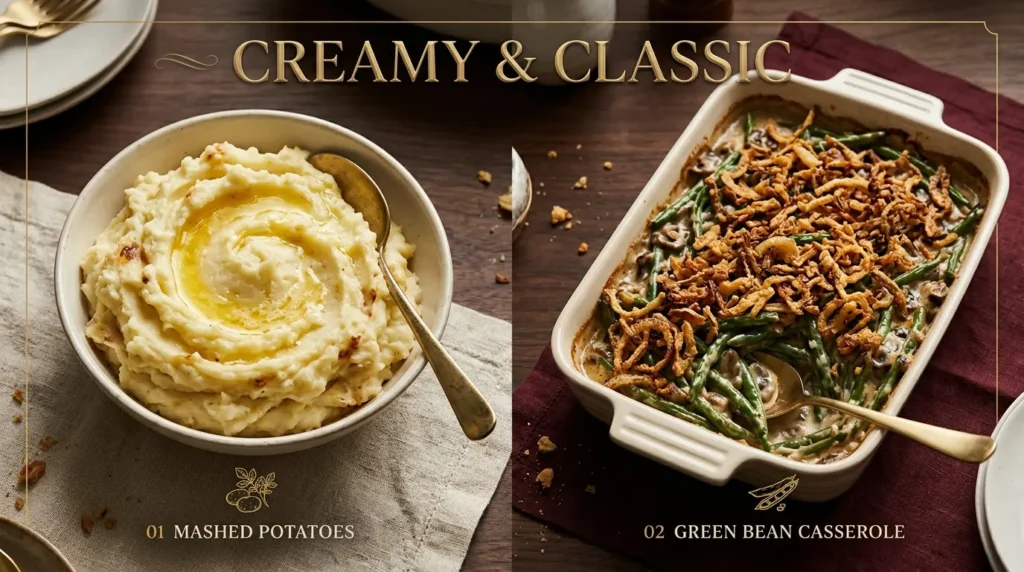
1. Creamy Make-Ahead Mashed Potatoes
Serves: 6
Prep: 15 minutes
Cooking: Approximately 25 minutes
Make ahead: 1–2 days
Reheat: Stovetop or covered oven dish
Mashed potatoes are often the first side dish to become a problem on Thanksgiving.
They seem easy enough until you’re trying to mash them while every other pan needs attention.
The trick to preparing them early is keeping enough moisture in the potatoes to help them warm back up without becoming stiff.
Ingredients
- 3 lb (1.36 kg) Yukon Gold potatoes
- 6 tablespoons unsalted butter
- ¾ cup whole milk, warmed
- ¼ cup sour cream
- 1 teaspoon fine salt, plus more to taste
- ¼ teaspoon freshly ground black pepper
- Additional warm milk for reheating, if needed
Method
- Peel the potatoes if preferred, then cut them into similarly sized pieces.
- Place in a large pot, cover with cold water, add salt and bring to a gentle boil.
- Simmer for approximately 15 to 20 minutes, until the potatoes are easily pierced with a fork.
- Drain thoroughly, then return to the warm pot for a minute to let excess moisture evaporate.
- Mash until smooth using a potato masher or ricer.
- Fold in the butter, warm milk, sour cream, salt and pepper. Avoid prolonged beating, which can make potatoes gluey.
- Taste and adjust the seasoning.
Make-ahead instructions: Divide into shallow covered containers and refrigerate promptly. Keep chilled for up to two days before serving.
Reheating: Transfer to a saucepan over low heat with a little extra milk, stirring carefully. Or cover in a baking dish and warm in a 325°F (163°C) oven. Because this is a previously cooked, chilled dish, check that it reaches 165°F (74°C) throughout.
Best tip: Add milk gradually. You can always loosen thick mashed potatoes, but watery potatoes are harder to rescue.
2. Classic Green Bean Casserole With a Crispy Topping
Serves: 6
Prep: 20 minutes
Cooking: Approximately 30–40 minutes
Make ahead: Prepare components 1 day before
Final cooking: Thanksgiving Day
Green bean casserole deserves a crispy finish.
That’s why it usually works better to prepare its components ahead rather than refrigerate the entire finished dish with fried onions already on top.
Ingredients
- 1½ lb (680 g) fresh green beans, trimmed
- 2 tablespoons butter
- 8 oz (225 g) mushrooms, sliced
- 2 cloves garlic, minced
- 2 tablespoons all-purpose flour
- 1 cup low-sodium vegetable or chicken broth
- ¾ cup whole milk
- ½ teaspoon salt, or to taste
- ¼ teaspoon black pepper
- 1 cup crispy fried onions, reserved until baking
Method
- Bring a large pot of water to a boil.
- Blanch the trimmed green beans for 3 to 4 minutes, then drain and cool promptly.
- Melt butter in a saucepan and cook the mushrooms until most of their moisture evaporates.
- Add garlic and cook briefly.
- Stir in the flour and cook for about one minute.
- Slowly whisk in broth and milk, stirring until the sauce thickens.
- Add salt and pepper, then allow the sauce to cool safely.
Make-ahead instructions: Refrigerate the beans and sauce in separate covered containers for up to one day.
Thanksgiving Day: Combine the beans and sauce in a lightly greased casserole dish. Bake at 350°F (177°C) until the casserole is bubbling and the center reaches 165°F (74°C). This may take approximately 25 to 35 minutes, depending on dish depth and starting temperature. Add the crispy onions for the final 5 to 10 minutes, watching that they don’t burn.
Storage: Refrigerate any leftovers promptly in shallow containers and use within three to four days.
Best tip: Don’t add the fried onions until the final stage. That small decision makes a noticeable difference to their texture.
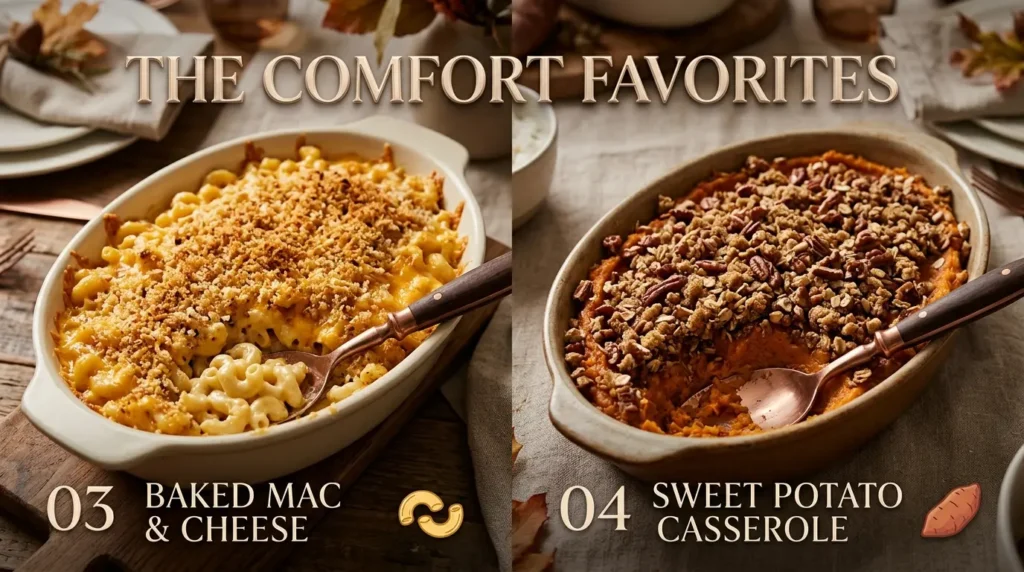
3. Baked Macaroni and Cheese With a Golden Top
Serves: 6–8
Prep: 20 minutes
Cooking: Approximately 35 minutes
Make ahead: Assemble up to 1 day in advance
Final cooking: Thanksgiving Day
Macaroni and cheese can be wonderfully forgiving when you account for how much liquid the pasta absorbs while sitting in the refrigerator.
For this version, the cheese sauce should look slightly looser than you might expect before baking.
Ingredients
- 12 oz (340 g) elbow macaroni
- 4 tablespoons butter
- ¼ cup all-purpose flour
- 3 cups whole milk
- 2 cups grated sharp cheddar
- 1 cup grated Monterey Jack
- ½ teaspoon mustard powder
- ½ teaspoon salt, adjusted to taste
- ¼ teaspoon black pepper
- ½ cup plain breadcrumbs
- 1 tablespoon melted butter for the topping
Method
- Boil the macaroni in salted water until about one or two minutes short of the package’s suggested cooking time. Drain.
- Melt four tablespoons of butter in a saucepan.
- Whisk in the flour and cook for one minute.
- Slowly add milk, whisking until the sauce becomes smooth and lightly thickened.
- Remove from the heat and stir in the grated cheeses, mustard powder, salt and pepper.
- Fold in the pasta, keeping the mixture generously coated.
- Transfer to a greased 9 by 13 inch baking dish.
Make-ahead instructions: Cool the mixture promptly in shallow portions where necessary, assemble in a covered casserole dish and refrigerate for up to one day. Keep the breadcrumbs and topping butter separately.
Thanksgiving Day: Heat the oven to 350°F (177°C). Mix the breadcrumbs with the melted butter and sprinkle over the casserole. Bake until the center reaches 165°F (74°C) and the topping turns golden, approximately 30 to 40 minutes depending on depth and temperature.
Storage: Refrigerate leftovers within two hours.
Best tip: If the pasta appears dry before baking, gently stir in a few tablespoons of milk.
4. Sweet Potato Casserole With a Crisp Pecan Topping
Serves: 6–8
Prep: 20 minutes
Cooking: 45–60 minutes total
Make ahead: Prepare base and topping separately 1–2 days before
Final cooking: Thanksgiving Day
Sweet potato casserole sits somewhere between a side dish and dessert.
For a less sugary result, let the flavor of the sweet potatoes do most of the work.
Ingredients
For the filling:
- 3 lb (1.36 kg) sweet potatoes
- 3 tablespoons melted butter
- ¼ cup brown sugar
- ⅓ cup milk
- 1 teaspoon vanilla extract
- ½ teaspoon ground cinnamon
- ¼ teaspoon salt
For the topping:
- ½ cup chopped pecans
- ⅓ cup all-purpose flour
- ¼ cup brown sugar
- 3 tablespoons cold butter, cubed
Method
- Heat the oven to 400°F (204°C).
- Prick the sweet potatoes with a fork and bake on a tray for approximately 45 to 60 minutes, until very tender.
- Allow to cool enough to handle, scoop out the flesh and mash thoroughly.
- Add melted butter, brown sugar, milk, vanilla, cinnamon and salt.
- In a separate bowl, rub together the pecans, flour, brown sugar and cold butter until crumbly.
Make-ahead instructions: Promptly refrigerate the cooked sweet potato mixture in shallow containers. Store the topping separately. Use within one to two days.
Thanksgiving Day: Spread the sweet potato mixture in a greased baking dish, scatter the topping over it and bake at 350°F (177°C) until hot throughout and the center reaches 165°F (74°C), approximately 25 to 35 minutes. If the topping browns too quickly, loosely cover with foil.
Storage: Refrigerate leftovers promptly.
Best tip: Toasted pecans taste wonderful, but they are optional. For a nut-free version, use an oat-based topping with ingredients suitable for the guests’ dietary needs.
Thanksgiving Sides That Benefit From Early Preparation
Some recipes are especially convenient because you can finish the entire dish well before anyone arrives.
Others call for a more careful division between preparation and final cooking.
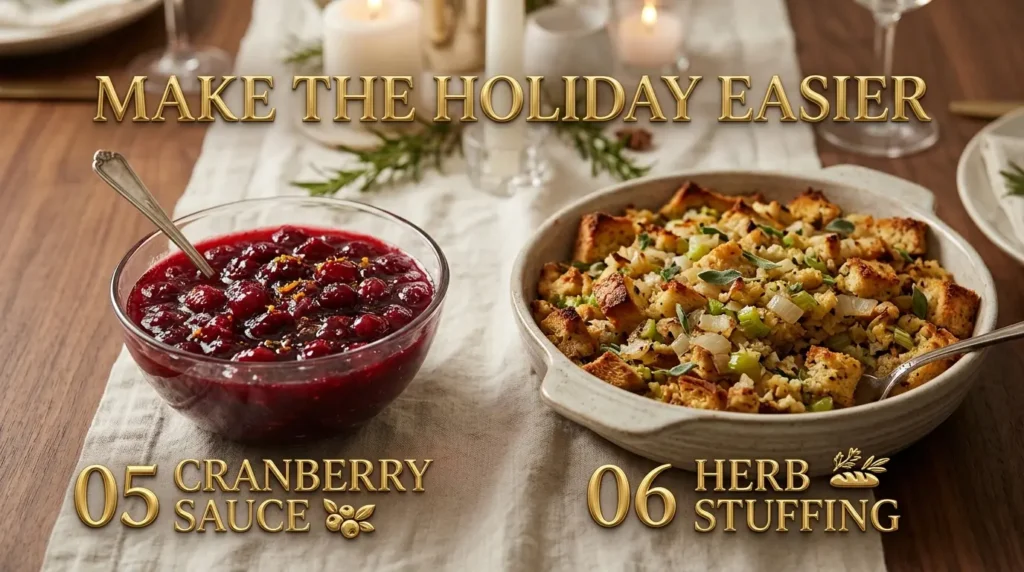
5. Homemade Cranberry Orange Sauce
Serves: 8–10 as a condiment
Prep: 5 minutes
Cooking: 12–15 minutes
Make ahead: 1–3 days
Final step: Serve chilled or warm gently
Cranberry sauce is one of the easiest Thanksgiving dishes to prepare early.
Fresh cranberries soften quickly as they simmer, and the sauce naturally thickens as it cools.
Ingredients
- 12 oz (340 g) fresh or frozen cranberries
- ¾ cup granulated sugar
- ½ cup orange juice
- ½ cup water
- Finely grated zest of one orange
- Small pinch of salt
Method
- Rinse fresh cranberries and remove any damaged berries.
- Place cranberries, sugar, orange juice, water and salt in a medium saucepan.
- Bring to a simmer over medium heat.
- Cook for around 12 to 15 minutes, stirring occasionally, until most berries burst and the mixture looks syrupy.
- Stir in the orange zest.
- Taste carefully and adjust sweetness if necessary.
Make-ahead instructions: Cool promptly in a shallow container, cover and refrigerate for one to three days.
Serving: Stir before serving. Serve chilled or warm gently if preferred.
Storage: Use within the general refrigerated leftover window of three to four days, or freeze promptly for longer storage.
Best tip: Don’t panic if the sauce looks runny while hot. It firms up as it cools.
6. Herb and Onion Stuffing Baked Separately
Serves: 6–8
Prep: 20 minutes, plus bread drying
Cooking: Approximately 40–50 minutes
Make ahead: Prepare components separately; combine immediately before baking
Final cooking: Thanksgiving Day
Stuffing is where the convenience of advance preparation must be balanced against food safety.
The USDA’s stuffing safety guidance advises against refrigerating fully mixed, uncooked stuffing overnight.
Prepare the bread and vegetables separately, then combine them immediately before cooking.
Ingredients
- 10 cups dry, cubed bread
- 5 tablespoons butter
- 1 large onion, finely chopped
- 3 celery stalks, chopped
- 2 cloves garlic, minced
- 2 teaspoons dried sage or 1 tablespoon finely chopped fresh sage
- 1 teaspoon dried thyme
- ½ teaspoon black pepper
- ½ teaspoon salt, adjusted to taste
- 2 to 2½ cups low-sodium chicken or vegetable broth
- 2 eggs, beaten
Preparation ahead
- Cut the bread into cubes.
- Dry it on a tray in a low oven until crisp, then cool completely and store safely in a clean dry container.
- Cook onion and celery in butter until softened. Add garlic and herbs briefly.
- Cool the vegetable mixture promptly and refrigerate in a covered container.
- Keep the broth and eggs refrigerated separately.
Thanksgiving Day
- Heat the oven to 350°F (177°C).
- Combine the bread and chilled vegetable mixture in a large bowl.
- Stir the eggs into the broth and add enough liquid to moisten the bread evenly without making it soupy.
- Transfer immediately to a greased baking dish.
- Cover with foil and bake for approximately 25 to 30 minutes.
- Remove the foil and continue baking until the top is golden and the center reaches 165°F (74°C), approximately another 15 to 20 minutes.
Important: Do not mix everything together and leave uncooked stuffing in the refrigerator overnight. The wet and dry components should remain separate until you are ready to bake.
Storage: Refrigerate cooked leftovers promptly in shallow containers. Reheat to 165°F (74°C).
Best tip: Baking stuffing separately from the turkey makes checking its internal temperature and coordinating oven space easier.
Vegetable Sides You Can Prep Before Thanksgiving
Vegetables create an opportunity to save time without giving up freshness.
Peeling, washing, trimming and measuring ingredients in advance may be all you need.
7. Honey Glazed Carrots With Butter and Thyme
Serves: 6
Prep: 10 minutes
Cooking: 15–20 minutes
Make ahead: Peel and cut 1–2 days before
Final cooking: Thanksgiving Day
Carrots are a useful Thanksgiving side because they offer sweetness and color without requiring oven space.
Ingredients
- 2 lb (900 g) carrots, peeled and cut evenly
- 2 tablespoons butter
- 2 tablespoons honey
- ¼ cup water
- ½ teaspoon salt
- ¼ teaspoon black pepper
- 1 teaspoon fresh thyme leaves or ¼ teaspoon dried thyme
Method
- Place carrots and water in a wide skillet.
- Cover and cook over medium heat until the carrots begin to soften, roughly 8 to 12 minutes.
- Remove the lid and allow excess water to evaporate.
- Add butter, honey, salt, pepper and thyme.
- Stir gently for another few minutes until the glaze coats the carrots and they are tender.
Make-ahead instructions: Refrigerate peeled, cut carrots in a covered food-safe container for up to two days. Mix the honey and seasonings separately.
Final cooking: Cook the carrots close to serving, using the method above.
Storage and reheating: Refrigerate cooked leftovers promptly and reheat thoroughly to 165°F (74°C).
Best tip: Slice thicker carrots more narrowly than thin ones so they finish cooking at about the same time.
8. Roasted Brussels Sprouts With Balsamic Glaze
Serves: 6
Prep: 10 minutes
Cooking: 20–30 minutes
Make ahead: Trim and dry 1 day before
Final cooking: Thanksgiving Day
Brussels sprouts are at their best when their cut surfaces brown and become crisp.
Roasting them too far ahead and reheating in a covered container tends to soften those edges.
Ingredients
- 2 lb (900 g) Brussels sprouts
- 3 tablespoons olive oil
- ¾ teaspoon salt
- ¼ teaspoon black pepper
- 1 tablespoon balsamic vinegar
- 1 teaspoon maple syrup, optional
Method
- Heat the oven to 425°F (218°C).
- Trim the sprouts and halve larger ones.
- Pat dry thoroughly.
- Toss with olive oil, salt and pepper.
- Spread cut side down on a baking sheet without crowding.
- Roast for 20 to 30 minutes, turning or checking as needed, until tender with browned edges.
- Toss with balsamic vinegar and optional maple syrup just before serving.
Make-ahead instructions: Trim, wash and dry thoroughly one day before. Refrigerate in a covered container lined with a clean paper towel.
Final cooking: Roast close to serving for the best texture.
Storage: Refrigerate cooked leftovers promptly and reheat to 165°F (74°C), recognizing that the texture may soften.
Best tip: Use two trays rather than overcrowding one. Crowded sprouts steam instead of brown.

9. Garlic Parmesan Roasted Potatoes
Serves: 6
Prep: 15 minutes
Cooking: 35–45 minutes
Make ahead: Prepare ingredients up to 1 day before
Final cooking: Thanksgiving Day
If you love crispy potatoes, don’t roast them too early.
This is one recipe where advance organization helps more than advance cooking.
Ingredients
- 2 lb (900 g) small Yukon Gold or red potatoes
- 3 tablespoons olive oil
- 3 cloves garlic, minced
- ½ teaspoon salt
- ½ teaspoon black pepper
- ½ teaspoon dried rosemary
- ⅓ cup finely grated Parmesan
- 1 tablespoon chopped parsley, optional
Method
- Preheat the oven to 425°F (218°C).
- Cut the potatoes into similarly sized pieces.
- Dry them thoroughly.
- Toss with olive oil, salt, pepper and rosemary.
- Spread in one layer on a baking sheet.
- Roast for 25 to 30 minutes, turning once.
- Add garlic and Parmesan, then return to the oven for approximately 8 to 12 minutes, until the potatoes are tender and golden. Watch closely to prevent the cheese and garlic burning.
- Finish with parsley if desired.
Make-ahead instructions: Measure the dry ingredients and prepare the Parmesan a day ahead. If cutting potatoes ahead, refrigerate them submerged in cold water for no more than a day, then drain and dry thoroughly before roasting.
Final cooking: Roast on Thanksgiving for the best crispness.
Storage: Refrigerate any leftovers promptly. Reheat to 165°F (74°C).
Best tip: Drying the potatoes before roasting matters more than adding extra oil.
10. Creamed Spinach With Parmesan
Serves: 6
Prep: 10 minutes
Cooking: 15–20 minutes
Make ahead: Fully cook 1–2 days before
Reheat: Stovetop
Creamed spinach brings something green and savory to a table full of rich casseroles.
It’s also well suited to gentle stovetop reheating.
Ingredients
- 2 lb (900 g) frozen chopped spinach, thawed
- 3 tablespoons butter
- 1 small onion, finely chopped
- 2 cloves garlic, minced
- 2 tablespoons flour
- 1 cup milk
- ½ cup heavy cream
- ⅓ cup grated Parmesan
- ¼ teaspoon nutmeg, optional
- Salt and pepper to taste
Method
- Squeeze the thawed spinach thoroughly to remove excess water.
- Melt butter in a saucepan and soften the onion.
- Add garlic and stir briefly.
- Sprinkle in flour and cook for about one minute.
- Gradually whisk in milk and cream until the sauce thickens.
- Stir in Parmesan, nutmeg if using, and the drained spinach.
- Cook for several minutes until hot and evenly combined.
- Season to taste.
Make-ahead instructions: Divide into shallow containers, refrigerate promptly and keep for one to two days.
Reheating: Warm in a saucepan over medium-low heat, stirring and adding a splash of milk if necessary. Check that it reaches 165°F (74°C) throughout.
Storage: Refrigerate leftovers promptly.
Best tip: Remove as much water as possible from the spinach before adding it to the sauce.

Comforting Thanksgiving Casseroles and Autumn Vegetables
The following dishes are good candidates for partial advance preparation.
They also provide a little more color and variety when the rest of the menu leans heavily on potatoes and gravy.
11. Easy Cheesy Corn Casserole
Serves: 6–8
Prep: 10–15 minutes
Cooking: 40–50 minutes
Make ahead: Mix dry ingredients and prepare wet components separately, or bake fully 1 day ahead
Final cooking: Thanksgiving Day if unbaked
Ingredients
- 2 cups corn kernels, thawed if frozen
- 1 can (14–15 oz) creamed corn
- 1 cup sour cream
- ½ cup melted butter
- 2 eggs
- 1 cup all-purpose flour
- ½ cup fine yellow cornmeal
- 2 teaspoons baking powder
- ½ teaspoon salt
- 1 cup grated cheddar cheese
Method
- Heat the oven to 350°F (177°C).
- Grease an 8 by 8 inch baking dish.
- In one bowl combine flour, cornmeal, baking powder and salt.
- In another bowl whisk sour cream, melted butter and eggs.
- Stir in corn kernels, creamed corn and cheddar.
- Fold in the dry ingredients until just combined.
- Spread into the dish and bake for roughly 40 to 50 minutes, until set and the center reaches 165°F (74°C).
Make-ahead instructions: Measure the dry ingredients and prepare the wet components separately the day before, refrigerating perishables. Combine just before baking so the baking powder works as intended. Alternatively bake the complete casserole one day ahead, cool promptly and refrigerate.
Reheating: For a previously cooked casserole, cover and reheat at 325°F (163°C) or above until the center reaches 165°F (74°C).
Best tip: Don’t overmix the batter once the wet and dry ingredients are combined.
12. Butternut Squash Gratin With Sage
Serves: 6
Prep: 20 minutes
Cooking: 45–60 minutes total
Make ahead: Roast the squash and prepare the sauce 1 day before
Final cooking: Thanksgiving Day
Ingredients
- 2 lb (900 g) peeled butternut squash, cut into ¾-inch cubes
- 2 tablespoons olive oil
- 2 tablespoons butter
- 2 tablespoons flour
- 1½ cups milk
- ½ cup grated Gruyère or mature cheddar
- 1 teaspoon chopped fresh sage
- ½ teaspoon salt
- ¼ teaspoon black pepper
- ⅓ cup breadcrumbs
Method
- Heat the oven to 400°F (204°C).
- Toss the squash with olive oil and a little salt.
- Spread on a tray and roast for 20 to 25 minutes, until just tender.
- Meanwhile, melt butter in a saucepan and stir in flour.
- Slowly whisk in milk until the sauce thickens.
- Remove from heat and add cheese, sage, salt and pepper.
Make-ahead instructions: Cool the cooked squash and sauce promptly, then refrigerate separately in shallow covered containers for up to one day.
Thanksgiving Day: Combine the squash and sauce in a greased baking dish, sprinkle breadcrumbs over the top and bake at 350°F (177°C) until bubbling and the center reaches 165°F (74°C), generally 25 to 35 minutes. Watch the topping and cover lightly if it browns before the center is hot.
Storage: Refrigerate leftovers within two hours.
Best tip: Roast the squash until just tender before assembly. If it’s already falling apart, the final gratin may become too soft.

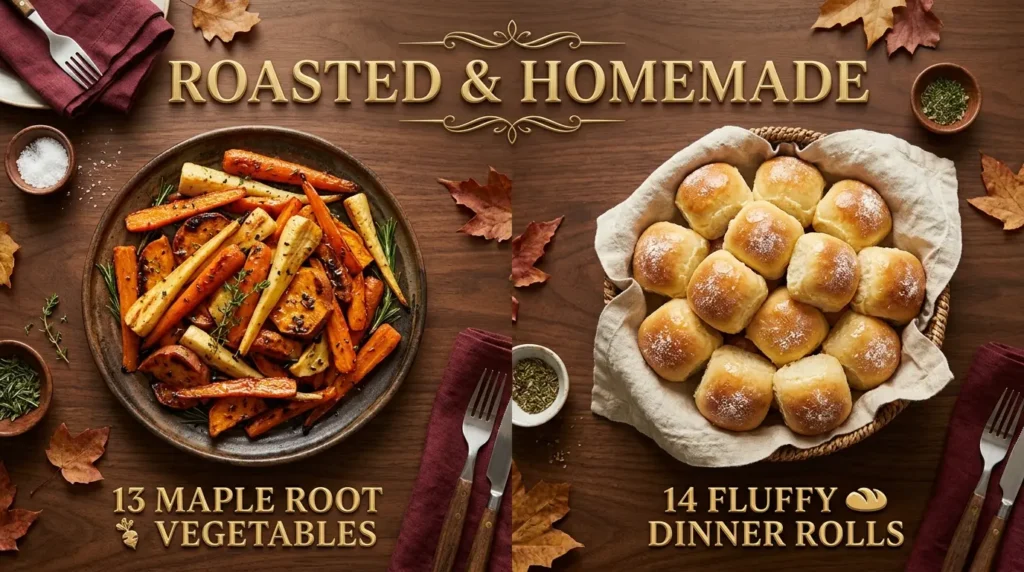
13. Maple Roasted Root Vegetables
Serves: 6
Prep: 15 minutes
Cooking: 30–40 minutes
Make ahead: Peel and chop 1 day before
Final cooking: Thanksgiving Day
Roasted roots are useful when you want a vegetable side that doesn’t need a complicated sauce.
Ingredients
- 1 lb (450 g) carrots
- 1 lb (450 g) parsnips
- 1 large sweet potato, about 12 oz (340 g)
- 3 tablespoons olive oil
- 2 tablespoons maple syrup
- 1 teaspoon fresh thyme leaves or ¼ teaspoon dried thyme
- ¾ teaspoon salt
- ¼ teaspoon black pepper
Method
- Heat the oven to 425°F (218°C).
- Peel and cut the vegetables into similar-sized pieces.
- Toss with olive oil, salt and pepper.
- Spread evenly across one or two baking sheets.
- Roast for 20 minutes.
- Toss with maple syrup and thyme.
- Continue roasting for another 10 to 20 minutes, until tender with browned edges.
Make-ahead instructions: Peel and portion the carrots and parsnips one day ahead. Refrigerate the cut vegetables in appropriate covered containers. Cut the sweet potato closer to cooking for the best color and texture.
Final cooking: Roast near serving time.
Storage: Refrigerate leftovers promptly and reheat to 165°F (74°C).
Best tip: Add the maple syrup during the later stage of roasting so it is less likely to burn.
14. Fluffy Homemade Dinner Rolls
Makes: 12 rolls
Prep: Approximately 25 minutes active, plus rising
Baking: 18–22 minutes
Make ahead: Fully bake and freeze before Thanksgiving
Final step: Thaw and warm
There’s something lovely about bringing warm bread to the Thanksgiving table.
But homemade rolls are not the best thing to start from scratch when the turkey is almost ready.
For this version, make the rolls in advance and freeze them fully baked.
Ingredients
- 3½ cups all-purpose flour, plus extra as needed
- 2¼ teaspoons instant yeast
- 2 tablespoons sugar
- 1 teaspoon salt
- 1 cup warm milk, approximately 105–110°F (41–43°C)
- 4 tablespoons melted butter
- 1 large egg
- Additional melted butter for brushing
Method
- Combine 3 cups of flour, yeast, sugar and salt in a large bowl.
- Add warm milk, melted butter and the egg.
- Mix into a soft dough, gradually adding the remaining flour only as needed.
- Knead for approximately 8 to 10 minutes, until smooth and elastic.
- Place in a lightly greased bowl, cover and leave in a warm spot until approximately doubled in volume, usually about 60 to 90 minutes.
- Divide into 12 equal pieces and shape into smooth balls.
- Arrange in a greased baking pan and cover loosely.
- Allow to rise until puffy, usually another 30 to 60 minutes.
- Heat the oven to 375°F (190°C).
- Bake for approximately 18 to 22 minutes, until evenly golden and baked through.
- Brush lightly with butter.
Make-ahead instructions: Cool completely on a rack. Wrap tightly in food-safe freezer packaging and freeze promptly.
Thanksgiving Day: Thaw in the refrigerator, then warm covered in a 325°F (163°C) oven for approximately 10 to 15 minutes. The exact timing depends on roll size and starting temperature.
Storage: Keep thawed rolls refrigerated if they contain perishable fillings or have been handled as a refrigerated cooked food. Do not leave frozen rolls thawing for extended periods in warm conditions.
Best tip: Warm rolls just before serving. They need relatively little oven time and can be prepared after the main casseroles.
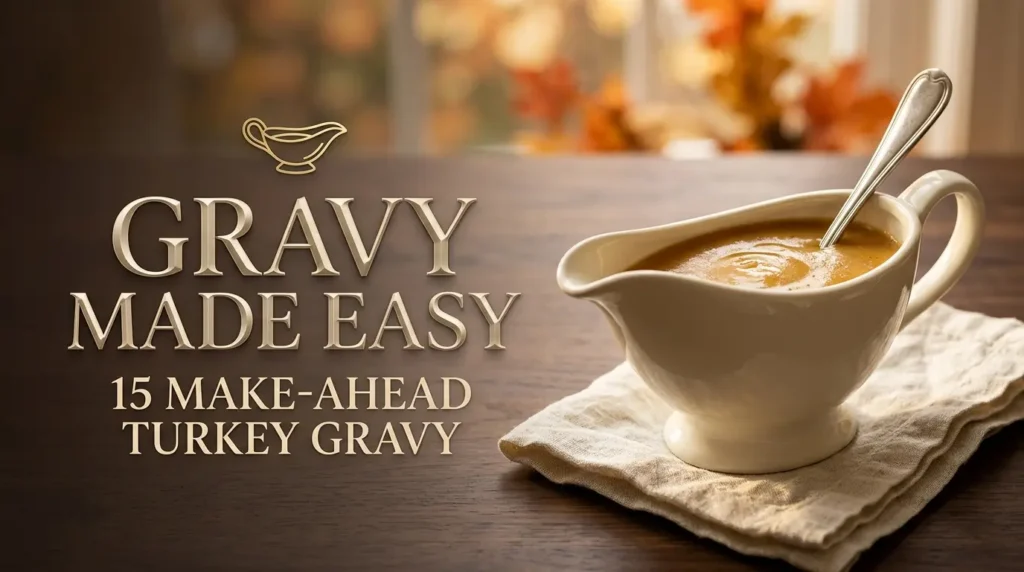
15. Make-Ahead Turkey Gravy Without Waiting for Drippings
Makes: Approximately 3 cups
Prep: 10 minutes
Cooking: 15–20 minutes
Make ahead: 1–2 days refrigerated, or freeze earlier
Final step: Reheat to a rolling boil
Gravy is often the last thing people think about and the first thing everyone wants.
Making it ahead means you don’t have to wait for the turkey to finish before starting the sauce.
This version uses broth rather than turkey drippings, so it can be completed before Thanksgiving.
Ingredients
- 4 tablespoons unsalted butter
- ¼ cup all-purpose flour
- 3 cups low-sodium turkey or chicken stock
- ½ teaspoon onion powder
- ¼ teaspoon dried thyme
- ¼ teaspoon black pepper
- Salt to taste
- Optional: 1 teaspoon Worcestershire sauce, checking dietary suitability
Method
- Melt the butter in a medium saucepan over medium heat.
- Add the flour and whisk continuously for 2 to 3 minutes, until the mixture becomes lightly golden.
- Add the stock a little at a time, whisking to prevent lumps.
- Add onion powder, thyme and pepper.
- Simmer for approximately 8 to 12 minutes until the gravy reaches your preferred thickness.
- Taste before adding salt, since prepared stock may already be salty.
Make-ahead instructions: Divide into shallow containers, chill promptly and refrigerate for one or two days. For longer advance preparation, freeze in a food-safe airtight container.
Thanksgiving Day: Reheat in a saucepan, whisking until smooth. Bring gravy to a rolling boil, following the USDA’s reheating guidance. Add a little water or stock if needed.
If you want to add drippings from a freshly cooked turkey, do so only after handling the drippings safely and bringing the gravy back to a proper boil.
Storage: Refrigerate leftovers promptly and use within three to four days.
Best tip: It’s easier to thin gravy that is too thick than to rescue gravy that is too watery.
Your November 22–26 Thanksgiving Meal Prep Calendar
The best plan for Thanksgiving isn’t to make everything as early as possible.
It’s to do the jobs that save time without keeping perishable foods in the refrigerator longer than necessary.
This schedule assumes Thanksgiving dinner is served on Thursday, November 26.
Sunday, November 22: Plan the Menu
Decide how many dishes you’re actually making.
Check how much refrigerator and freezer space you have.
Write a shopping list based on the recipes and make sure you own a food thermometer.
Prepare any dry bread cubes for stuffing and freeze finished rolls if you’re baking them early.
You can also make cranberry sauce or gravy on Sunday if you promptly freeze it for use later in the week.
Don’t plan to hold a Sunday batch of cooked dairy-rich casserole in the refrigerator until Thursday without considering the three-to-four-day safety window and prompt cooling.
Monday, November 23: Shop and Organize
Buy fresh vegetables, dairy ingredients, stock and herbs.
Group the ingredients by recipe.
Label clean storage containers and make room in the refrigerator.
If you froze rolls or gravy early, plan enough refrigerator thawing time.
Check your supply of foil, baking paper, clean kitchen towels and serving utensils.
Tuesday, November 24: Cook the Dishes That Reheat Well
Prepare the mashed potatoes, creamed spinach and cranberry sauce.
Cook gravy if it hasn’t already been made.
Roast sweet potatoes and prepare the casserole filling.
Cool all cooked food promptly in shallow containers and refrigerate.
Keep the sweet potato topping separate.
A little work today can free up a large part of the stove on Thanksgiving.
Wednesday, November 25: Prepare the Casseroles and Vegetables
Blanch the green beans and prepare their sauce separately.
Assemble the macaroni and cheese.
Roast the squash and prepare the gratin sauce.
Trim and dry Brussels sprouts.
Peel carrots and measure their glaze ingredients.
Prepare the dry bread and cooked vegetable components for stuffing, storing them separately.
If making the corn casserole, measure the dry ingredients and prepare the refrigerated wet components without combining them yet.
Everything should be labeled, covered and stored at the correct temperature.
Thursday, November 26: Finish and Serve
Start with the recipes that require the longest final cooking time.
Use your oven schedule to finish the stuffing and casseroles while the turkey is resting or while other suitable cooking equipment is available.
Roast Brussels sprouts, potatoes and root vegetables close to serving.
Warm mashed potatoes and creamed spinach on the stovetop.
Bring gravy to a boil.
Heat rolls toward the end.
Check the centers of cooked casseroles, stuffing and reheated leftovers with a food thermometer.
Then bring the food to the table.
A Simple Thanksgiving Day Oven Schedule
The exact schedule will depend on your turkey, oven, serving time and number of dishes.
Here is a sample for a 5:00 p.m. dinner, assuming the turkey has safely finished cooking and there is sufficient oven capacity for the selected sides.
| Time | Task |
|---|---|
| 2:30 p.m. | Check turkey progress, available oven space and casserole dishes |
| 3:15 p.m. | Combine stuffing components and prepare final casserole toppings |
| 3:30 p.m. | Begin 350°F casserole and stuffing cooking where oven space permits |
| 4:00 p.m. | Check temperatures and rotate dishes as needed |
| 4:10 p.m. | Finish crisp toppings, then remove safely cooked casseroles |
| 4:15 p.m. | Raise oven to 425°F for vegetables, if needed |
| 4:20 p.m. | Roast Brussels sprouts and other prepared vegetables on separate trays |
| 4:30 p.m. | Reheat potatoes and spinach on the stove; bring gravy to a boil |
| 4:45 p.m. | Check vegetable doneness and warm rolls using available oven space |
| 5:00 p.m. | Serve, once each dish is properly cooked or reheated |
This is an illustrative workflow, not a promise that every recipe fits one oven simultaneously.
A single standard oven may require you to choose fewer baked dishes, cook one casserole completely the day before, or adjust the serving time.
Use actual food temperature rather than the clock to decide when a casserole or reheated dish is ready.
The Most Important Food Safety Rules for Make-Ahead Thanksgiving Cooking
Preparing food early is useful only when it’s done safely.
The USDA’s 2026 Thanksgiving safety reminder says perishable prepared food and leftovers should be refrigerated within two hours.
It also recommends dividing larger dishes into smaller, shallow containers so they cool more quickly.
Keep the Refrigerator Cold
Your refrigerator should be at or below 40°F (4°C).
If you’re preparing several casseroles, check the temperature rather than assuming an overfilled fridge is cold enough.
Leave room for cold air to circulate.
Cool Food Promptly
Don’t leave a large casserole on the counter for several hours waiting for it to reach room temperature.
Divide cooked food into shallow food-safe containers and refrigerate promptly.
Follow the two-hour rule.
Reheat Properly
The CDC recommends that leftovers and casseroles reach 165°F (74°C).
Use a food thermometer in the center of the dish.
For oven reheating, the USDA recommends an oven temperature of at least 325°F (163°C).
Don’t use a slow cooker to slowly reheat chilled leftovers. It may take too long for food to move through unsafe temperatures. A slow cooker may be useful for holding already properly heated food at a safe hot temperature, but it is not a recommended method for reheating cold leftovers.
Take Extra Care With Stuffing
For advance preparation, keep the wet and dry ingredients separate until cooking, or fully cook stuffing and then chill it promptly.
Avoid leaving mixed, uncooked stuffing refrigerated overnight.
Cook stuffing to 165°F (74°C).
Keep Hot Food Hot and Cold Food Cold
During serving, keep hot foods at or above 140°F (60°C) and cold perishables at or below 40°F (4°C), or limit time outside temperature control according to official guidance.
Leftovers should go into the refrigerator within two hours.
Be Careful With Food Allergies
Thanksgiving sides often contain dairy, wheat, eggs, nuts or other common allergens.
Label dishes clearly and avoid assuming a vegetarian-looking recipe is automatically vegetarian if it contains meat stock.
A guest with a serious allergy may also need protection against cross-contact in the kitchen.
Which Thanksgiving Side Dishes Should You Freeze?
The freezer is helpful when the holiday is still several days away.
But not every dish returns to the table with the same texture.
Generally more suitable for freezing: Cranberry sauce, prepared gravy, fully baked rolls and some fully cooked casseroles.
Better finished fresh: Crispy Brussels sprouts, roasted potatoes, glazed carrots and most delicate vegetable toppings.
Freeze food promptly in suitable airtight containers, label it with the date and allow adequate refrigerator thawing time when needed.
For recipes that contain dairy, texture may change slightly after freezing. Sauces may need gentle whisking during reheating.
The freezer preserves food safety when used correctly, but it doesn’t guarantee that every dish will taste identical after thawing.
How Much Food Should You Make for Thanksgiving?
When you’re serving several sides, you don’t necessarily need a full serving of every dish for every guest.
A practical starting point for six adults might be:
- One generous potato dish
- One green vegetable
- One casserole or bread-based side
- One lighter vegetable dish
- Cranberry sauce and gravy as accompaniments
- Rolls if people enjoy them
Adjust for children, dietary preferences, large appetites and planned leftovers.
Cooking fifteen separate dishes for six people may create more stress and food waste than it solves.
The best Thanksgiving menu is the one people actually want to eat.
Frequently Asked Questions
What Thanksgiving side dishes can be made two days ahead?
Mashed potatoes, creamed spinach, cranberry sauce and gravy are practical candidates when promptly chilled and stored correctly. Some casserole components can also be prepared separately.
Can you make green bean casserole the day before?
Yes. A practical approach is to prepare the beans and sauce separately, refrigerate them, then combine and bake on Thanksgiving. Add the crispy topping near the end.
Can I make mashed potatoes ahead and reheat them?
Yes. Refrigerate them promptly and reheat gently with a little additional warm milk if needed, checking that they reach 165°F (74°C).
Is it safe to prepare stuffing the night before?
You can prepare the bread and cooked vegetable components in advance, but do not leave fully mixed, uncooked stuffing in the refrigerator overnight. Combine and cook promptly, or cook stuffing completely before refrigerating it.
Which Thanksgiving sides freeze well?
Cranberry sauce, gravy, fully baked rolls and some cooked casseroles are useful freezer candidates. Texture and quality can vary after thawing.
Can I reheat Thanksgiving sides in a slow cooker?
USDA guidance does not recommend reheating cold leftovers in a slow cooker because warming can take too long. Properly reheat food first, then use suitable equipment to hold it hot if needed.
What temperature should reheated Thanksgiving food reach?
Previously cooked, chilled leftovers should reach 165°F (74°C) throughout. Check with a food thermometer.
How long can cooked Thanksgiving sides stay refrigerated?
USDA guidance generally recommends using refrigerated leftovers within three to four days when they have been handled and cooled safely.
Should I refrigerate hot casseroles immediately?
Do not leave them cooling on the counter for hours. Divide larger quantities into shallow containers and refrigerate promptly within the safe cooling window.
How do I keep macaroni and cheese from drying out?
Leave the sauce slightly loose before baking and add a small splash of milk when needed. Avoid overcooking the pasta before it goes into the oven.
Can I prepare roasted vegetables the night before?
Yes. Washing, trimming, peeling and portioning can save time. For the crispest results, roast them close to serving.
How do I manage Thanksgiving sides with just one oven?
Choose fewer oven-dependent dishes, fully cook some sides in advance, use the stove for mashed potatoes and gravy, and schedule roasted vegetables after the longer baked dishes finish.
The Real Secret to an Easier Thanksgiving Dinner
The best make-ahead Thanksgiving meal isn’t one where everything has been sitting in the refrigerator for days.
It’s one where the work has been divided sensibly.
Maybe the cranberry sauce is already chilled. The gravy needs only a saucepan. The potatoes are ready to warm, the green beans are waiting for their sauce, and the vegetables are trimmed and neatly stored.
You’ve done enough preparation that the day can unfold without every dish demanding your attention at once.
There’s still cooking to do.
The kitchen will still get messy. Someone may ask when dinner will be ready a little earlier than expected.
But you won’t be starting from scratch.
Choose a few favorites from this list, prepare them according to how well they store and finish the dishes that deserve to be fresh.
Then, when everyone sits down, you can enjoy the meal too.
Editorial and recipe disclosure: The recipes are original instructional formulations based on common culinary methods and publicly available food safety guidance. TrendOutsider has not independently kitchen-tested or professionally validated the formulations. Cooking times are estimates, and safe internal temperatures and proper food handling take priority.
Food safety references: USDA Food Safety and Inspection Service, CDC Food Safety, and university extension guidance on stuffing and holiday meal preparation.
Visual disclosure: All accompanying food images are conceptual editorial illustrations. They are not photographs of recipes prepared and tested by TrendOutsider.








Leave a Reply