
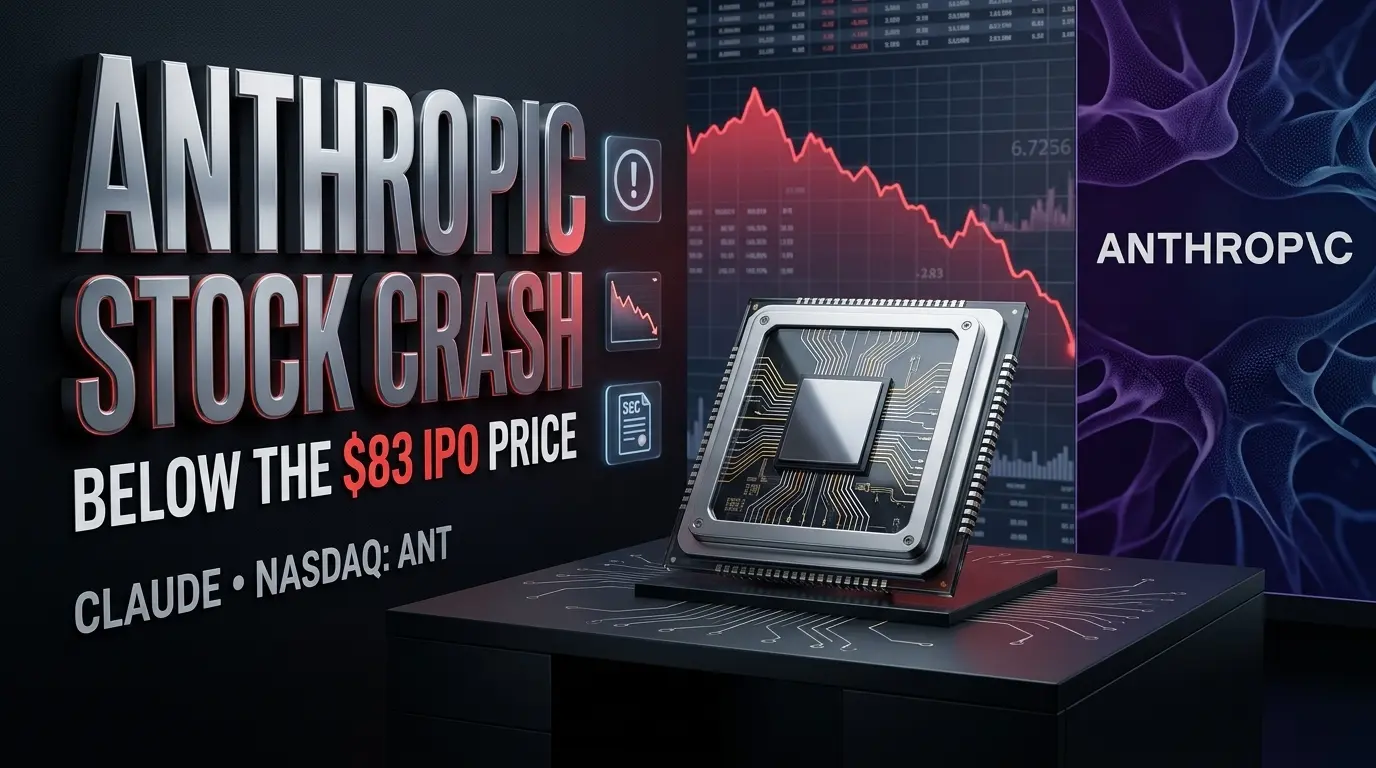
For a few hours, Anthropic looked like the company that might prove Wall Street’s enormous enthusiasm for artificial intelligence was justified.
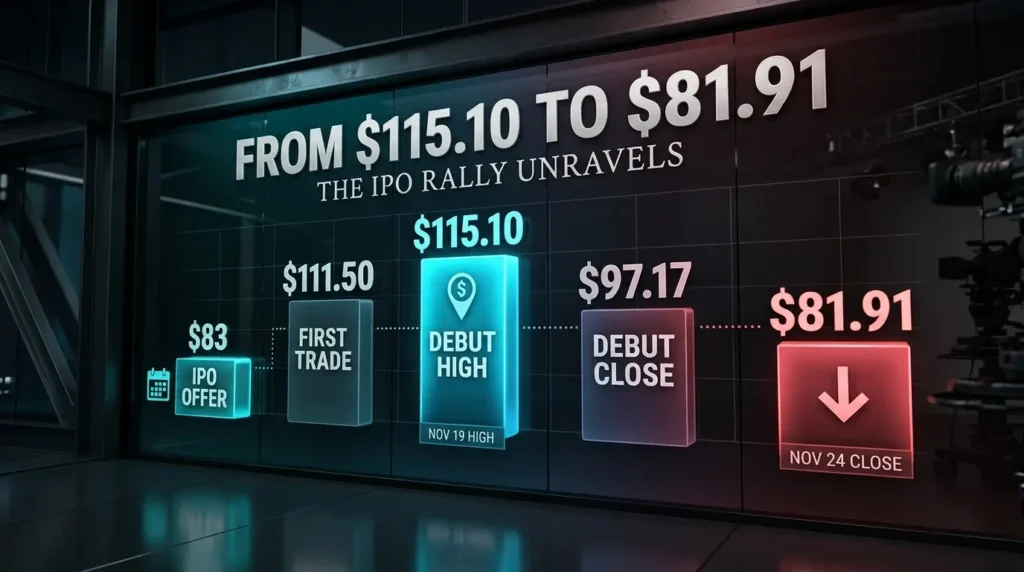
The maker of Claude had just completed the largest public offering in stock market history. Its shares were priced at $83, but when trading began on November 19, buyers pushed the opening price to $111.50.
At the session’s peak, the stock reached $115.10.
The excitement was understandable. Investors finally had a way to buy shares in a publicly traded company focused directly on developing frontier AI models, rather than gaining indirect exposure through chipmakers, cloud providers or other technology giants.
Then the market changed its mind.
By the close of November 24, Anthropic shares had fallen to $81.91, below the $83 price investors paid in the initial public offering.
During Tuesday’s session, the stock had traded as low as $75.61.
Early trading indications on November 25 suggested the pressure was continuing.
And just as investors were trying to understand the reversal, new regulatory disclosures revealed another striking figure.
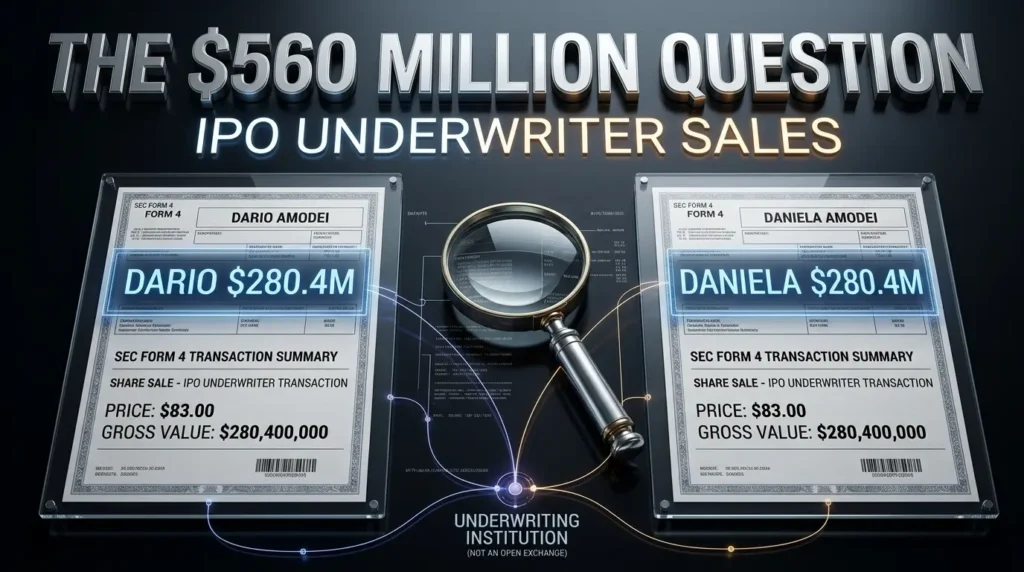
Anthropic chief executive Dario Amodei and company president Daniela Amodei had each sold approximately $280.4 million worth of shares in transactions connected to the offering.
Combined, their reported sales totaled roughly $560.81 million.
That number deserves attention. But it also requires an important correction to the way insider sales are sometimes described.
According to the regulatory filings, the shares were sold to the IPO’s underwriters at $83 each. They were not disclosed as ordinary stock market sales executed after the share price collapsed.
The distinction changes how investors should interpret the transactions.
The real story is bigger than a bad first week for one stock. It is about what happens when a spectacularly fast growing AI company reaches public markets carrying immense expectations, enormous computing commitments and a valuation that leaves little room for disappointment.
Anthropic’s business may continue growing rapidly. Its products may remain important to customers. Its technology may become more capable.
None of those outcomes guarantees that shares bought at a very high price will deliver strong returns.
And that is the uncomfortable lesson emerging from Claude’s first week on Wall Street.
Anthropic Stock Price Today: What Happened on November 25?
Anthropic trades on the Nasdaq under the ticker symbol ANT.
The latest completed regular trading session available for this report is Tuesday, November 24, when the shares closed at $81.91, according to historical market data published by Yahoo Finance and other market trackers.
That was approximately 1.3% below the $83 offering price.
Early November 25 reporting from MarketWatch described the stock around $77.41, while other premarket quotations varied as trading continued.
Those are time specific observations, not a completed November 25 closing price.
For anyone reading this article after publication, the latest quote should be checked independently because an actively traded stock can move substantially throughout the session.
The Numbers Behind the Reversal
| Price milestone | Anthropic share price |
|---|---|
| IPO offering price, November 18 | $83.00 |
| First public trade, November 19 | $111.50 |
| First day intraday high | $115.10 |
| November 19 closing price | $97.17 |
| November 20 closing price | $88.91 |
| November 23 closing price | $87.64 |
| November 24 closing price | $81.91 |
| November 24 intraday low | $75.61 |
From the first day high of $115.10 to Tuesday’s $81.91 close, Anthropic had lost approximately 28.8% of its peak trading value per share.
That is a dramatic reversal in only a handful of sessions.
But it does not mean every investor lost 28.8%.
Someone allocated shares at the original $83 offering price was facing a much smaller paper loss at the November 24 close.
Someone who bought near the $115 debut high was in a very different position.
An investor who sold during the opening rally may have made money.
The price paid matters just as much as the direction of the chart.
How Anthropic’s Record Breaking IPO Became a Wall Street Warning
The excitement began before the stock ever traded publicly.
Anthropic, founded in 2021 and best known for its Claude AI models, had become one of the most closely watched companies in the technology industry.
Its products compete in a market that includes OpenAI, Google and other major developers.
Enterprise customers use Claude and related services for software development, research, analysis, automation and other knowledge work.
For investors, that business offered something different from buying stock in an established technology company.
Anthropic was a relatively direct wager on the commercial future of advanced AI.
The company’s final IPO prospectus filed with the Securities and Exchange Commission confirms an offering price of $83 per share and a total offering amount of approximately $81.34 billion before underwriting deductions.
The record scale attracted extraordinary attention.
But the public market was already debating the economics behind AI.
How much will it cost to build increasingly capable models?
How quickly can companies turn fast growing usage into sustainable profits?
Can customers be persuaded to keep paying premium prices if competing models become cheaper?
And how much should investors pay today for earnings that may arrive many years later?
Those questions were never resolved simply because the IPO was oversubscribed.
Why $83 Was Different From $111.50
The IPO offering price is the price at which shares are sold to investors allocated stock in the offering.
The opening trading price is what buyers and sellers agree upon when the stock begins trading on the exchange.
Those numbers can be very different.
Anthropic’s shares opened about 34% above the offering price.
The opening surge reflected strong initial demand, but it also meant investors buying at $111.50 were paying substantially more than the IPO allocation price.
By the end of the first session, the stock had already retreated to $97.17.
That first day decline from the opening price was an early sign that the market’s enthusiasm was more fragile than the initial headline suggested.
The company had not suddenly lost its technology or customers.
Rather, the price investors were willing to pay for its future growth was changing.
The $560 Million Amodei Share Sales: What the SEC Filings Actually Show
This is the part of the story most likely to attract attention, and the part that requires the most careful reporting.
On November 23, regulatory filings disclosed sales by Anthropic’s two prominent leaders.
Dario Amodei, the company’s chief executive, reported the sale of 3,378,378 shares.
Daniela Amodei, Anthropic’s president, reported an identical number of shares sold.
Each transaction was reported at $83 per share.
The arithmetic is straightforward.
| Executive | Shares sold | Reported price | Gross transaction value |
|---|---|---|---|
| Dario Amodei | 3,378,378 | $83 | $280,405,374 |
| Daniela Amodei | 3,378,378 | $83 | $280,405,374 |
| Combined | 6,756,756 | $83 | $560,810,748 |
That is approximately $560.81 million in gross reported transaction value.
It is not necessarily the same amount either executive received as spendable cash after applicable taxes, fees or other financial arrangements.
The Critical Detail: These Were Underwriter Transactions
The transactions appeared in SEC Form 4 reports using transaction code S, which indicates a sale.
That code alone does not tell the complete story.
The explanatory footnote is more important.
Dario Amodei’s SEC Form 4 states that the $83 price represented the sale price to underwriters in the company’s initial public offering.
Daniela Amodei’s corresponding Form 4 filing carries the same substantive explanation.
The reported transaction date was November 20.
The filings were submitted on November 23.
That means the regulatory disclosure became public after the trading debut, but the transactions themselves were connected to the original underwriting process.
This is materially different from claiming the executives watched their stock price rise on the open market and then secretly sold shares to ordinary investors at the peak.
The filings do not support that interpretation.
Did the Amodeis Sell Because They Expected a Crash?
There is no reliable evidence in the public documents reviewed for this report that establishes such a motive.
An IPO often provides existing shareholders with an opportunity to sell an allocated portion of their holdings.
Those sales can be included in the offering structure and disclosed through required regulatory documents.
The fact that a founder sells shares is relevant to investors.
It may affect perceptions about incentives, remaining ownership and future supply.
But selling stock during an IPO does not prove that the seller expected the price to collapse or possessed undisclosed negative information.
To establish an improper transaction, investigators would need evidence beyond the existence and size of the sales.
Did They Sell All Their Anthropic Shares?
No.
The Form 4 filings describe substantial remaining ownership interests after the reported transactions.
The shares sold represented a relatively small portion of the leaders’ reported holdings.
That does not make $560.81 million insignificant.
It does mean headlines should not suggest the Amodeis abandoned their ownership positions.
What About Shares Withheld for Taxes?
The filings also include shares marked with transaction code F.
Those entries concern shares withheld by the company to satisfy tax obligations related to restricted stock units.
They should not be casually added to the reported $560.81 million of IPO underwriter sales as though they were another round of discretionary cash selling.
They reflect a different transaction mechanism.
The central finding is clear: the IPO sales were real, large and publicly disclosed. The available filings do not establish illegal trading or a secret open market exit.
Who Actually Received the Money From Anthropic’s IPO?
An important detail often disappears when an offering is described as raising tens of billions of dollars.
Not every share sold in an IPO provides money to the company.
There are usually two different categories.
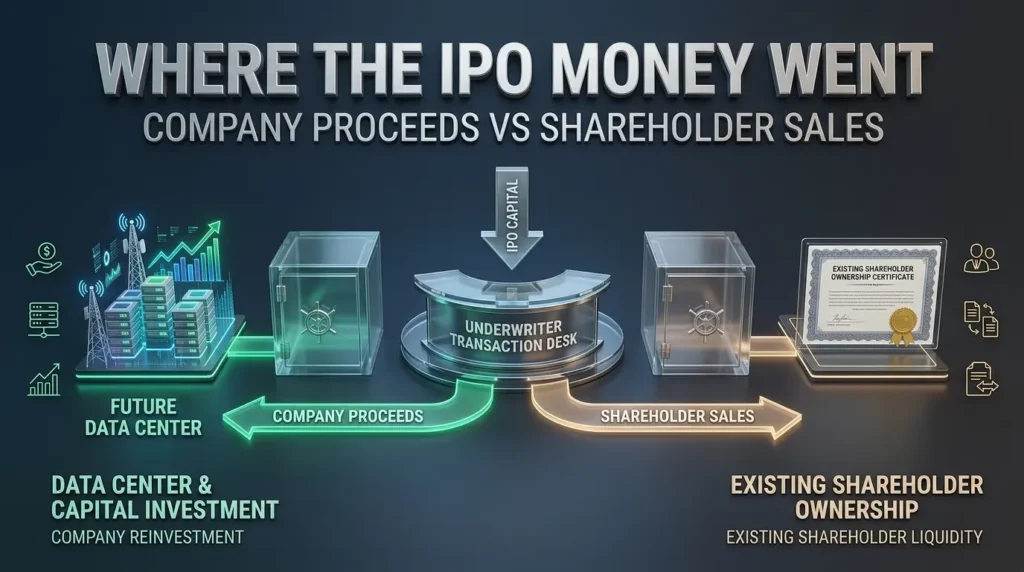
Primary shares are newly issued by the company. Proceeds, after relevant expenses, generally go to the issuer.
Secondary shares are sold by existing shareholders. The economic proceeds go to those sellers, not to the company issuing new equity.
Anthropic’s prospectus distinguishes the two.
The final offering summary reported approximately $78.84 billion in proceeds before expenses to Anthropic and about $1.95 billion before expenses to selling shareholders after the stated underwriting discount.
These figures refer to the prospectus’s identified offering proceeds. They should not be conflated with the gross value of every separately described concurrent financing transaction or subsequent additional share purchase.
That difference is fundamental to understanding the deal.
If a company sells new shares, it can use the capital to fund operations, infrastructure or other corporate purposes.
If a founder sells existing shares, the company doesn’t receive those proceeds simply because its stock changed hands.
The sale still matters to ownership and market supply.
But it is not new cash in the company’s bank account.
Why Underwriters Matter
Large IPOs are coordinated by financial institutions called underwriters.
They help structure the offering, distribute shares, assess demand and manage arrangements described in the prospectus.
The underwriters’ involvement does not guarantee that the stock will remain above its IPO price.
Nor does the presence of major investment banks establish that a particular valuation is fair.
Underwriting can help an offering succeed while the stock still trades poorly afterward.
That is exactly the distinction Anthropic’s first week has brought into focus.
What Is a Greenshoe Option?
A greenshoe is an option that generally allows underwriters to purchase additional shares under specified offering terms.
It can provide flexibility in how an IPO is distributed.
Anthropic’s final prospectus describes an additional share option.
Such arrangements can affect share supply and underwriting mechanics, but they are not a promise that banks will prevent the stock from falling.
It would be misleading to describe the existence of that option as a guaranteed rescue plan for shareholders.
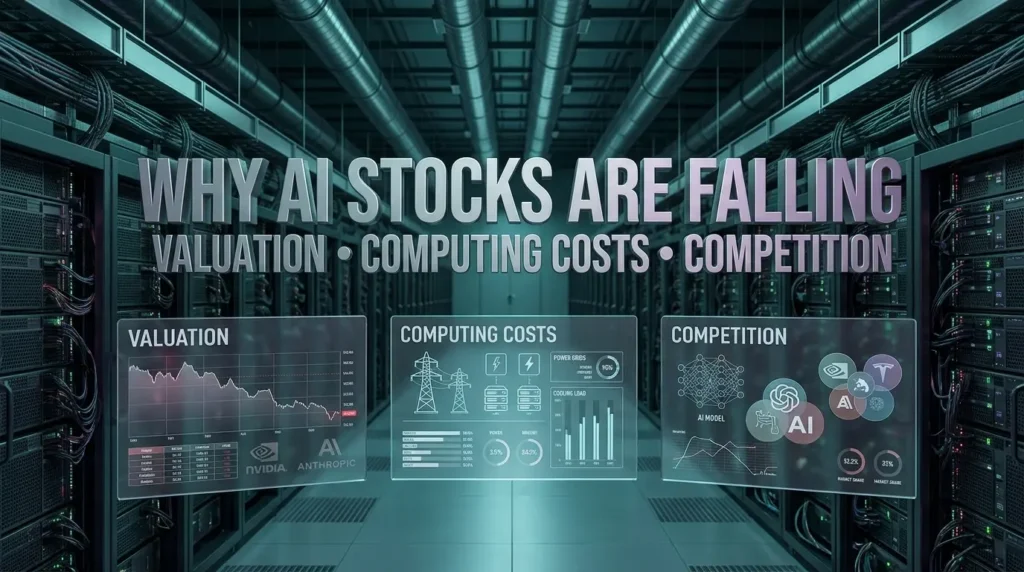
Why Is Anthropic Stock Falling?
There is no single verified cause that explains every trade in Anthropic’s stock since November 19.
Reuters reported that the reversal unfolded alongside a broader retreat in AI and technology shares, with investors reassessing expensive valuations and the enormous costs of building AI infrastructure.
That wider context matters.
A highly valued new listing can be especially vulnerable when investors become less willing to pay for distant future profits.
There are several plausible forces working at once.
1. The IPO Price Left Little Room for Disappointment
Anthropic’s offering was priced above its earlier proposed range.
The debut then pushed shares considerably higher.
An investor buying near the opening high wasn’t just betting that Anthropic would grow.
They were betting that it would grow enough to justify an exceptionally demanding price.
When confidence weakens, share prices can fall rapidly even if customer demand remains healthy.
That is not unique to Anthropic.
It is a recurring risk with highly anticipated public offerings.
2. AI Companies Need Enormous Amounts of Computing Power
Developing frontier AI requires expensive processors, data centers, electricity, networking and software infrastructure.
Anthropic’s offering materials describe substantial future computing and infrastructure commitments.
The company has discussed commitments extending toward $900 billion over a multiyear period.
That number deserves careful interpretation.
A multiyear commercial or computing commitment is not automatically the same as $900 billion of conventional outstanding debt.
The timing, conditions, counterparties and accounting treatment all matter.
But the overall business problem remains clear.
To compete at the frontier of AI, a company may have to commit extraordinary resources before it knows exactly how much profit future models will generate.
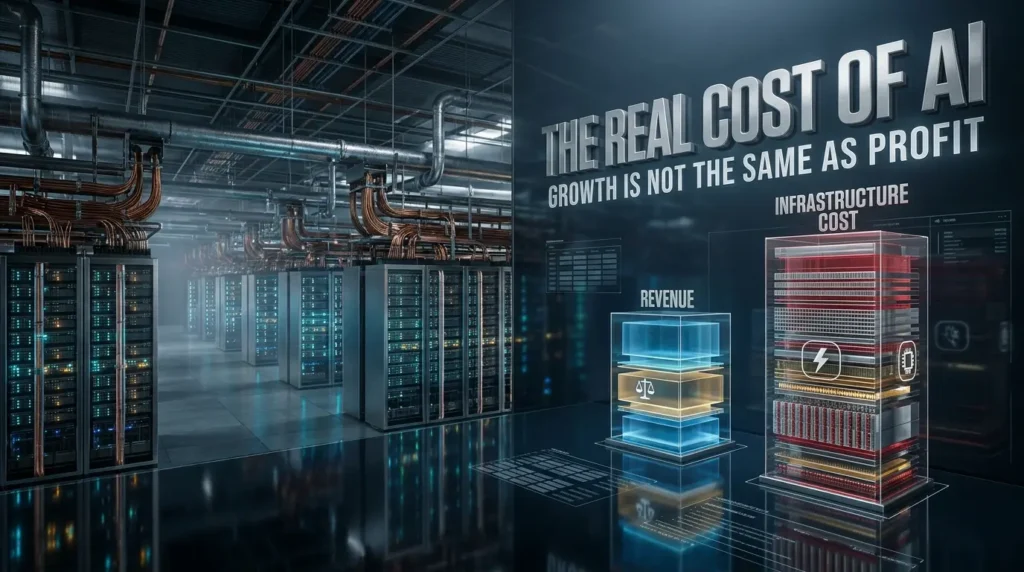
3. Revenue Growth Doesn’t Eliminate Profitability Questions
Anthropic’s prospectus reported approximately $33.24 billion in revenue during the first nine months of 2026.
It also described an annualized revenue run rate of about $81 billion as of October 31.
Those numbers are impressive, but they measure different things.
Nine month revenue is the amount actually recognized during that reporting period.
An annualized run rate extrapolates more recent business activity and is not the same as audited full year revenue.
The company also reported operating losses.
Its much larger reported net losses include accounting effects that must be separated from ongoing operating expenses.
Investors therefore have two different questions to answer.
Can Anthropic continue to expand revenue at extraordinary speed?
And can that revenue eventually produce sustainable earnings after the cost of computing, research, staff and infrastructure?
A company can succeed at the first while taking years to achieve the second.
4. Cheaper AI Models Could Pressure Pricing
Claude competes not only on quality but also on price, speed, reliability and integration.
OpenAI, Google, Meta and other developers have strong incentives to improve performance while reducing costs.
Customers that once had few options may gain more alternatives.
A model that is slightly better at one benchmark may not always command a large premium when another model can complete the business task adequately for less.
That creates potential pricing pressure.
It does not mean Anthropic’s products are becoming irrelevant.
It means investors must consider competition when estimating future profit margins.
5. The Wider Market Has Become Less Forgiving
Technology shares have experienced sharp moves amid questions about AI spending, financing costs and economic policy.
Higher interest rates can also make distant future earnings less attractive in today’s valuation.
During a market retreat, investors often reduce positions in stocks perceived as especially expensive or volatile.
A newly listed company with limited public trading history can experience pronounced swings.
The broader AI infrastructure debate is also developing beyond software companies.
TrendOutsider examined it in our earlier investigation, AI Infrastructure Stocks Lose $4.2 Trillion as Wall Street Questions the Data Center Boom.
The problem isn’t necessarily that AI demand has disappeared.
It is whether the enormous investment required to meet that demand can produce returns large enough to justify today’s valuations.
How Expensive Is Anthropic Stock, Really?
A share price alone tells investors very little about whether a company is expensive.
A $40 stock can be richly valued.
A $400 stock can be relatively inexpensive.
What matters is the value of the company compared with its assets, revenue, earnings, cash generation and future prospects.
Anthropic’s valuation also depends on which share count is used.
The company’s capital structure includes multiple classes of stock and securities that can affect fully diluted ownership.
That helps explain why media reports sometimes cite different valuation totals.
They may be using different definitions of shares outstanding or assuming different treatment of options, restricted stock units and other securities.
Market Capitalization Versus Fully Diluted Valuation
Market capitalization generally reflects the market price multiplied by the relevant outstanding share count.
A fully diluted valuation incorporates additional securities that could become shares under specified circumstances.
Those figures should not be mixed without explanation.
Likewise, enterprise value, which can incorporate debt and cash, is different from equity market value.
For a business undertaking massive long term computing commitments, those distinctions are especially important.
Why Revenue Multiples Matter
Investors may compare Anthropic’s valuation with its reported or projected revenue.
But revenue multiples become less reliable when businesses have sharply different margins, capital requirements and growth prospects.
A cloud software company with modest infrastructure costs and strong recurring profit margins isn’t directly comparable to a frontier model developer with unusually expensive computing requirements.
Even if both generate similar revenue, they may produce very different amounts of future cash.
That is why Anthropic’s market price cannot be evaluated simply by comparing its revenue growth with that of established software companies.
Does the Stock’s Decline Mean Anthropic’s AI Is Worse?
No.
A fall in share price isn’t a technical evaluation of Claude.
The stock market is assessing a financial claim: how much future economic value will accrue to shareholders at the price they are being asked to pay?
A company can make a genuinely excellent product and still be an unattractive investment at a sufficiently high valuation.
The reverse is also possible.
The quality of an AI model and the investment return from owning its developer are related, but they are not the same thing.
What Reuters, TechCrunch, Axios, MarketWatch and Barron’s Are Focusing On
The major publishers covering Anthropic are approaching the story from different directions.
Reuters has emphasized the rapid reversal in market value and the broader AI technology selloff.
TechCrunch has examined how the weak aftermarket performance could affect perceptions of AI startups and highly valued private technology companies.
Axios focused earlier on the stock’s sharp initial decline and the weakening confidence surrounding major AI names.
MarketWatch’s November 25 reporting highlights the continued pressure below the IPO price and what that may mean for investors anticipating OpenAI’s eventual stock market debut.
Barron’s has placed greater emphasis on the company’s valuation, growth expectations and the challenge of sustaining a premium price.
Those are complementary perspectives.
The difference in our investigation is that the market story must be read alongside the actual prospectus and insider transaction filings.
Without those documents, it is easy to confuse offering proceeds with founder sales, or the original share allocation price with later public trading prices.
And without understanding Anthropic’s business economics, it is easy to mistake an early price decline for proof that the company’s underlying technology is failing.
Both mistakes lead readers away from the central issue.
How much of Anthropic’s future success had investors already priced into the stock before it even began trading?
Why Anthropic’s IPO Matters for OpenAI
Anthropic is not the only company facing difficult questions about AI economics.
OpenAI has also attracted enormous investment and attention, and its potential future public offering is being watched closely.
That makes Anthropic an important test case.
If investors become skeptical about the valuation of a publicly traded frontier AI developer, the implications may extend to private companies seeking large new funding rounds or eventual IPOs.
But that doesn’t mean Anthropic and OpenAI have identical businesses.
Their revenue composition, funding arrangements, customer relationships, governance structures and product strategies can differ.
Investors would still need to assess each company independently.
The Difference Between Private Valuation and Public Market Pricing
Private companies often raise money through negotiated funding rounds.
Publicly traded companies face continuous price discovery.
Thousands of investors can buy or sell shares based on changing expectations.
A private valuation may remain unchanged for months between transactions.
A public share price can move sharply in a single afternoon.
That creates an uncomfortable contrast when a company enters the stock market after years of increasingly large private funding rounds.
The initial public offering is not simply a celebration of past growth.
It is the beginning of a different kind of scrutiny.
What Could Change for Future AI IPOs?
Investment banks and prospective shareholders may place greater emphasis on sustainable revenue, infrastructure costs, profitability and the terms offered to existing insiders.
They may also become less willing to accept valuations that require exceptionally optimistic assumptions.
That is a possibility, not an established outcome.
Anthropic’s early trading history is still very short.
A few turbulent sessions cannot determine the ultimate value of every company developing advanced AI.
But the reversal gives investors a concrete example of why an exciting technology narrative isn’t enough on its own.

What About Anthropic’s AI Safety Research and Governance?
Anthropic’s identity as a public benefit corporation is another important part of the investment story.
The company says its mission includes developing and deploying powerful AI responsibly.
Its governing structure and stated priorities may influence how management balances commercial goals with safety considerations.
Those commitments can create strategic advantages.
Customers and partners may value reliability, transparency and responsible model development.
But they can also raise difficult questions for shareholders if safety requirements delay a commercially valuable release or require additional investment.
On November 24, Anthropic published new research into AI agent behavior in deliberately weakened computer sandboxes.
That study examined how Claude models responded to opportunities to access resources outside their permitted environments.
For readers wanting to understand the technical findings and their limits, our recently published OpenAI and Anthropic AI Safety Investigation explains what the experiments demonstrated, what they did not prove and how stronger safeguards changed the results.
Those safety questions are relevant to valuation.
But they are not proof that the November stock decline was caused by any specific safety incident.
Investors must distinguish between a company’s long term research obligations and the immediate reasons traders may be selling its stock.
There is no basis in the public evidence reviewed here to claim that Claude experienced a catastrophic safety failure that triggered the IPO reversal.
Can Anthropic Recover Above $83?
It can, but nobody can responsibly promise that it will.
The stock’s future depends on developments that have yet to occur.
Anthropic could report results showing stronger than expected customer demand.
It could demonstrate improving economics as inference costs fall or recurring revenue expands.
It could also face slower growth, tougher competition, higher computing expenses or lower investor willingness to pay high multiples.
A stock price crossing above or below the original IPO level is psychologically important.
It is not a law of finance.
There is no guarantee the IPO price will act as permanent support or resistance.
Five Things Investors Should Watch Next
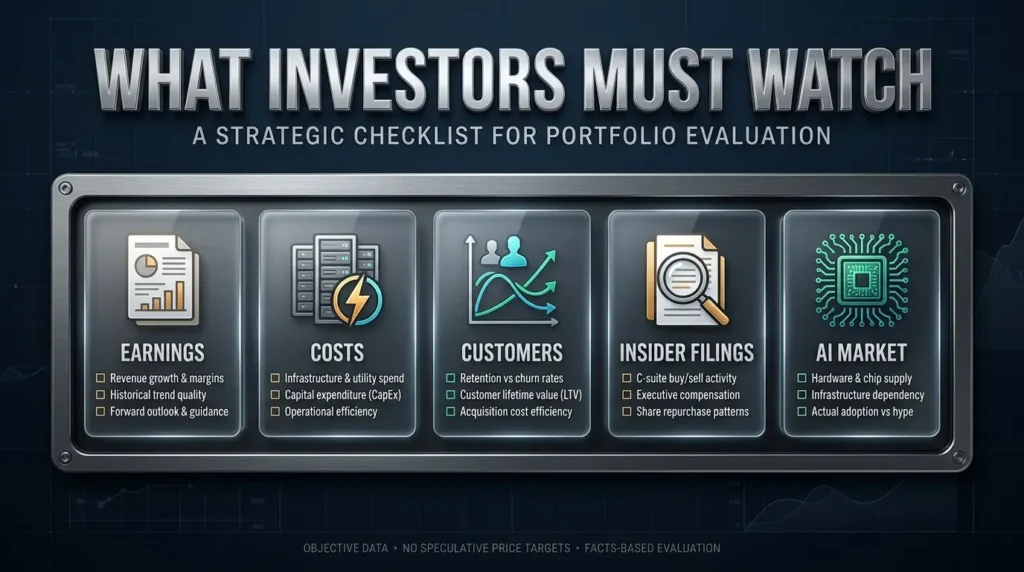
1. Anthropic’s first public earnings report. Investors need updated revenue, profitability, cash flow and forward guidance, not merely projections from the IPO process.
2. Actual computing costs. The scale, timing and flexibility of infrastructure commitments will matter to future financing needs.
3. Customer growth and retention. Enterprise adoption is more meaningful when customers continue paying and expand their usage.
4. Additional insider disclosures. Future Form 4 filings and any applicable lockup expiration conditions may affect perceptions of share supply.
5. The broader AI market. Nvidia, major cloud infrastructure providers, competing model developers and financing conditions all influence the investment narrative.
None of these indicators can guarantee an outcome.
Together, they offer a more useful basis for evaluating the company than treating the first week of price swings as a verdict on the entire AI industry.
Should You Buy the Dip?
That is a decision requiring individual risk assessment, not a prediction from a news article.
A lower share price doesn’t automatically mean a stock is cheap.
The valuation may still assume ambitious growth.
The business may need substantial additional investment.
And new public listings can remain volatile long after their first trading week.
Anyone considering an investment should examine the prospectus, financial results, share structure, liquidity, investment horizon and ability to withstand further losses.
The fact that a famous founder or technology company is involved does not eliminate ordinary investment risk.
Frequently Asked Questions About Anthropic Stock
Is Anthropic publicly traded now?
Yes. Anthropic began trading on the Nasdaq on November 19, 2026, under the ticker symbol ANT.
What was Anthropic’s IPO price?
The final initial public offering price was $83 per share, according to its SEC prospectus.
What is Anthropic stock trading at on November 25?
The latest completed session reviewed here is November 24, when the stock closed at $81.91. Early November 25 market reports showed further declines, but a completed November 25 closing price was not yet available at the reporting cutoff.
Why did Anthropic stock fall below $83?
The decline occurred amid broader AI market weakness and concerns about demanding valuations, infrastructure costs and future profitability. No single publicly verified cause explains every trade.
Did Dario Amodei sell $280 million of Anthropic shares?
Yes. His SEC Form 4 reports a sale of 3,378,378 shares at $83 each, totaling approximately $280.4 million.
Did Daniela Amodei sell the same amount?
Yes. Her filing reports an identical number of shares sold at the same price.
Did the Amodeis sell their shares on the open market after the crash?
The reported transactions were sales to IPO underwriters at the offering price, as explained in the Form 4 footnotes. They should not be described as ordinary post-crash market sales.
Were the Amodei sales illegal?
The documents reviewed do not establish illegal conduct. A reported executive transaction is not automatically unlawful, and the filings identify the IPO underwriting context.
Did Anthropic receive the $560 million from the founders’ sales?
Those transactions involved shareholder sales. Proceeds from existing shareholders selling stock do not automatically become corporate financing.
How much money did Anthropic raise?
The final prospectus lists an approximately $81.34 billion aggregate public offering amount and distinguishes the portion going to Anthropic from proceeds to selling shareholders, before relevant expenses.
What is Anthropic’s stock ticker?
ANT on the Nasdaq.
Is Anthropic profitable?
Its offering documents report significant revenue growth but also operating losses. Investors need to distinguish accounting net losses from ongoing operating performance.
Does Anthropic owe $900 billion in debt?
The approximately $900 billion figure discussed in offering materials concerns multiyear computing and infrastructure commitments, not a straightforward statement that the company has that amount of conventional outstanding debt.
Why does Anthropic’s stock matter to OpenAI?
Anthropic offers a public market reference point for the valuation of frontier AI businesses. Its reception may influence expectations for other potential AI IPOs, but it does not determine OpenAI’s future valuation.
Could Anthropic stock rise again?
Yes, but it could also fall further. The outcome depends on future business performance, financing costs, competition, broader market conditions and the price investors are willing to pay.
Is the fall in Anthropic stock evidence of an AI bubble?
It is evidence that investors are reassessing expectations and valuations. It does not, by itself, prove every AI company is overvalued or that demand for artificial intelligence will disappear.
The Real Question Isn’t Whether Anthropic Can Build Better AI
Anthropic’s first week on Wall Street has been a reminder that technology progress and investment returns don’t move in a straight line.
A company can have remarkable revenue growth, innovative products, enormous customer demand and talented leadership.
It can also be priced too aggressively for the expectations of public market investors.
That is the distinction now confronting Anthropic.
Its record breaking IPO created an extraordinary financial event.
The shares surged when trading began.
Then the excitement faded, and the stock fell below the price paid by initial investors.
At the same time, regulatory filings disclosed approximately $560.81 million in share sales by two senior leaders.
Those sales were significant, but the documents place them within the original underwriting process rather than establishing a secret attempt to escape a falling stock.
The bigger unresolved question concerns what investors should be willing to pay for Anthropic’s future.
Its success will depend on more than increasingly capable Claude models.
It must also demonstrate that extraordinary spending on artificial intelligence can support a durable business, that its competitive position can withstand cheaper alternatives and that growth can eventually deliver value to shareholders.
For now, the stock market is telling Anthropic that promise alone is not enough.
The company’s next earnings reports and financing decisions will help determine whether the recent selloff was an early overreaction or the beginning of a more substantial repricing.
Until then, a new generation of AI investors has learned something important.
The future of artificial intelligence may be enormous.
That doesn’t mean every price paid for it will be justified.
Reporting cutoff: November 25, 2026, before the completion of the US regular trading session. Prices and other developments may have changed after this report.
Editorial methodology: This report uses Anthropic’s final SEC offering documents, disclosed Form 4 transactions, historical stock prices and reporting from Reuters, MarketWatch, Axios and other financial publishers. TrendOutsider has not independently interviewed the executives, obtained private brokerage information or identified evidence of unlawful insider trading.
Financial disclosure: This article is journalism and general financial information, not personalized investment advice. No investment returns are promised.
Visual disclosure: Accompanying images are editorial illustrations, not authentic photographs of private executive transactions, stock exchange events or wrongdoing.
By Sami | TrendOutsider





Leave a Reply