
You finally find the headphones you’ve been hoping to buy.
They’re usually a little more expensive than you’re comfortable spending, but suddenly there’s a Black Friday offer for almost half the price. The website looks professional. The product photos seem genuine. A countdown timer says the deal ends in eleven minutes.
You hesitate.
Then another notification appears: Only two left.
It’s exactly the sort of moment when an exciting bargain can override a nagging feeling that something isn’t quite right.
And in November 2026, that hesitation may be worth paying attention to.
Just days before Black Friday, the Federal Trade Commission issued a fresh warning about fraudulent shopping websites appearing in search results. The agency explained that scammers can buy advertisements that resemble legitimate retailer links, including placements near the top of Google or Bing.
Click the wrong result, and you might be taken to a convincing imitation store that accepts your payment but never sends the product. Worse, you could be handing over information that criminals can use for further fraud.
The scale of the problem is already serious. According to the FTC, people reported losing more than $95 million in 2025 to scams that began when they ordered something after seeing an advertisement on social media.
That figure is not an estimate of total Black Friday fraud, and it does not mean every social shopping advertisement is suspicious. It describes a particular category of reported losses, which is precisely why it deserves attention.
Black Friday 2026 takes place on November 27, with Cyber Monday following on November 30. Millions of shoppers are comparing technology, toys, beauty products, clothing and Christmas presents.
Some will find worthwhile discounts.
Others will encounter fake stores, copied product photos, suspicious delivery texts, counterfeit goods or advertisements that make ordinary prices look extraordinary.
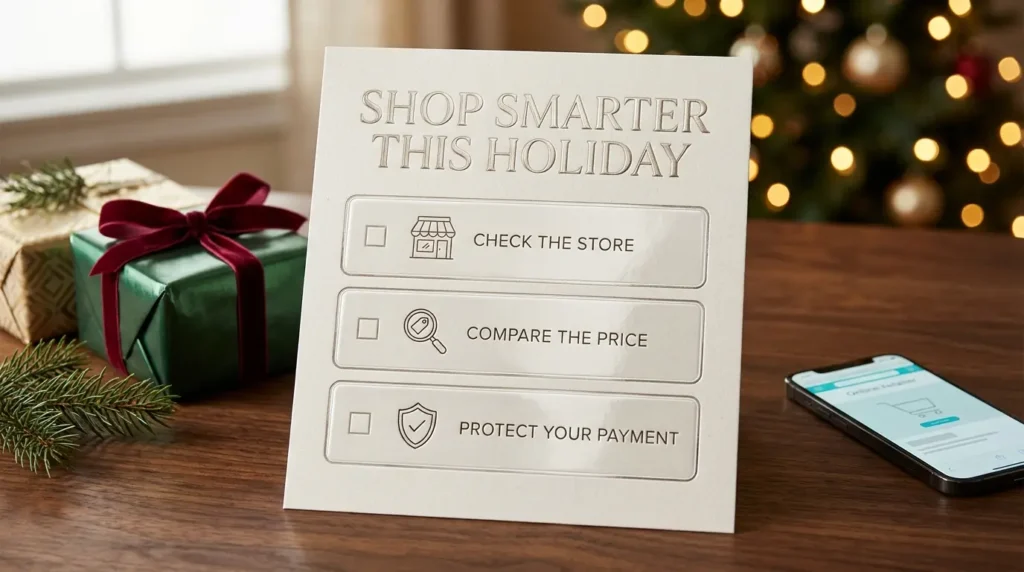
The most useful rule is simple: verify the seller, the exact product and the final payment terms before you buy. A polished website, a sponsored search result or a large discount is not proof that an offer is genuine.
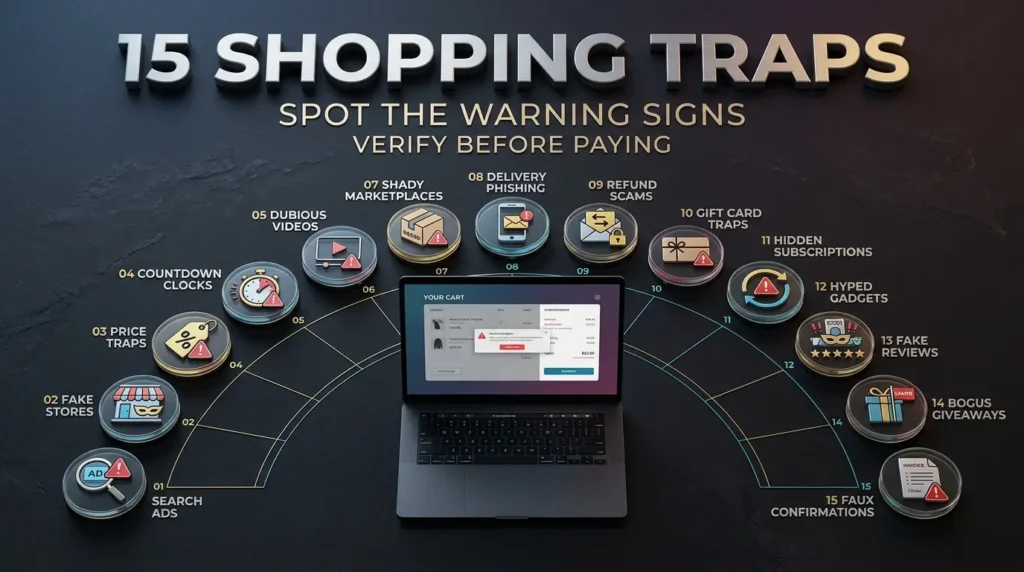
Here are 15 shopping traps worth recognizing, the warning signs that matter and the steps that can protect your money.
Why Black Friday 2026 Is a Perfect Moment for Shopping Scams
Holiday shopping creates an unusually effective combination for fraudsters: people are actively searching for unfamiliar products, discounts are changing quickly and limited stock messages can make delaying a purchase feel risky.
A shopper who would normally research a seller might move faster because Christmas is approaching.
Someone searching for a sold out toy might accept a retailer they’ve never heard of.
A person hoping to save hundreds on a laptop might overlook a strange website address.
Scammers take advantage of those decisions.
What the FTC warned about on November 19
The FTC’s latest holiday shopping search scam alert focuses on an easily overlooked problem.
Fraudulent websites don’t have to wait for you to stumble across them.
Their operators can pay for advertising.
As a result, the first shopping result you see may be sponsored by a dishonest seller rather than the company you intended to visit.
The agency recommends looking beyond advertisements, investigating unfamiliar retailers and entering known store addresses directly into the browser.
Organic search results are not guaranteed to be safe either. The point is that advertising placement isn’t a trust certificate.
What the $95 million figure actually means
In its August 2026 warning about social media advertisements, the FTC reported more than $95 million in consumer reported losses during 2025 from scams that began after purchases prompted by social advertisements.
These were reported losses, not the value of every suspicious ad or every counterfeit purchase.
The FTC also notes that many scams go unreported.
That makes the reported figure significant without needing to exaggerate it.
The lesson for Black Friday isn’t that every sponsored post is dangerous.
It’s that an advertisement, even one appearing on a familiar platform, deserves the same scrutiny as any unfamiliar seller.
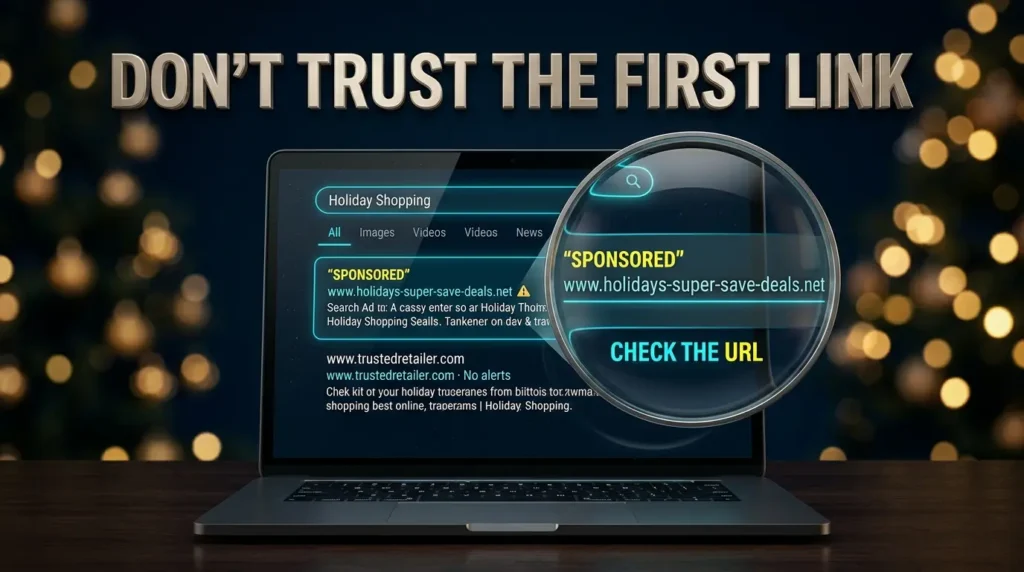
1. Fake Stores Hidden in Sponsored Search Results
You search for a popular gaming console, skincare set or coffee machine.
The first result looks like a familiar retailer.
It has a plausible store name, a promotional headline and a link that seems relevant.
But when you click, the address is slightly different from the real retailer’s website.
Perhaps the domain has an extra word. Maybe the spelling has been altered. Or the address has no obvious connection to the brand being advertised.
This is precisely the scenario behind the FTC’s November 19 warning.
The scam relies on the fact that people often treat the first result as the most trustworthy one.
How to protect yourself: If you’re looking for a retailer you already know, type its website address directly rather than relying on a search advertisement. If the business is unfamiliar, investigate its name alongside terms such as “complaint” and “scam,” and independently check its contact information.
Never assume that paying for a search advertisement means a company has passed a full legitimacy review.
2. Lookalike Websites That Impersonate Popular Brands
A fake retailer doesn’t need an obviously strange design.
It may reproduce a well known company’s logo, familiar colors, product categories and professional photography.
The checkout can look convincing too.
This is what makes brand impersonation dangerous.
You may feel you’re shopping with a major retailer when you’re actually entering details into a completely unrelated site.
The most important thing to inspect is the website’s actual domain name.
Don’t judge it from the logo or page title alone.
Be cautious with unexpected extensions, unnecessary extra words and links that differ from the retailer’s official address.
And remember that an HTTPS padlock only shows that a connection is encrypted. As the FTC’s online shopping guidance explains, encryption does not prove that the business is legitimate.
How to protect yourself: Visit the brand through its known official website or application. Search for the offer from there. If you cannot find the advertised promotion on the official store, don’t assume the third party listing is authorized.
3. Discounts That Look Bigger Than the Real Savings
Not every disappointing discount is a scam.
A legitimate retailer may advertise a product as reduced from a stated reference price while the same item has recently sold for much less.
That can make an ordinary offer appear exceptional.
Consider this hypothetical example.
| Price information | Amount |
|---|---|
| Advertised reference price | $200 |
| Black Friday sale price | $140 |
| Recent price at another legitimate seller | $150 |
| Practical saving against that recent price | $10 |
The advertised reduction is 30 percent.
But compared with the recent $150 price, the saving is just $10.
Those numbers describe different comparisons.
Some misleading reference prices may raise advertising law questions, but an unimpressive discount is not automatically criminal fraud.
How to protect yourself: Check the exact model number, recent prices and total checkout cost. Price history tools can be useful when they cover the product and retailer accurately.
TrendOutsider’s Black Friday vs Cyber Monday 2026 buying guide explains which product categories are expected to offer stronger discounts on each day, while emphasizing that category forecasts are not promises about individual prices.
The best deal is the one that makes sense for your actual purchase, not the one with the biggest percentage in red lettering.
4. Countdown Timers and Artificial Scarcity
A timer can make a routine shopping decision feel like an emergency.
You see eight minutes remaining.
Then four.
Then a message says several other shoppers are viewing the same item.
Real retailers sometimes run genuinely limited promotions, and popular products can sell out.
But a countdown or scarcity claim becomes misleading if it falsely suggests that an offer will disappear when it won’t.
Some suspicious websites rely heavily on these pressure tactics.
How to protect yourself: Decide your budget before shopping and avoid allowing a timer to override basic checks. If a site won’t give you enough time to investigate the seller, that is a good reason to leave.
A missed discount is usually less costly than a fraudulent payment.
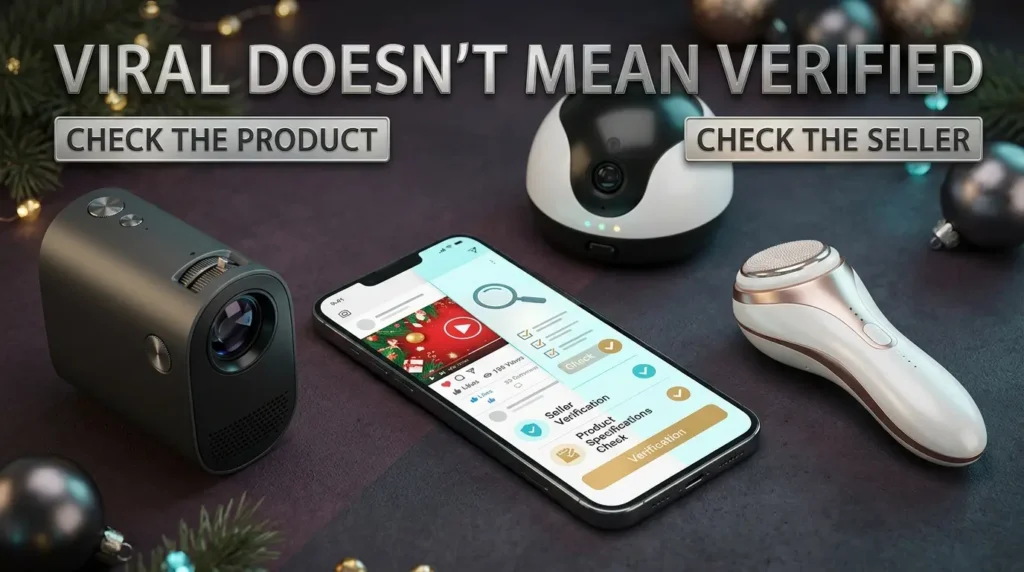
5. Viral Social Media Gadget Ads That Hide the Real Seller
You may have seen advertisements for portable projectors, robotic cleaners, unusual kitchen gadgets or beauty tools that appear to solve a problem in seconds.
The demonstration is satisfying.
The price looks surprisingly low.
And the video has accumulated thousands of likes.
None of that independently establishes that the seller is trustworthy.
The FTC warns that scammers can buy social advertisements and impersonate legitimate businesses.
An impressive demonstration may also fail to show limitations that matter in everyday use.
How to protect yourself: Identify the actual product model and seller. Search for independent reviews and verify the manufacturer’s official specifications where available.
For a Christmas gift, popularity should be a starting point, not the deciding factor. TrendOutsider’s Google Trending Christmas Gifts 2026 guide explores gifts attracting search interest, while explaining why growing curiosity doesn’t establish product quality or suitability.
6. Counterfeit Products Sold as Genuine Discounts
Sometimes a shopper receives a package, but it isn’t what was advertised.
The headphones resemble a popular model. The beauty product carries familiar packaging. The fashion accessory looks close to the designer version.
But the item may be counterfeit, unauthorized or materially different from the listing.
Counterfeiting also creates concerns beyond the purchase price, especially when products involve electrical safety, batteries, cosmetics or other regulated materials.
A very low price is a warning sign, not proof.
How to protect yourself: Check the seller’s identity, product warranty, model information and authorized distribution details where applicable. Be cautious about products that use official brand images without explaining who is actually selling them.
If authenticity matters, buying directly from the manufacturer or a confirmed authorized retailer may be worth the difference in price.
7. Marketplace Listings That Confuse Product, Seller and Condition
A familiar marketplace can host listings from different sellers.
That means the platform name alone doesn’t tell you everything about the transaction.
Two listings may look almost identical but differ in product condition, warranty, shipping location or included accessories.
One might be new.
Another could be refurbished, used or missing important components.
This is not automatically fraud. It becomes a problem when important details are misrepresented or hidden.
How to protect yourself: Read the complete listing, including the seller’s name, condition, product model, delivery information, return policy and warranty.
For expensive electronics, confirm storage, memory, product generation and regional compatibility before paying.
A laptop with a lower specification isn’t automatically a fake laptop, but it may be the wrong bargain.
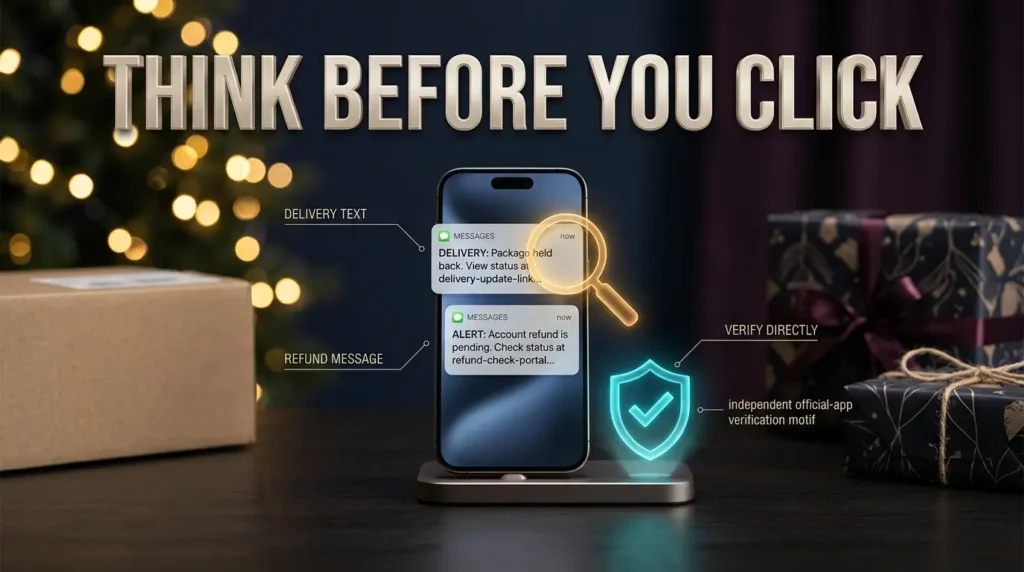
8. Fake Delivery Texts Sent During the Holiday Rush
Imagine ordering several Christmas presents over the weekend.
A day later, you receive a text saying your package could not be delivered because the address is incomplete.
The message contains a link to update your information.
This tactic works because the timing feels plausible.
The FTC has repeatedly warned about fake shipping and delivery notifications designed to steal personal information or direct people to malicious websites.
These messages may mention a missed delivery, an address error or a small fee.
The goal is to get you to click before checking whether the message belongs to a real shipment.
How to protect yourself: Open your retailer account or the delivery company’s official website independently. Check your genuine tracking number there. Don’t use a suspicious message’s link or phone number to verify itself.
9. Fake Refund and Customer Support Messages
After placing an order, a customer receives an unexpected email.
It says there’s a payment problem and offers a refund, but first the shopper must verify their account.
Another message claims to be from customer support and asks for a password, verification code or payment details.
These are classic impersonation warning signs.
A legitimate refund process should not require you to give an unsolicited caller access to your account or reveal a one time security code.
How to protect yourself: Contact the retailer using the official support channel listed on its verified website or order confirmation. Never disclose passwords or security codes to someone who contacted you unexpectedly.
If you believe account details have been exposed, change the password through the official website and review the account’s security settings.
10. Sellers Who Demand Gift Cards, Crypto or Wire Transfers
There is a major difference between a merchant offering several payment methods and an unfamiliar seller insisting on a difficult to reverse payment.
The FTC advises consumers to be especially cautious when online sellers demand gift cards, cryptocurrency, wire transfers or certain payment app transfers.
Scammers favor methods that can make recovery difficult.
For a normal online retail purchase, a seller insisting that you buy gift cards and send the codes should be treated as a serious warning.
How to protect yourself: Use a credit card where possible and suitable. The FTC explains that credit card purchases generally provide stronger dispute protections in the United States.
A credit card is not a guarantee against all losses, and protection differs by country and transaction, but it can offer meaningful recourse when goods never arrive or billing is incorrect.
Never send a gift card code to someone claiming it is required to release or confirm a retail order.
11. Hidden Subscription Charges and Unexpected Checkout Additions
Sometimes the issue isn’t a fake store.
It’s a checkout process that makes a purchase more expensive than expected.
A subscription may be added to a product order. A free trial may convert into a recurring payment. Shipping, handling or optional services may not be obvious until late in the process.
These practices are not all necessarily scams. Some are lawful when terms are clearly disclosed and consumers properly consent.
But unexpected charges are a reason to review the transaction carefully.
How to protect yourself: Read the final order summary before confirming payment. Check for recurring charges, preselected optional services, return shipping fees and membership conditions.
The total amount you authorize should match the purchase you intend to make.
12. Product Listings That Promise More Than the Gadget Can Do
Black Friday is full of technology advertising.
A small handheld vacuum promises powerful cleaning.
A compact projector suggests a theater sized experience.
A beauty device appears to produce dramatic results after one use.
Some advertisements exaggerate performance.
Others omit practical limitations such as battery life, brightness, noise, maintenance or compatibility.
An unrealistic claim isn’t automatically proof of a criminal scam. It is a reason to demand better evidence.
How to protect yourself: Look for manufacturer specifications, independent testing and clear return conditions. Compare the product’s actual capabilities with the task you want it to perform.
Avoid buying technology solely because an advertisement demonstrates an impressive result without explaining how it was achieved.
13. Fake Reviews and Manufactured Social Proof
A five star rating can make an unfamiliar listing appear safe.
But reviews are only as useful as their authenticity and relevance.
Suspicious patterns include repetitive wording, ratings that don’t discuss the actual product, sudden bursts of overly enthusiastic comments and testimonials that appear unrelated to the model being sold.
One or two unusual reviews don’t establish manipulation.
The concern grows when the overall evidence looks inconsistent.
How to protect yourself: Read a mix of positive and critical reviews, prioritizing specific descriptions of performance, durability and customer service.
Compare information across independent sources.
Don’t assume a high average rating replaces verifying the seller.
14. Fake Prize, Gift Card and Giveaway Offers
Holiday shopping attracts promotional giveaways.
Some are genuine.
Others are designed to capture personal information, obtain payments or draw consumers into suspicious sites.
You might receive a message saying you’ve won a retailer gift card, exclusive Black Friday prize or limited promotional item.
The catch may be a supposed verification payment, a form requesting financial details or instructions to share the offer widely.
How to protect yourself: Look for the giveaway through the company’s official channels. Do not pay a fee to claim an unexpected prize or share sensitive information merely because a message uses a familiar brand.
A surprise gift card announcement isn’t evidence that you’re dealing with the real retailer.
15. Fake Order Confirmations Designed to Make You Panic
Not every fraud attempt begins with an attractive bargain.
Some begin with a charge you never made.
A message says your account was used to buy an expensive smartphone or gaming console.
It tells you to call immediately if you want to cancel.
That urgency is the trap.
The phone number may connect you to an impostor who asks for financial details, remote access to your device or an immediate transfer.
How to protect yourself: Check your retailer account and payment records independently. If a charge appears on your actual card statement, contact your card issuer using the official number on the card or in its verified application.
Do not call a number solely because it appears in a suspicious order confirmation.
Scam, Misleading Deal or Simply a Bad Bargain? Know the Difference
It’s tempting to describe every disappointing online purchase as a scam.
That isn’t always accurate.
A purchase can be legitimate but poor value. An advertisement can be misleading without being part of a fake retail operation. A fraudulent seller may intentionally take money with no intention of supplying the promised goods.
Those situations call for different responses.
| Situation | What it may indicate | What you should do |
|---|---|---|
| A fake store takes payment and disappears | Possible fraud | Contact payment provider and report the site |
| A product’s reference price is questionable | Potentially misleading advertising | Compare price history and retain screenshots |
| A real retailer sells a lower specification model | Legitimate offer unless materially misrepresented | Check exact model and purchase terms |
| An unfamiliar seller has no verifiable details | Elevated risk, not automatic proof of fraud | Investigate before paying |
| A real order is delayed | Delivery or contractual problem | Contact seller and review dispute rights |
| A product is clearly counterfeit | Possible counterfeit sale and consumer rights issue | Document the listing and contact seller or payment provider |
| A gadget performs poorly despite realistic claims | Dissatisfaction or product quality issue | Review return and warranty options |
This distinction matters because sound consumer journalism should help readers identify evidence, not simply attach a criminal label to every retailer they dislike.
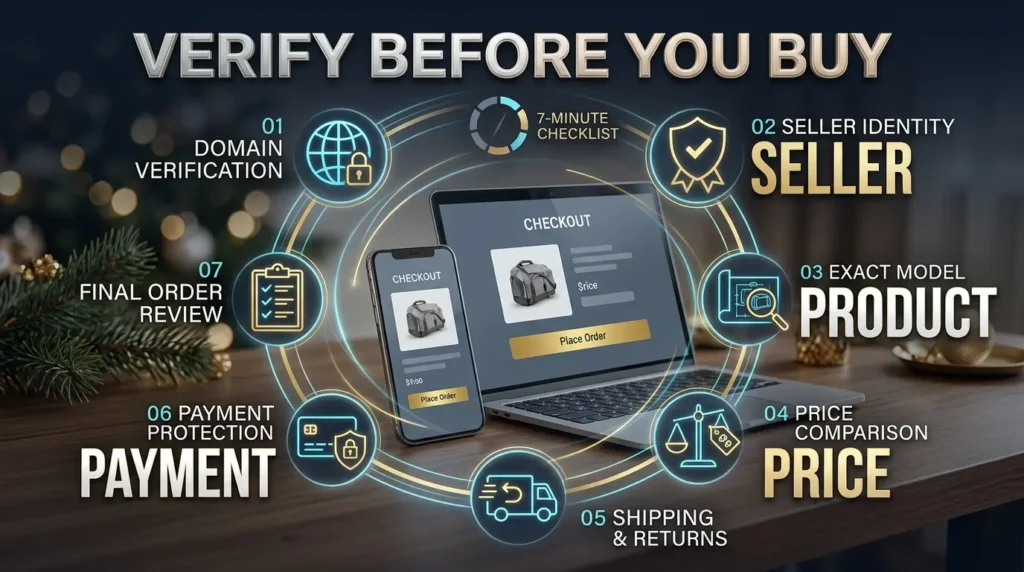
The Seven Minute Check Before You Pay
You don’t need to spend hours researching a modest purchase.
For expensive items, unfamiliar stores or offers that seem unusually attractive, a short verification routine can prevent serious problems.
First minute: Check the address
Look at the full website domain.
If you intended to visit a known retailer, confirm that you’re on its actual site.
Second minute: Check the seller
Find the business name and contact information.
For marketplace purchases, distinguish the platform from the individual seller.
Third minute: Check the exact product
Confirm the model number, specification, condition and included accessories.
Fourth minute: Check the price
Compare the offer with other legitimate sellers and recent historical prices where available.
Fifth minute: Check shipping and returns
Read the delivery expectations, return deadline, shipping charges and refund conditions.
Sixth minute: Check payment methods
Be especially cautious if the seller insists on gift cards, wire transfers or cryptocurrency.
Seventh minute: Recheck the final order
Confirm the total amount, delivery address, recurring charges and retailer name before authorizing payment.
This routine isn’t a guarantee that a seller is legitimate.
It gives you a practical way to catch several common warning signs before money leaves your account.
For readers choosing gifts rather than simply hunting the largest discount, our 35 screen free Christmas gifts for all ages guide offers a more thoughtful approach to shopping for children, teenagers and adults.
How to Check Whether a Black Friday Discount Is Really Worth It
Once you’re satisfied that a store appears legitimate, there’s still another question.
Is the offer actually good?
Start with a short wishlist rather than browsing hundreds of products.
Know the exact item you want, your budget and the price you would consider fair.
If you’re buying technology, compare actual specifications.
If you’re buying clothing, confirm sizing and return options.
If you’re buying appliances, include delivery and installation costs.
A low initial price doesn’t always mean a low final cost.
TrendOutsider’s guide to using AI and price trackers for Black Friday 2026 explains how to compare products, examine historical prices and use AI research without treating its recommendations as verified live offers.
A useful approach is to compare three figures: the advertised reference price, the current sale price and a reliable recent price from a legitimate seller.
Don’t assume a crossed out number represents the amount you would otherwise have paid.
And don’t let a dramatic discount persuade you to purchase something you didn’t want in the first place.
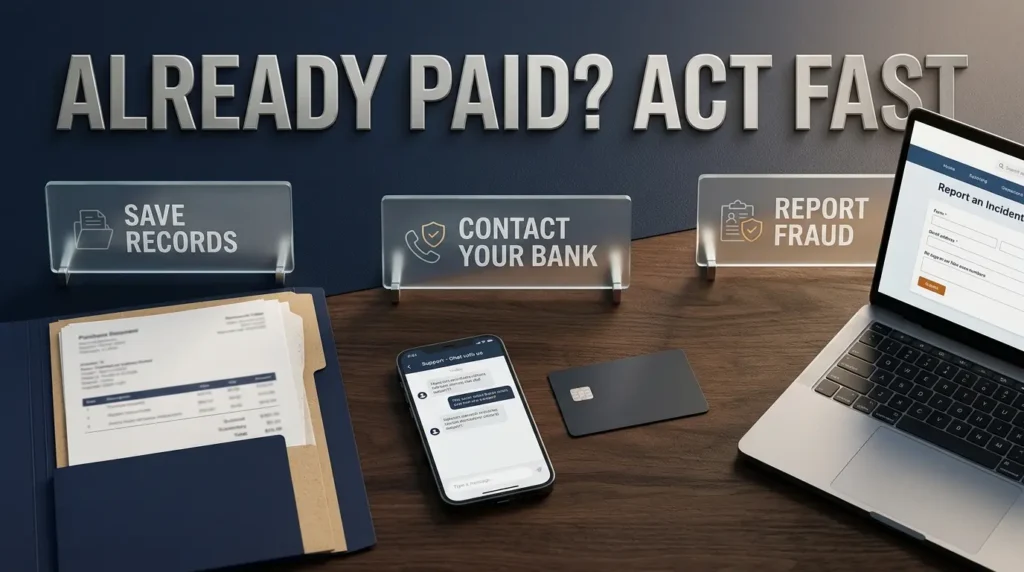
What to Do if You Already Paid a Suspicious Seller
Discovering that a purchase may have been fraudulent can be upsetting, particularly when the order involved an expensive gift.
The most important thing is to act promptly and preserve evidence.
Step 1: Save the transaction details
Keep the store URL, product listing, screenshots, payment confirmation, emails, messages and any contact details supplied by the seller.
Avoid deleting suspicious communications before recording what happened.
Step 2: Contact your payment provider
If you paid by credit card, contact the card issuer immediately and ask what dispute or fraud process applies.
For eligible US credit card billing errors, the Consumer Financial Protection Bureau explains that a written billing error notice generally must reach the issuer within 60 days after the first statement showing the disputed charge was sent.
Other claim types may follow different procedures.
Do not assume a phone call alone always preserves every legal right.
If you paid with a debit card or payment application, contact that provider promptly and ask about available protections.
Step 3: Secure compromised accounts
If you entered a password into a suspicious website, change it through the real service.
Change reused passwords elsewhere and enable multifactor authentication where available.
If you supplied payment card details, ask your bank whether the card needs to be blocked or replaced.
Step 4: Report the incident
US consumers can report suspected fraud through ReportFraud.ftc.gov.
Where applicable, cybercrime can also be reported to relevant law enforcement agencies.
A report may not automatically recover money, but it can help authorities identify patterns.
Step 5: Follow up on the actual order
If the issue is simply non-delivery from a legitimate retailer, contact the seller first and keep the correspondence.
The FTC’s guidance for orders that never arrive explains how payment disputes may become relevant when the seller fails to resolve the problem.
Step 6: Beware of recovery scammers
People who have already lost money may be targeted again by impostors promising guaranteed refunds.
Be suspicious of unsolicited requests for additional payment to recover an earlier loss.
A genuine refund process should be verified through your card issuer, bank, retailer or relevant official agency.
The Safer Way to Shop Through Cyber Monday
A good holiday shopping plan should reduce both fraud risk and impulsive spending.
Before Black Friday, identify the products you actually want and note the maximum amount you’re willing to pay.
When an offer appears, compare the exact model and verify the seller.
Use trustworthy payment methods, read return conditions and retain records.
Be especially careful with products promoted through unfamiliar advertisements or messages that demand immediate action.
Cyber Monday brings another round of online offers, but the same rules apply.
A site doesn’t become trustworthy because its promotion is labeled Cyber Monday.
And a product doesn’t become valuable because the checkout page claims it is almost sold out.
If you’re shopping for holiday presents, allow enough time for delivery and consider whether a simpler gift from a familiar seller might be the better choice.
A little less urgency can make the whole experience easier.
Frequently Asked Questions
What are the most common Black Friday scams in 2026?
Common risks include fake shopping sites, sponsored search advertisements leading to fraudulent sellers, social media shopping scams, counterfeit products, phishing messages and sellers demanding difficult to reverse payments. These are documented fraud methods, not a ranked list of confirmed 2026 incident volumes.
Can a sponsored Google result be a scam?
Yes. The FTC warned on November 19, 2026, that scammers can purchase search advertisements and make fraudulent stores visible alongside legitimate results. Paid placement does not establish trustworthiness.
Does HTTPS mean an online store is legitimate?
No. HTTPS indicates an encrypted connection. Scammers can use encrypted websites too. Verify the business and seller separately.
Are Black Friday discounts fake?
Not necessarily. Many discounts are genuine, while some reference prices may make savings look larger than they are. Compare recent prices and the full purchase cost.
Is it safer to pay by credit card?
For many US online retail purchases, credit cards provide useful dispute protections. The FTC recommends paying by credit card where possible. Rights differ by jurisdiction and transaction.
Can I get my money back after an online shopping scam?
Sometimes, depending on the payment method, timing and circumstances. Contact the payment provider immediately. Refunds or chargebacks are not guaranteed.
What should I do if a Black Friday package never arrives?
Contact the seller and retain your records. If the problem remains unresolved, ask your card issuer or payment provider about dispute options. Different payment methods have different protections.
Are shopping ads on TikTok, Instagram or Facebook verified?
The presence of an advertisement on a social platform does not guarantee the seller is legitimate. The FTC has warned that scammers can use paid social advertising to direct shoppers toward fraudulent purchases.
How can I check whether a website is fake?
Inspect the domain, verify the seller independently, read returns and contact information, check outside reviews and examine the payment options. No single test proves legitimacy.
Should I trust a countdown timer?
A timer may reflect a real limited promotion, but it can also be used to create pressure. Verify the offer before paying.
Is Cyber Monday safer than Black Friday?
Not inherently. Both involve online shopping and similar fraud risks. The seller, product and payment process matter more than the date.
Can AI generated ads make scams harder to spot?
Convincing artificial imagery or writing can make a suspicious advertisement appear professional. Treat the ad as a claim requiring verification rather than evidence of seller legitimacy.
Where can I report a shopping scam in the United States?
Use the FTC’s official reporting service at ReportFraud.ftc.gov. For payment issues, contact your bank or card issuer directly.
What is the FTC’s latest holiday shopping warning?
On November 19, 2026, the FTC specifically warned that fraudulent stores can appear through paid search advertisements and recommended checking sellers and navigating directly to known retailer websites.
The Best Black Friday Deal Is One You Can Trust
The internet has made holiday shopping wonderfully convenient.
You can compare products, find unusual gifts and order something from your sofa that once required an afternoon in crowded stores.
But the same convenience gives dishonest sellers opportunities to reach people quickly.
A good scam doesn’t always look like a scam.
It might look like a familiar retailer, an exciting new gadget or a discount you’ve been waiting months to find.
That’s why the most valuable thing you can do before checking out is slow the process down just enough to verify the facts.
Look at the website address.
Check who is selling the product.
Compare the actual price.
Read the return conditions.
And use a payment method that offers appropriate protection.
Black Friday is supposed to help you spend less on things you genuinely want.
It shouldn’t leave you trying to recover money from a seller that never existed.
Reporting date: November 24, 2026.
Editorial methodology: This guide draws on the FTC’s November 2026 search scam warning, its 2026 analysis of 2025 reported social shopping losses, established FTC consumer guidance and Consumer Financial Protection Bureau dispute guidance. The illustrative examples are not allegations against specific retailers.
Consumer protection notice: Payment dispute rights depend on the transaction, payment method and jurisdiction. This article is general information rather than individualized legal or financial advice.
Visual disclosure: Accompanying illustrations depict fictional stores and consumer scenarios. They are not authentic images of identified fraudulent businesses or victims.







Leave a Reply