
Imagine you’re looking for a new laptop.
You have a budget, a few important features in mind and no interest in opening twenty browser tabs to work out which model is actually worth buying.
So you ask ChatGPT.
A few moments later, you have a shortlist, an explanation of the differences between processors, a comparison of battery life and suggestions for where to buy.
Then you try Google Gemini. It shows product listings and helps you explore alternatives. Amazon’s Alexa for Shopping offers another perspective, including price history for eligible products.
Suddenly, the problem isn’t finding a shopping assistant.
It’s knowing which one to trust.
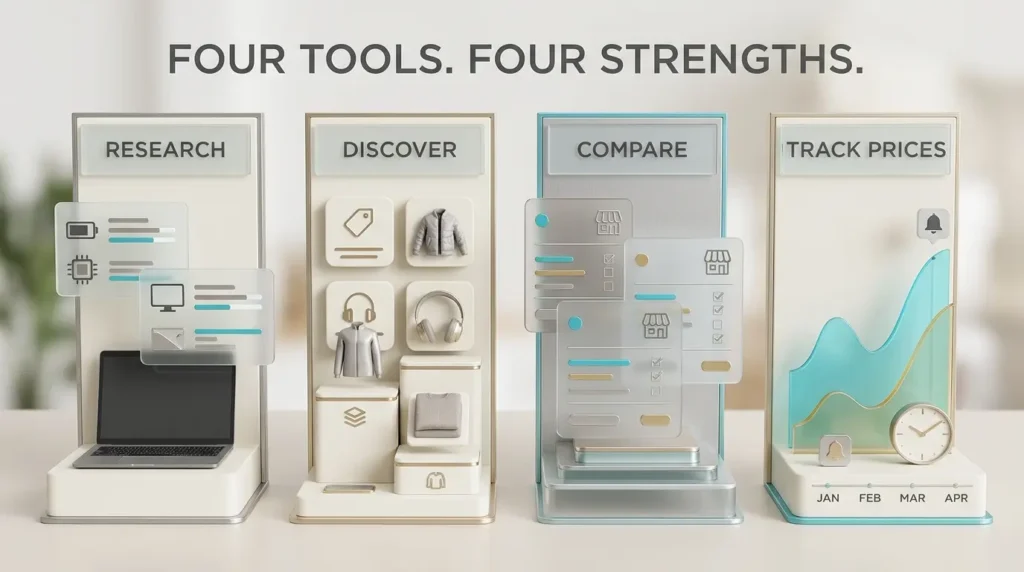
The best AI shopping assistants in 2026 include ChatGPT for detailed product research, Google Gemini and Google Shopping for product discovery, and Amazon Alexa for Shopping for price history and shopping within Amazon’s ecosystem.
But there is no universal winner.
The right tool depends on what you’re buying, which retailers it can access, where you live and whether you want recommendations, price tracking or help completing an order.
AI shopping has advanced rapidly this year. Some assistants now support product comparisons, visual searches, personalized recommendations and increasingly automated purchases.
That doesn’t mean they always find the cheapest price.
Here’s what the leading tools actually offer, where they work and how to use them without being misled by convincing but incomplete recommendations.
The Best AI Shopping Assistants in 2026 at a Glance
If you’re deciding which assistant deserves your attention, start with the task rather than the brand.
| Shopping assistant | Best reason to use it | Main strength | Important limitation |
|---|---|---|---|
| ChatGPT | Researching an unfamiliar purchase | Detailed comparisons based on your needs | Prices and availability may be incomplete or outdated |
| Google Gemini | Discovering products through conversation | Shopping listings and Google Shopping Graph information | Dedicated shopping features vary significantly by country |
| Google Shopping and AI Mode | Comparing retailers and exploring products | Product listings, prices, shopping information and supported tracking | Merchant coverage and advanced features vary by region |
| Amazon Alexa for Shopping | Buying and researching products through Amazon | Product comparisons, shopping history and eligible price history | Price history and advanced purchasing capabilities are not identical worldwide |
The recommendations above are based on documented capabilities and suitability for different tasks. They are not the results of a controlled TrendOutsider product test.
Google Gemini and Google Shopping appear separately because their consumer experiences and feature availability are not identical, even though Google’s AI and Shopping Graph connect them.
Amazon deserves a place in this comparison, too.
In May 2026, Amazon brought its Rufus shopping technology and Alexa capabilities together under the name Alexa for Shopping. That makes older lists referring only to Rufus potentially confusing.
Before choosing anything, remember one distinction.
A product recommendation is not a verified bargain. And an assistant that can organize your research cannot necessarily complete a purchase in your country.
Why AI Shopping Has Become So Important in 2026
A conventional shopping search works well when you already know what you want.
If you need an exact charger model, entering its name into a search engine can be enough.
Shopping becomes harder when your requirements are less precise.
Perhaps you want comfortable headphones for long flights, a coffee machine that’s easy to clean or a Christmas present for someone whose interests you know better than their wishlist.
Those are decisions involving tradeoffs.
And explaining tradeoffs is where conversational AI can be useful.
Instead of searching for isolated keywords, you can describe your situation in ordinary language.
An assistant can ask what matters most, narrow the choices and explain why one product may suit you better than another.
This shift is more than a technology company marketing story.
Research published by PYMNTS Intelligence in 2026 found that 30% of surveyed consumers had used ChatGPT while researching their most recent purchase, compared with 2% in its 2024 comparison data. Gemini appeared in 19% of the 2026 responses.
Those figures describe the survey population and its methodology, not the percentage of every shopper worldwide.
A separate McKinsey consumer study covering eleven markets also found that people use AI shopping tools for different parts of the buying journey.
Research and recommendations are one thing. Actually handing over payment is another.
Retailer assistants may have an advantage at checkout because they are already connected to product inventory, payment systems and delivery services.
That helps explain why the most useful AI assistant for researching a purchase may not be the best tool for completing it.
1. ChatGPT: Best for Detailed Product Research
ChatGPT is particularly useful when you need to understand a product category before choosing a specific item.
Let’s say you’re shopping for a laptop for university.
You don’t necessarily need the most powerful machine available. You need something reliable, portable and suitable for the applications you’ll actually use.
A useful request might be:
I need a lightweight laptop for university in Australia. My budget is AUD 1,400. I care about battery life, portability and a comfortable keyboard more than gaming performance. Compare suitable options, explain their disadvantages and tell me which specifications I should verify before purchasing.
That gives the assistant a meaningful starting point.
It can help distinguish requirements from features that sound impressive but may be unnecessary.
What ChatGPT Shopping Research Can Do
OpenAI introduced shopping research in ChatGPT in November 2025 and has continued developing its shopping capabilities.
The dedicated experience is designed for decisions that involve several requirements.
It can ask follow-up questions about your budget, preferences and priorities, then investigate relevant products and organize comparisons.
You can refine the results when the first recommendations don’t quite fit.
This makes the tool useful for categories such as electronics, household appliances, home furnishings, beauty products and outdoor equipment.
ChatGPT can also display product listings, merchant options and, for eligible clothing or accessories, visual try-on capabilities.
According to OpenAI’s shopping documentation, those product listings may draw on merchant data and third party providers.
That is useful, but it introduces a limitation.
The first price an AI assistant displays may not be the lowest available price.
Product data can lag behind a retailer’s latest changes. A particular color, storage configuration or regional model may also be unavailable by the time you reach checkout.
OpenAI explicitly recommends checking the final price, stock, shipping and returns with the merchant.
What About ChatGPT Wallet?
On November 13, 2026, OpenAI announced ChatGPT Wallet, a payment feature for eligible users of its dots agent service.
It allows supported agents to help complete purchases after the user reviews and authorizes the transaction.
But this is not a worldwide payment feature available to every ChatGPT account.
The initial rollout is restricted to eligible adult ChatGPT Pro users in the United States who meet the card and billing requirements.
Our separate guide explains how ChatGPT Wallet works, who can use it and what happens before payment.
For most readers, the distinction is straightforward.
You can use ChatGPT to investigate products without assuming that your account can buy something automatically.
When ChatGPT Makes the Most Sense
Choose ChatGPT when the difficult part of shopping is understanding what you need.
It is a useful starting point for comparing laptop specifications, exploring a new appliance category or narrowing a long gift wishlist.
Just make sure the final decision rests on actual product specifications and retailer information, not the confidence of the AI response.
2. Google Gemini: Best for Conversational Product Discovery
Gemini takes a slightly different approach to shopping.
Google connects its AI experiences with information from the Shopping Graph, which contains product listings and merchant data.
That makes Gemini useful when you’re exploring what to buy rather than simply asking a factual question about a product you already know.
Imagine you’re looking for an outfit for a winter wedding.
You could describe the occasion, color preferences, budget and climate, then ask Gemini to suggest suitable options.
For a more technical purchase, you could request a comparison between several headphones or ask which features matter most when selecting a camera.
Google’s Gemini shopping documentation describes product discovery, comparisons and purchasing assistance.
But there is a detail international shoppers should not overlook.
Gemini Shopping Is Not Available Everywhere
Google’s dedicated Gemini shopping feature currently lists support for countries including the United States, Australia, Canada, India, Japan and several markets in Asia and Latin America.
The United Kingdom, Germany and France are not included in that specific supported-country list.
That does not mean people in those countries cannot use Gemini for ordinary conversational questions.
It means they should not assume the dedicated shopping listings and merchant features will appear in their accounts.
Google also requires a personal account, age eligibility and relevant history settings for this shopping experience.
This distinction becomes important when a website claims that a particular assistant is the best shopping tool for everyone.
A feature that works beautifully in the United States may not be offered to a reader in London, Berlin or Paris.
Can Gemini Actually Buy Products?
Google has also expanded its agentic technology, including systems that can work through certain supported tasks.
On November 17, Google announced broader access to Gemini Tasks and additional capabilities involving shopping and payments.
However, its new task features, payment capabilities and regional eligibility are not the same thing as the general Gemini shopping experience.
TrendOutsider has already examined Gemini Tasks, its free rollout and country restrictions.
If you want Gemini to help complete a transaction, check the exact feature, country, account requirements and merchant support before assuming checkout is possible.
The safest approach is to keep product discovery and purchase authorization clearly separate.

3. Google Shopping and AI Mode: Best for Comparing Retailers
Google Shopping remains valuable even when you do not want a long conversation with an AI assistant.
Its main advantage is helping you move between product discovery and retailer information.
You might already know the exact headphones you want.
In that case, your problem isn’t choosing the right model. It’s finding a trustworthy seller offering a competitive price.
Google Shopping can help identify available merchant listings.
AI Mode adds conversational research capabilities, allowing shoppers to describe their requirements more naturally.
Google has also expanded price tracking and shopping automation.
What Is Google’s Universal Cart?
In October 2026, Google launched its Universal Cart in the United States.
The idea is to help shoppers organize products from multiple retailers, track potential savings and manage parts of the buying process in one place.
It is part of Google’s broader investment in what the industry calls agentic commerce.
That phrase sounds complicated, but the basic idea is simple.
Instead of merely displaying products, software can help carry out steps in the shopping process.
Those steps might involve tracking a price, organizing a cart or preparing a supported checkout.
Google has also described purchasing features that require appropriate eligibility and user confirmation.
Not every merchant participates, and a US launch should not be mistaken for worldwide availability.
Is Google Shopping Better Than ChatGPT for Finding Deals?
It depends on the question.
If you need help deciding between three laptops with different processors, ChatGPT’s guided research may be useful.
If you already know the exact laptop and want to compare merchants, Google’s shopping surfaces may be a better place to investigate prices.
Neither should be treated as an infallible price checker.
A retailer may change its stock, delivery conditions or promotional price after a result is generated.
A lower listed price may also become more expensive once shipping and taxes are included.
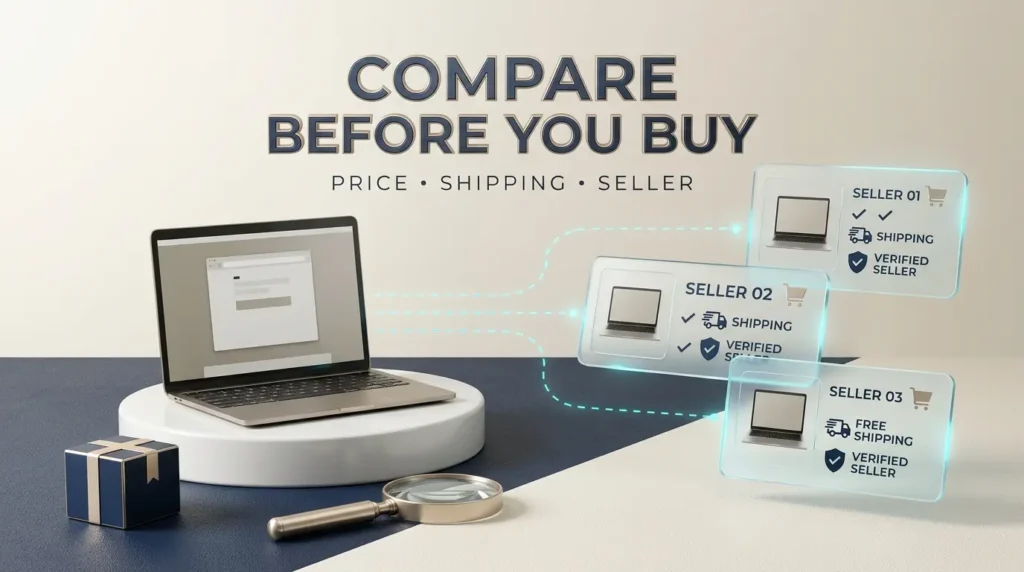
Use the comparison to identify promising options, then confirm the actual purchase terms directly.
4. Amazon Alexa for Shopping: Best for Amazon Price History and Repeat Purchases
Amazon’s shopping assistant deserves more attention than many general AI comparison articles give it.
In May 2026, Amazon introduced Alexa for Shopping, combining capabilities associated with Rufus and Alexa+.
By November, the company had expanded the assistant’s documented international availability.
It can answer product questions, compare listings and help with shopping tasks through the Amazon Shopping app and website.
For people who already shop on Amazon frequently, that can be especially convenient.
The Feature That Matters Most: Price History
One of Alexa for Shopping’s most useful capabilities is access to historical Amazon pricing for eligible products.
Amazon says shoppers can view up to 365 days of price history on supported listings.
That gives you information a general recommendation alone cannot provide.
Suppose an item is advertised as a major Black Friday bargain.
Before purchasing, you can check whether it recently sold for a similar price.
You might discover that the apparent discount is genuinely unusual.
Or you might discover that the product has been close to that price several times during the year.
That makes historical pricing particularly valuable during major promotional events.
Amazon’s official price history guide explains where the information appears and how shoppers can ask questions about it.
There is an important geographic distinction.
Amazon lists Alexa for Shopping’s full experience across 13 countries, including the US, UK, Germany, France and Australia.
However, its price history documentation lists nine supported countries and does not currently include Australia.
So an Australian reader should not assume every Alexa shopping feature shown in an American demonstration will work identically.
Can Alexa Shop Outside Amazon?
Amazon has also described functionality for exploring products across other retailers and, in eligible situations, helping complete purchases.
The specifics depend on participating merchants, country and feature availability.
Alexa for Shopping’s most obvious advantage remains its connection to Amazon’s product and account ecosystem.
That makes it particularly useful for repeat purchases, Amazon product comparisons and investigating whether an Amazon discount is unusual.
It does not mean Amazon always has the lowest price.

Which AI Shopping Assistants Work in the US, UK, Europe and Australia?
This is where the comparison becomes much more practical.
A shopping assistant’s general availability is not the same as the availability of every individual shopping feature.
Here is what the providers currently document.
| Market | ChatGPT shopping research | Dedicated Gemini shopping | Alexa for Shopping |
|---|---|---|---|
| United States | Supported, subject to feature eligibility | Listed as supported | Full experience listed |
| United Kingdom | ChatGPT available; feature eligibility applies | Not listed for dedicated Gemini shopping | Full experience listed |
| Germany | ChatGPT available; feature eligibility applies | Not listed for dedicated Gemini shopping | Full experience listed |
| France | ChatGPT available; feature eligibility applies | Not listed for dedicated Gemini shopping | Full experience listed |
| Australia | ChatGPT available; feature eligibility applies | Listed as supported | Full experience listed |
| Canada | ChatGPT available; feature eligibility applies | Listed as supported | Full experience listed |
This table concerns the specified experiences, not every Google, OpenAI or Amazon feature. Checkout, automation, price history and merchant participation can have narrower country restrictions.
United States
American shoppers currently have the broadest collection of the specifically documented automated purchasing features discussed here.
Google’s Universal Cart launched in the US, while ChatGPT Wallet began with a restricted US rollout.
Alexa for Shopping also supports the US market.
That gives American shoppers several choices for research and potentially more automated tasks, although eligibility still matters.
United Kingdom
UK readers can use ChatGPT for product questions and comparisons.
Amazon also lists Alexa for Shopping’s full experience in the UK, including support for price history according to its separate pricing documentation.
Gemini’s dedicated shopping availability should not be assumed merely because the general Gemini app works in Britain.
For many British shoppers, a practical combination is an AI research assistant plus the retailer’s own current listing and applicable local price comparison services.
Germany and France
Germany and France follow a similar pattern for the major services considered here.
Amazon’s full Alexa for Shopping experience and price history are documented for both countries.
ChatGPT can help with product comparisons, while advanced Google shopping features should be checked individually.
Remember that buying across EU borders may involve different delivery terms and seller arrangements.
The assistant’s recommendation should never replace checking the merchant’s actual conditions.
Australia
Australia is an especially interesting market.
Google lists Australia for the dedicated Gemini shopping experience, and Amazon lists the country among those supported by Alexa for Shopping.
However, Amazon’s separate nine-country price history list does not currently include Australia.
That means Australians have several useful AI research options, but should not assume every price tracking or checkout feature works as it does in the United States.
Australia also has a different holiday shopping rhythm.
Christmas takes place in summer, so a generic northern hemisphere gift or fashion recommendation may be poorly suited to local weather and activities.
Whenever you’re shopping with AI, include your country, currency and relevant seasonal needs in the request.

Can AI Shopping Assistants Actually Find the Cheapest Price?
This is the question that matters most to many shoppers.
And the answer is more complicated than a confident recommendation might suggest.
AI can help discover competitive prices, but no assistant should be assumed to have checked every retailer or found the absolute lowest price.
There are several reasons.
Product Listings May Not Be Fully Current
Retailers change prices regularly.
Some products have limited time offers, location-specific promotions or separate prices for members.
Even when an assistant receives merchant data, there can be a delay before new information appears.
The Same Product May Have Different Variants
A laptop sold with 8GB of memory is not necessarily the same deal as one with 16GB.
A television may have a similar name but different display technology.
A pair of headphones might be an earlier generation.
If an AI assistant mixes these versions together, the comparison can look convincing while being fundamentally misleading.
The Lowest Listed Price May Not Be the Lowest Total Cost
Suppose one retailer offers a product for $180 plus $25 shipping.
Another charges $195 with free shipping.
Before taxes and other fees, the second option is $10 cheaper overall.
The AI might still highlight the first retailer because the listed item price is lower.
Recommendations May Not Cover Every Merchant
A shopping assistant’s results depend partly on accessible data, merchant participation and how products are selected.
A service might miss a local retailer, a smaller independent business or a promotion available only through a retailer’s own website.
The important lesson is not to stop using AI.
It’s to understand which part of the process it handles well.
Use the assistant to research and narrow your options. Use reliable price history and actual merchant listings to confirm value.
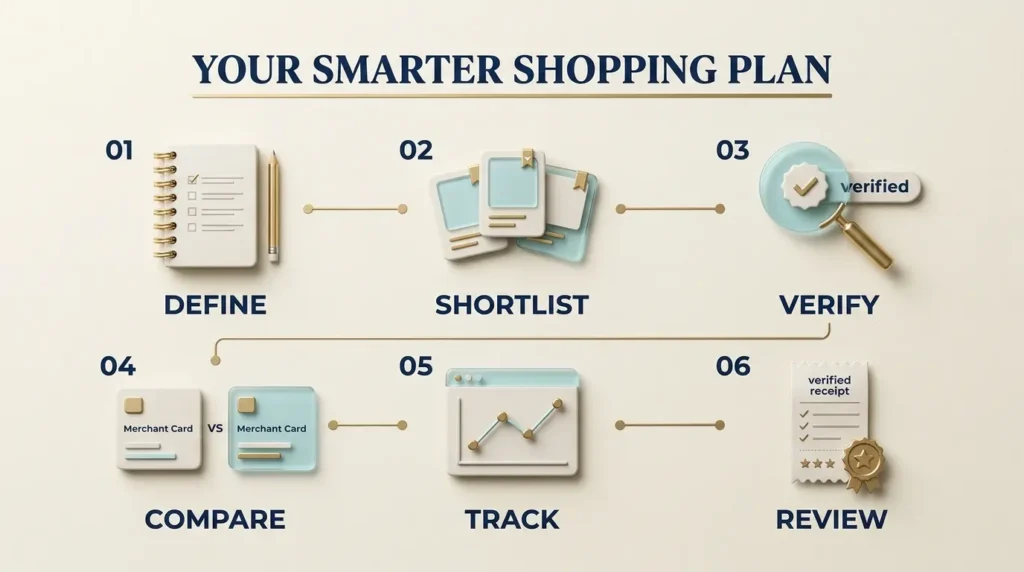
A Practical AI Shopping Workflow You Can Use Today
You don’t need four AI assistants open at once.
A simple process is usually enough.
Step 1: Define the Purchase
Start with a product category, budget and important requirements.
For example:
I’m buying noise cancelling headphones in the UK. My budget is £180. I care about comfort, battery life and microphone performance. Compare suitable models and explain the main compromises.
Notice that the country and currency are included.
That prevents the assistant from treating American prices as if they apply to every market.
Step 2: Ask for a Shortlist
Request three to five products, not thirty.
Ask for a comparison of the specifications and tradeoffs that genuinely matter.
If the first suggestions are too expensive, refine the budget.
If a feature is unnecessary, remove it from the requirements.
Step 3: Verify Exact Models
Check manufacturer model numbers, storage capacity, compatibility and warranty conditions.
For an electronic product, even small configuration differences can matter.
Use the manufacturer’s official specifications where possible.
Step 4: Compare Retailers
Open relevant shopping listings and identify the actual seller.
Confirm the price for your location and the exact variant you want.
Check whether membership, promotional codes or minimum order requirements affect the advertised amount.
Step 5: Check Price History
Use a suitable price history feature where available.
For supported Amazon products, Alexa for Shopping may provide historical pricing.
For other retailers, consider reliable price tracking tools appropriate to your country.
Do not assume a discount label proves an item is cheaper than it was last month.
Step 6: Review Delivery, Returns and Payment
Before authorizing any transaction, check the total charge, delivery expectations, seller details and return conditions.
If an AI agent is involved in checkout, read the approval screen carefully.
An assistant can reduce administrative effort, but it should not remove your ability to understand the purchase.
Five AI Shopping Prompts Worth Saving
You can adapt these prompts for ChatGPT, Gemini or another supported assistant.
1. Compare products without unnecessary features
I’m buying [product] in [country]. My maximum budget is [amount and currency]. My three priorities are [requirements]. Recommend up to five suitable models, explain their disadvantages and identify which specifications I must confirm.
2. Check whether a cheaper alternative is good enough
Compare [expensive product] with three lower priced alternatives. Which important features would I lose by choosing the cheaper option? Do not assume a promotional price is the lowest available.
3. Plan Christmas gifts around someone’s interests
Suggest thoughtful gifts for a person who enjoys [interests]. My total budget is [amount and currency], including delivery. Avoid generic suggestions and explain why each idea fits their interests.
If you’re looking for nontraditional gift ideas, TrendOutsider’s guide to Christmas gift baskets for different budgets and recipients offers another starting point.
4. Evaluate a suspicious discount
This retailer lists [exact product] at [sale price] and claims it was reduced from [reference price]. Explain which information I should check to determine whether the discount represents genuine value. Do not invent a price history.
5. Build a country-specific buying checklist
I’m buying [product] in [country]. Create a checklist covering model compatibility, total cost, shipping, seller verification, returns, warranty and any regional restrictions. Clearly separate verified information from details I must check myself.
These prompts are examples, not the results of hands-on testing by TrendOutsider.
AI Shopping for Black Friday, Cyber Monday and Christmas
The November shopping season provides a particularly useful setting for AI shopping tools.
A reader preparing for Black Friday may need to compare laptop specifications and recent prices.
Someone shopping for Christmas may have a different problem: choosing meaningful presents for several people without exceeding a budget.
AI can help with both, but the workflow should change depending on the task.
For Black Friday, prioritize exact model comparisons and price verification.
For Christmas, prioritize recipient interests, delivery deadlines and realistic spending limits.
TrendOutsider’s existing guide to using AI to find real Black Friday deals and avoid misleading discounts explains that seasonal workflow in greater depth.
The important point is that you don’t need a different AI platform for every shopping event.
You need a reliable process that helps you make better decisions.
Is It Safe to Let an AI Assistant Buy Things for You?
It can be convenient to let software complete steps on your behalf.
But a system that spends money needs more scrutiny than one that simply produces suggestions.
Before using any automated shopping feature, understand what permissions you’re granting.
Check whether it can only prepare a purchase or whether it may complete one after a particular kind of authorization.
Review which payment method is involved, what limits apply and how to cancel or dispute a transaction if something goes wrong.
Avoid sharing payment card details or account passwords in ordinary chat messages when an official secure payment interface is intended.
You should also be cautious about unfamiliar sellers recommended by an AI assistant.
A professional-looking product listing doesn’t automatically establish that the merchant is legitimate.
The US Federal Trade Commission’s online shopping guidance recommends checking sellers, prices, shipping arrangements and return terms before purchasing.
In the UK, shoppers can consult Citizens Advice consumer guidance. Australian readers can find official consumer information through the ACCC.
For EU shoppers, the European Consumer Centres Network provides information about cross-border consumer issues.
Consumer protections vary by country and transaction. They should not be treated as interchangeable simply because the same AI assistant is available internationally.
The safest shopping assistant is ultimately one that helps you understand the purchase while keeping you informed and in control.
So Which AI Shopping Assistant Should You Choose?
Here is the simplest way to decide.
Choose ChatGPT when you need help understanding unfamiliar products, comparing complex features or narrowing several options based on your budget.
Choose Gemini when its dedicated shopping experience is supported in your region and you want to explore products conversationally through Google’s shopping information.
Choose Google Shopping or AI Mode when your main task is finding merchants, comparing listings or investigating prices through supported Google shopping features.
Choose Alexa for Shopping when you already shop through Amazon and want a more integrated experience for product comparisons, recommendations or eligible price history.
Using two services together can sometimes be more useful than treating them as competitors.
For example, you might research laptop specifications with ChatGPT, find retailer options through Google Shopping, then check relevant Amazon price history before making a decision.
That workflow is a recommendation based on how the tools are designed, not a claim that we independently tested it and proved it always finds the lowest price.
And remember that none of these assistants is compulsory.
If you know the exact product you want and already have a trustworthy retailer offering a competitive price, a conventional purchase may be quicker.

Frequently Asked Questions
What is the best AI shopping assistant in 2026?
There isn’t a universal winner. ChatGPT is useful for detailed buying research, Google Gemini and Google Shopping support product discovery, and Amazon Alexa for Shopping offers valuable capabilities within Amazon’s ecosystem. The best choice depends on your location and shopping task.
Can ChatGPT find the cheapest product?
ChatGPT can identify product options and merchant listings, but it cannot guarantee the lowest price across every retailer. Verify prices, variants and the final checkout total before purchasing.
Is Google Gemini better than ChatGPT for shopping?
Gemini can be useful for product discovery through Google’s Shopping Graph, while ChatGPT offers guided comparisons based on detailed requirements. Availability and product coverage differ, so neither is automatically better for every shopper.
Is Gemini shopping available in the UK?
Google’s official dedicated Gemini shopping support list does not currently include the UK. General Gemini access and other Google shopping experiences are separate from that specific feature.
Can I use AI shopping assistants in Australia?
Yes. ChatGPT is supported in Australia, Google lists Australia for dedicated Gemini shopping, and Amazon lists Australia among the countries supported by Alexa for Shopping. Specific payment and price history features may have narrower availability.
Is Amazon Rufus still available?
Amazon brought Rufus and Alexa shopping capabilities together under the name Alexa for Shopping in May 2026. Older articles and screenshots may still use the Rufus name.
Can AI track Amazon prices?
Amazon offers price history for eligible products through Alexa for Shopping in supported countries. Its official documentation describes up to 365 days of history, but availability varies by market.
Can an AI assistant buy products automatically?
Some services support purchases through specific automated workflows, but not every assistant, merchant or country is eligible. Many experiences require user confirmation. Research and automated checkout should not be treated as the same feature.
Are AI shopping assistants free?
Several core shopping and comparison experiences are available without a dedicated paid subscription, depending on the service. Advanced capabilities, usage limits and automated purchasing eligibility can differ by plan, account and region.
Can AI help with Christmas shopping?
Yes. AI can help brainstorm gifts, compare products, organize budgets and identify questions to ask before purchasing. It should not be trusted blindly for prices, delivery deadlines or seller reliability.
Do AI shopping assistants always show unbiased recommendations?
Not necessarily. Different services use different product data, ranking criteria, merchant relationships and available inventory. Review why a product is being suggested and independently verify the important details.
The Bottom Line: AI Can Improve Your Shopping, but It Cannot Replace Good Judgment
Shopping used to mean opening a long list of retailer websites and trying to remember where you saw the best offer.
AI can make that process easier.
It can help explain complicated specifications, narrow your choices and identify product information that might otherwise take much longer to organize.
In some cases, it can also track prices, manage shopping tasks and support parts of checkout.
But it still has limits.
A convincing recommendation can contain outdated prices. A product comparison can overlook an important specification. An impressive automated purchasing feature may not be available where you live.
For 2026, the smartest approach is to choose your tools based on the job.
Use ChatGPT for detailed research. Explore Google’s shopping tools for product discovery and merchant comparisons where supported. Consider Alexa for Shopping if Amazon is a major part of how you shop.
Then take responsibility for the final checks.
Confirm the product. Check the seller. Compare the total price. Understand the return policy.
The best AI shopping assistant isn’t necessarily the one that can make a purchase fastest.
It’s the one that helps you make a decision you won’t regret.
Editorial research note: This article is based on official documentation and published consumer research available as of November 19, 2026. Features and regional eligibility may change. TrendOutsider has not independently conducted a controlled hands-on test or verified live retailer prices for this comparison.
Visual disclosure: Artwork is illustrative and should not be interpreted as authentic product screenshots, completed tests or verified retailer offers.








Leave a Reply