
If you’ve spent any time watching beauty videos lately, you’ve probably seen someone sweeping a small, curved brush across their cheeks and jawline.
The routine looks almost too easy.
A few gentle strokes, a little attention around the face, and suddenly the person in the video appears to have sharper cheekbones, a more defined jawline and less morning puffiness.
No expensive machine. No complicated skincare routine. Just a brush that could fit in the palm of your hand.
It’s the sort of beauty gadget that makes you wonder whether everyone else has discovered something you’ve missed.
And apparently, plenty of people are wondering.
On November 9, 2026, Google revealed its annual Holiday 100 gift guide, highlighting products attracting significant search interest in the United States. One of the biggest surprises came from the beauty category.
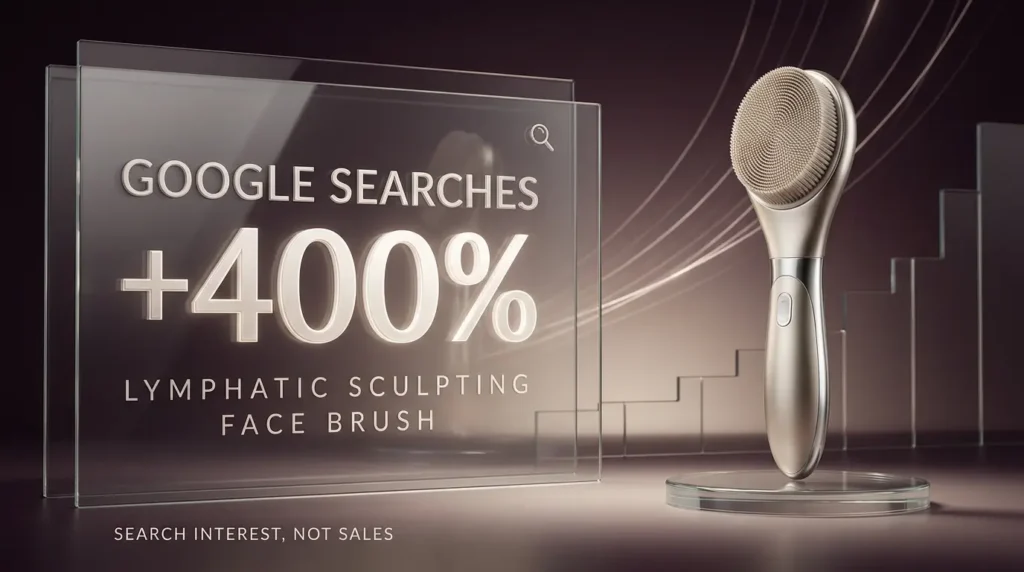
Search interest in “lymphatic sculpting face brush” increased by 400%, according to Google.
That makes the humble facial brush one of the most striking trends in the company’s holiday gift announcement.
But here’s where the story gets interesting.
A product can become incredibly popular without its most dramatic claims being scientifically established.
Lymphatic face brushes are being marketed as tools that can reduce puffiness, improve facial contours and create a more sculpted appearance. Some advertisements go much further, promising detoxification, tightening and lasting changes to the shape of the face.
Those claims aren’t equally credible.
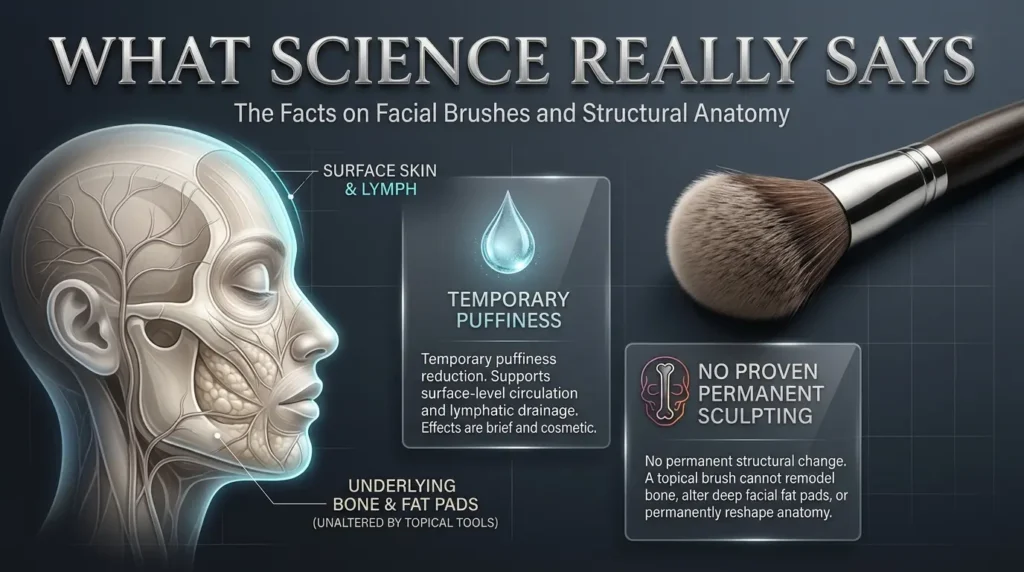
The short answer: a soft facial brush may provide a pleasant massage, and gentle facial massage may temporarily reduce the appearance of puffiness. But there is no convincing clinical evidence that a viral lymphatic face brush permanently sculpts your jawline, removes facial fat or changes your bone structure.
So, is this Google’s breakout beauty gift worth buying, or another attractive tool with exaggerated promises?
We examined the search trend, actual product designs, published research, medical guidance and practical questions that matter before someone adds one to a Christmas shopping basket.
Why Is the Lymphatic Face Brush Suddenly So Popular?
Beauty trends usually become interesting for one of two reasons.
Either someone invents a genuinely different product, or an existing practice is presented in a way that makes it feel new.
The lymphatic face brush belongs largely to the second category.
Facial massage isn’t new. Neither is the idea of using gentle movements to reduce the appearance of temporary swelling.
What has changed is how the routine is being packaged and shared.
Instead of visiting a spa or following a lengthy facial massage tutorial, shoppers are being offered a compact brush that promises to make the process easier.
The tool is visually appealing. It often has soft, densely packed bristles, a curved head and a natural looking wooden handle.
It also lends itself perfectly to short social videos.
The movement is simple enough to demonstrate in seconds. The packaging looks beautiful on a bathroom shelf. And the promise of a fresher looking face is something many people can relate to.
What Google’s 400% Figure Actually Tells Us
In its November 9 Holiday 100 announcement, Google specifically reported a 400% increase in search interest for “lymphatic sculpting face brush.”
The company also included the category in its Holiday 100 shopping collection.
That is a genuine trend signal.
It does not mean 400% of people use the product, that sales rose by the same percentage or that the brush has been medically proven to work.
Search interest can reflect several things: shoppers looking for gifts, people curious about viral videos and consumers researching whether the claims are believable.
A large percentage increase can also begin from a relatively small search base.
Google hasn’t established that this particular brush is the world’s most purchased beauty device.
What it has established is that substantially more people became interested in searching for it.
That makes the question of effectiveness worth investigating.
TrendOutsider previously examined this wider shopping pattern in our Google Trending Christmas Gifts of 2026 guide, which explores why search popularity and actual product value are not the same thing.
What Exactly Is a Lymphatic Sculpting Face Brush?
Despite the technical sounding name, most of these tools are fairly simple.
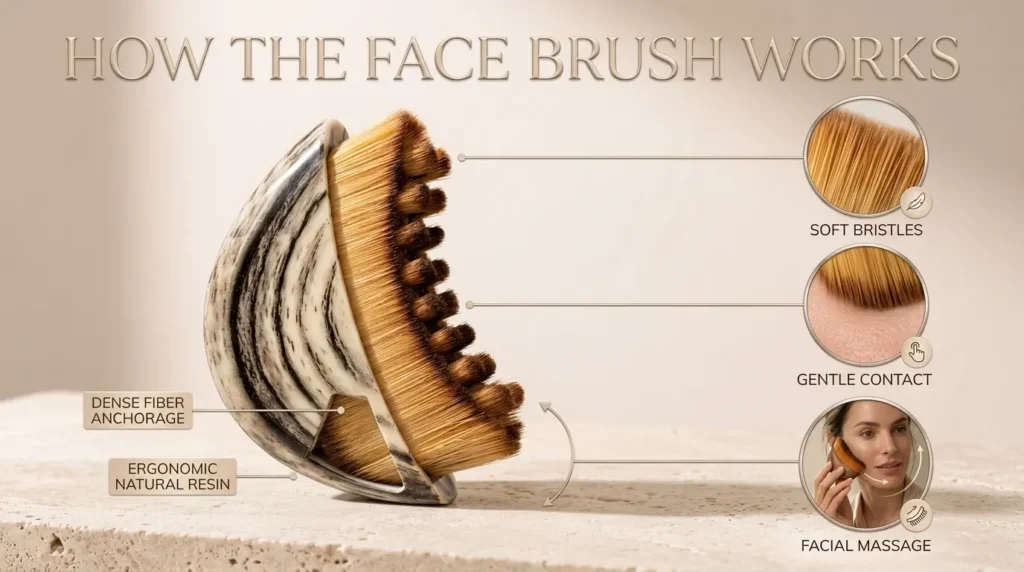
A typical lymphatic face brush has a handheld body, a curved or rounded brushing surface and soft synthetic bristles.
The idea is to move the brush across the skin with very light pressure, following a routine inspired by facial massage.
Some products are marketed as dry facial brushes.
Others suggest using them alongside skincare, although that depends on the manufacturer’s instructions.
They don’t normally contain electronics, vibration motors or medical treatment systems.
The brush itself is simply a mechanical tool.
Why the Shape Matters
The curved head is intended to follow areas such as the cheeks, jawline and forehead.
Soft bristles distribute contact across the surface instead of concentrating pressure at one hard edge.
That may make the tool feel different from a stone gua sha or a facial roller.
But an ergonomic shape doesn’t prove that the brush moves lymph more effectively.
It mainly describes how the accessory contacts the skin.
What Real Manufacturers Say
One example is the Earth Therapeutics Contour & Glow Lymphatic Face Brush.
Its manufacturer describes a brush with soft PBT bristles and a walnut wood handle, designed for use on clean, dry skin before serums or moisturizers.
The company recommends gentle strokes and warns against excessive pressure.
It also acknowledges that any visible reduction in puffiness may be temporary.
That is a more useful description than suggesting a brush can somehow rebuild the structure of the face.
Another product category, represented by the Cecily Braden Lymphatic Brush, emphasizes extremely gentle contact with the skin rather than vigorous scrubbing.
These products can vary in bristle density, curvature, handle shape, intended technique and cleaning requirements.
They shouldn’t all be treated as identical.
Does a Lymphatic Face Brush Actually Work?
That depends on what the word work means.
If you’re hoping for a relaxing skincare ritual that may leave your face looking a little less puffy for a short time, the idea is plausible.
If you expect a permanent facelift, a smaller face or a completely different jawline, the scientific evidence doesn’t support that expectation.
Let’s separate the most common claims.
Claim 1: It Reduces Facial Puffiness
Possibly, and any effect is likely to be temporary.
Facial puffiness can occur for everyday reasons, including fluid retention, sleep patterns, allergies and changes in diet.
Gentle facial massage may temporarily influence fluid distribution near the skin’s surface.
In an October 2026 report, The Washington Post examined lymphatic drainage tools and found that short lived changes in facial appearance are more plausible than lasting improvements in lymphatic function among healthy people.
But evidence about facial massage generally is not proof that every commercial brush will produce measurable results.
The tool, technique and person all matter.
Claim 2: It Creates a Sharper Jawline
It may temporarily make existing contours look more noticeable, but it doesn’t reshape the jaw.
A face can look slightly more defined when temporary swelling decreases.
That doesn’t mean the brush has reduced fat, lifted deep facial tissue or changed bone structure.
In a 2026 American Society of Plastic Surgeons discussion of viral facial trends, plastic surgeons explained that massage techniques such as gua sha may temporarily affect puffiness but do not permanently restructure facial contours.
That distinction matters when social videos describe short term visible changes as permanent sculpting.
Claim 3: It Detoxifies Your Face
There isn’t good evidence that a consumer face brush removes toxins from the body.
Your lymphatic system already plays an important role in managing fluid and supporting immune function.
Your liver, kidneys and other organs perform essential functions involved in processing and eliminating waste.
The idea that a healthy person’s face needs regular brushing to flush out mysterious accumulated toxins is not an established medical diagnosis.
Medical lymphatic drainage can be useful for certain conditions, but that is a different matter.
The Cleveland Clinic’s explanation of lymphatic drainage massage describes a specialized technique used in settings such as managing lymphedema.
A cosmetic facial brush should not be advertised as a replacement for that care.
Claim 4: It Reduces Wrinkles and Lifts Sagging Skin
There is no convincing evidence that soft facial brushing permanently lifts sagging skin or reverses wrinkles.
A little temporary plumping, relaxation or change in the appearance of swelling isn’t equivalent to rebuilding collagen or tightening deeper facial structures.
Facial aging involves skin elasticity, fat distribution, muscle changes, bone structure and other factors.
A brush cannot reasonably be expected to reverse those changes merely by gliding across the surface.
Claim 5: It Makes Skin Glow
A pleasant massage can leave the skin looking temporarily flushed or refreshed.
But this doesn’t necessarily indicate improved long term skin health.
Rubbing too hard may produce redness for the wrong reasons.
A healthy skincare routine still depends on appropriate cleansing, moisturizing, sun protection and treatments suited to a person’s skin concerns.
The honest verdict: Temporary cosmetic changes and relaxation are plausible. Permanent sculpting, fat removal and detoxification claims are unsupported.
What Does the Research Actually Say?
Here is an important complication: a great deal of research discussed around viral facial brushes wasn’t conducted on those brushes.
Instead, studies often investigate manual massage, facial rollers or gua sha.
That evidence can help us understand the broader subject.
It cannot automatically establish that a soft bristle brush performs in the same way.
The 2025 Randomized Trial Often Mentioned in Beauty Coverage
A study published in the Journal of Cosmetic Dermatology in 2025 investigated facial rollers and gua sha massage.
The randomized trial included 34 women between the ages of 20 and 50, divided into two groups.
Participants followed the assigned facial massage routines over eight weeks.
Researchers evaluated changes in facial measurements and certain muscle and skin parameters.
They reported modest measurable changes.
That is interesting early evidence.
But the trial was small, involved specific tools and did not establish that results were permanent.
Most importantly for this story, it did not test the viral soft bristle lymphatic sculpting face brush.
Using it to claim a particular brush has been clinically proven to lift the face would be misleading.
What Dermatology Reviews Have Found
A 2026 Dermatology Times review of facial gua sha claims discusses the distinction between modest facial measurements and dramatic promises of permanent facial reshaping.
It also notes the limited quality and size of much of the available research.
Meanwhile, the British Lymphology Society’s clinical guidance finds insufficient evidence to recommend dry brushing as a treatment for lymphedema.
That guidance concerns a medical condition and does not directly test cosmetic facial brushing, but it illustrates why the word lymphatic should not automatically be interpreted as proof of medical benefit.
A reasonable interpretation of the evidence is that gentle massage may have some short term effects on the appearance of fluid related puffiness, while lasting anatomical changes remain unsupported.
How to Use a Lymphatic Face Brush Safely
The correct technique depends on the particular tool.
A soft dry facial brush is not interchangeable with a gua sha stone or a device intended for use with facial oil.
Always start with the manufacturer’s instructions.
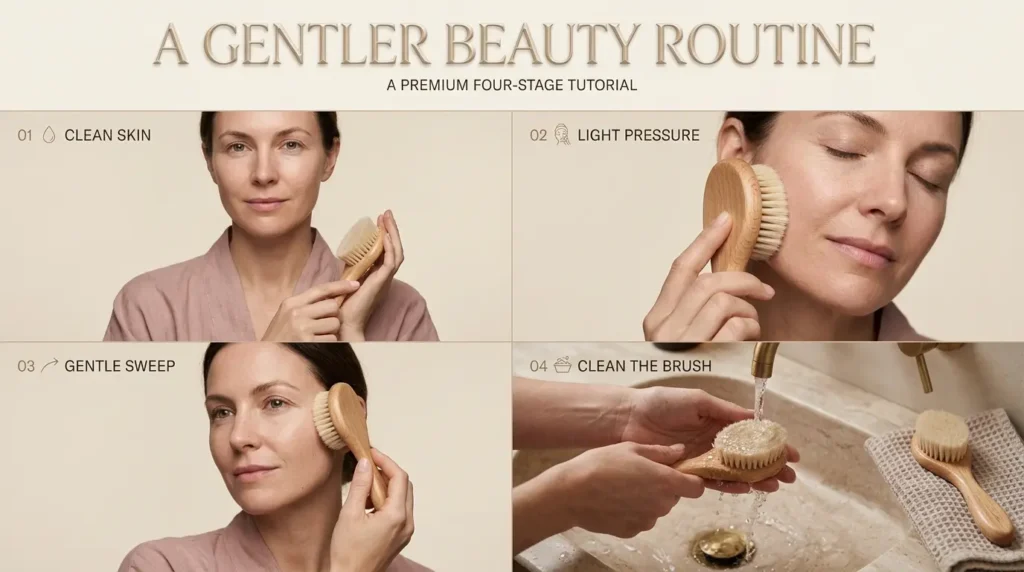
For a soft dry use brush that permits home facial massage, the following principles are sensible.
1. Start With Clean Skin
Follow the manufacturer’s directions on whether the skin should be clean and dry.
Some brushes are explicitly designed for dry use before skincare products.
Don’t assume using oil will improve a brush if its instructions say otherwise.
2. Use Very Light Pressure
This is not an exfoliating scrub.
The bristles should move gently across the skin rather than digging into it.
More pressure doesn’t mean more effective lymphatic drainage.
If your skin feels sore, hot or irritated, stop.
3. Work in Small Sections
Follow the specific routine supplied with the product, keeping movements slow and controlled.
Avoid unnecessary repeated brushing over delicate areas.
Don’t press directly onto the eyeballs or drag the bristles across irritated skin.
4. Keep the Session Short
The tool should not require a long, aggressive routine.
Some manufacturers recommend brief use, but there is no universally established medically effective duration for cosmetic facial brushes.
Start conservatively and see whether your skin tolerates it.
5. Clean the Brush
Facial products, skin oils and environmental debris can accumulate on beauty tools.
Follow the maker’s washing and drying instructions.
For wooden handles, soaking the whole tool may damage the material.
6. Watch Your Skin’s Response
Persistent redness, new irritation, broken skin or discomfort are signs to stop.
A successful beauty routine should not leave the face feeling injured.
If you have an underlying skin condition or recent procedure, ask an appropriate clinician before adding facial massage.
Who Should Avoid Using a Facial Sculpting Brush?
This is the part many short product videos skip.
Even a soft brush creates friction and pressure.
That may be unwelcome on already irritated skin.
People with active eczema flares, damaged skin, painful inflammatory acne, sunburn, open wounds or a skin infection should avoid brushing over affected areas.
Those with particularly reactive skin may find that even gentle bristles cause irritation.
Anyone recovering from facial surgery, cosmetic injections or other procedures should follow their clinician’s aftercare instructions rather than experiment with facial massage.
The same applies to people with medically significant swelling, diagnosed lymphedema or relevant circulatory and health conditions.
The Cleveland Clinic lists several medical situations in which lymphatic drainage massage may be inappropriate without clinical guidance, including infections and certain cardiovascular or clotting conditions.
When Facial Puffiness Is Not Just a Beauty Concern
Occasional mild morning puffiness is different from sudden or persistent swelling.
Seek medical advice if facial swelling is new, painful, one sided, persistent or accompanied by other concerning symptoms.
Sudden swelling affecting the lips, tongue or throat, especially with breathing difficulty, requires emergency medical attention.
A facial brush isn’t the appropriate response to symptoms like these.
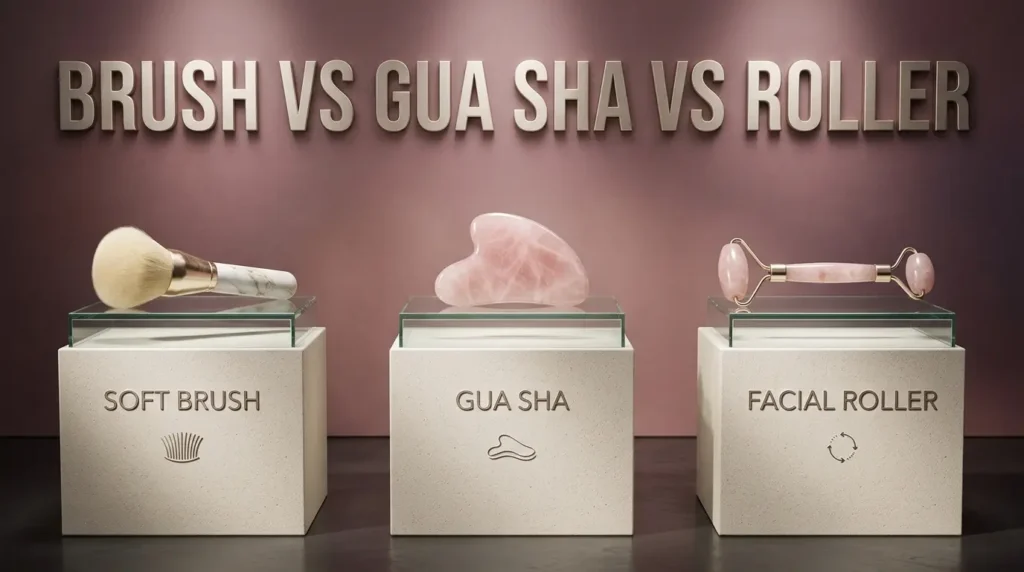
Lymphatic Face Brush vs Gua Sha vs Facial Roller
These tools are often grouped together under the label “face sculpting,” but their materials and application methods are different.
| Feature | Soft lymphatic face brush | Gua sha | Facial roller |
|---|---|---|---|
| Typical contact | Dense soft bristles | Smooth rigid edge | Rotating smooth surface |
| Main experience | Gentle brushing ritual | Controlled gliding massage | Rolling massage |
| Product use | Some are designed for dry skin | Usually needs suitable slip | Depends on tool and routine |
| Learning curve | Usually straightforward | More sensitive to angle and pressure | Usually straightforward |
| Potential temporary depuffing | Plausible, direct brush evidence limited | Some supportive early research | Some supportive early research |
| Permanent jawline reshaping | Not demonstrated | Not demonstrated | Not demonstrated |
| Maintenance | Clean bristles and dry thoroughly | Wash smooth surface | Clean roller and joints |
| Common concern | Irritation from friction | Excess pressure | Hygiene or excessive pressure |
Which One Is Better?
It depends on what you value.
If you enjoy a light brushing sensation and want a compact, simple beauty accessory, a soft face brush may appeal.
If you already use a gua sha tool comfortably, buying another device may not add much.
A roller may feel especially straightforward for someone who prefers a smooth gliding tool.
There’s no credible basis for declaring one method universally superior at permanently reshaping the face.
The most sensible choice is the tool that is comfortable, hygienic and realistic about what it can accomplish.
Are These Brushes Actually Better Than Using Your Fingers?
For some people, the brush’s main appeal is convenience.
It gives the routine a physical structure.
The curved handle can make the movements feel deliberate, and the bristles may provide a pleasant sensation.
But gentle facial massage does not always require a tool.
Clean hands may be enough for a simple routine where massage is appropriate.
The brush is therefore not an essential skincare purchase.
It’s an optional accessory.
If you’re buying one expecting a dramatically different face, the likelihood of disappointment is much greater than if you’re buying one because you enjoy a calming beauty ritual.
That distinction can save people money.
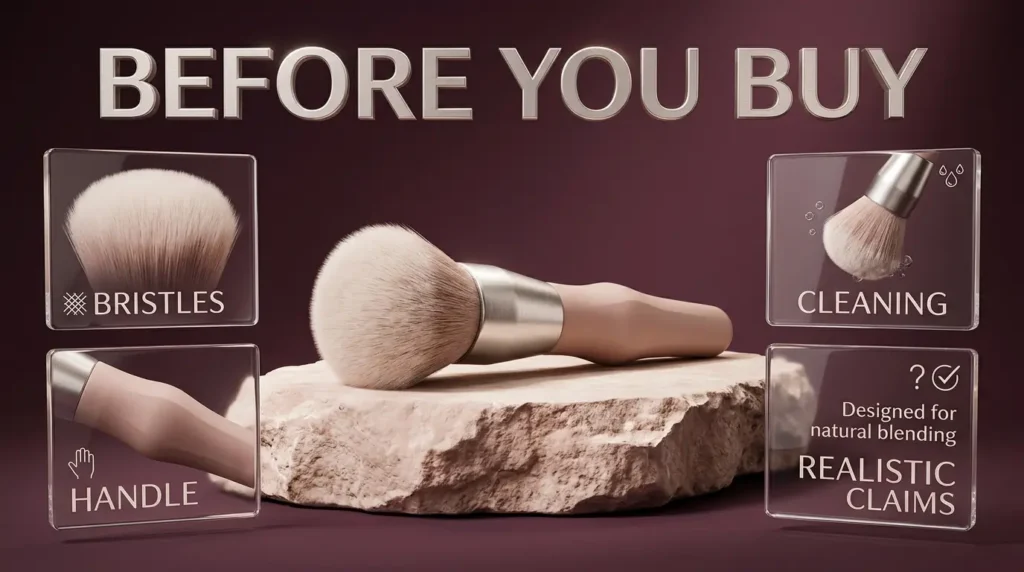
What to Look for Before Buying a Lymphatic Face Brush
Not all brushes marketed under this trend are built the same way.
A beautiful product photo won’t tell you how it feels against sensitive skin or whether it will be easy to clean.
Bristle Softness
Look for clear information about the bristle material and intended use.
A tool intended for gentle facial contact should not behave like a stiff exfoliating body brush.
Handle Shape
A comfortable handle can help you control the amount of pressure.
The brush should be easy to hold without gripping or pressing too hard.
Cleaning Instructions
Check whether the manufacturer explains how to clean and fully dry the bristles.
A tool that is difficult to maintain may not be a welcome addition to someone’s routine.
Skin Compatibility
Be skeptical of claims that a product is ideal for absolutely everyone.
Skin sensitivity, existing conditions and cosmetic procedures can change what is appropriate.
Realistic Product Claims
Descriptions promising relaxation or temporary improvement in appearance are more credible than claims of permanent face lifting or detoxification.
Seller Reputation
Check the seller’s identity, return terms, customer support and independent product feedback.
For seasonal sales, don’t assume that a large crossed out price represents genuine savings.
Our Black Friday vs Cyber Monday 2026 guide explains why comparing actual prices matters more than dramatic discount labels.
Is an Expensive Brush Necessarily Better?
Not necessarily.
More expensive materials, packaging or branding do not by themselves demonstrate better clinical results.
Look for solid construction, suitable bristles and clear care instructions.
Pay for the quality and experience you want, not a promised transformation that hasn’t been established.
Is the Lymphatic Face Brush a Good Christmas Gift in 2026?
It could be, for the right person.
That is the important qualification.
A soft facial brush may make a thoughtful small present for someone who already enjoys skincare, facial massage or spa style routines.
It has a particular appeal as a stocking gift or an addition to a self-care hamper.
It also feels more specialized than an ordinary washcloth without necessarily requiring a complicated electrical device.
But there are people for whom it would be a poor choice.
Someone with easily irritated skin may not appreciate another product creating friction.
Someone who dislikes beauty routines may never use it.
And a gift that implicitly promises to change someone’s facial appearance can feel less thoughtful than intended.
The best gift reflects the recipient’s interests, not an assumption that their face needs fixing.
Google’s search figures can provide inspiration, but they cannot tell you what a particular person will enjoy.
For people who prefer creative or relaxing presents without another electronic device, TrendOutsider’s screen free Christmas gift guide offers a broader range of thoughtful alternatives.
What About Black Friday Discounts?
With Black Friday falling on November 27 and Cyber Monday on November 30, beauty retailers may promote facial tools during the holiday shopping period.
That doesn’t mean every deal will be worthwhile.
Before buying, compare the actual brush material, delivery time, seller and return conditions.
A bargain priced beauty tool still isn’t good value if it irritates the recipient’s skin or never gets used.
Can a Facial Brush Replace Professional Lymphatic Drainage?
No.
Professional manual lymphatic drainage is a specialized technique used in the management of particular medical conditions.
It requires an understanding of the underlying condition, appropriate technique and clinical precautions.
A cosmetic brush sold for home skincare cannot be assumed to deliver those benefits.
This distinction also helps explain why seemingly related scientific research should be interpreted carefully.
In another area of beauty technology, TrendOutsider covered the experimental Detangle electric hair growth comb. That research involved a specialized device and experimental treatment mechanism, not a normal consumer grooming tool.
The same principle applies here.
A scientific term in a product name doesn’t make the product a clinically validated treatment.
The device must be evaluated according to what it actually does and the evidence that specifically supports it.

Frequently Asked Questions About Lymphatic Face Brushes
Do lymphatic face brushes actually work?
They may provide a relaxing massage and potentially help the face look temporarily less puffy. Direct, high quality clinical evidence for the viral soft bristle brush category remains limited. Permanent sculpting claims are not established.
Can a lymphatic face brush slim your face?
It cannot be relied upon to remove facial fat or permanently change facial anatomy. Temporary changes in puffiness may make existing contours appear more visible.
Does a lymphatic face brush help with a double chin?
There is no convincing clinical evidence that a cosmetic facial brush eliminates a double chin or permanently reduces fat under the chin.
How long do facial sculpting results last?
Any visible improvement related to fluid movement is generally temporary. The duration can vary, and controlled data for specific brush products are insufficient to give a reliable universal estimate.
How often should you use a lymphatic face brush?
Follow the specific manufacturer’s instructions and your skin’s tolerance. Daily use is not medically necessary, and excessive brushing can cause irritation.
Should a face brush be used with oil?
It depends on the product. Some soft facial brushes are specifically designed for use on clean, dry skin before skincare. Don’t assume every brush can be used with oil or serum.
Is a lymphatic face brush better than gua sha?
There is not enough comparative evidence to declare a soft brush superior. Gua sha and rollers have been studied more directly than the viral brush category, but neither is proven to permanently reshape facial anatomy.
Can a facial brush reduce wrinkles?
There is insufficient evidence that a soft lymphatic face brush provides lasting wrinkle reduction or reverses skin aging.
Can it help with morning puffiness?
Gentle facial massage may temporarily make mild fluid related puffiness less noticeable. Persistent or unusual facial swelling needs appropriate medical evaluation.
Are lymphatic face brushes good for sensitive skin?
Not necessarily. Even soft bristles may irritate reactive skin. Avoid use on damaged or inflamed areas and stop if the tool causes discomfort.
Do face brushes remove toxins?
There is no good clinical evidence that consumer facial brushing detoxifies the body. The lymphatic system and other organs already carry out essential physiological functions.
Why are lymphatic face brushes trending in 2026?
Google reported a 400% increase in search interest for the term in its November 9 Holiday 100 announcement. Social beauty content and seasonal gift interest may contribute, but the figure alone doesn’t identify the cause or establish sales volume.
Are lymphatic face brushes worth buying for Christmas?
They may be a nice small gift for someone who wants a gentle facial massage accessory. They are less suitable as a gift based on promises of permanent facial lifting or medical treatment.
Can a lymphatic face brush replace a dermatologist or qualified therapist?
No. A cosmetic brush does not diagnose, treat or replace professional care for skin disorders or abnormal swelling.
Final Verdict: A Pleasant Beauty Ritual, Not a Face Transformation
The lymphatic face brush trend tells us something interesting about beauty shopping in 2026.
People are drawn to simple tools that promise a small moment of care in an otherwise busy day.
A soft brush, a quiet bathroom and a brief routine before work can feel appealing.
There is nothing wrong with enjoying that experience.
And there is a reasonable possibility that gentle facial massage may temporarily change the appearance of mild puffiness.
But the biggest claims should be treated with caution.
A brush isn’t going to rebuild cheekbones, remove facial fat, permanently tighten a jawline or detoxify the body.
Those promises go well beyond what the available evidence demonstrates.
So should you buy one?
Yes, if you want a comfortable, easy to clean facial massage accessory and you have realistic expectations.
Probably not, if the main reason is a dramatic before and after video promising a completely different face.
Google’s reported 400% search increase makes this one of the standout beauty trends of the holiday season.
It doesn’t make the brush a miracle.
And sometimes that’s perfectly fine.
A beauty product can be enjoyable without changing your face.

Editorial disclosure: This article is based on Google’s official Holiday 100 data, published medical research, expert commentary and product manufacturer information. TrendOutsider has not physically tested the brushes described or measured their effects on facial puffiness. No brand sponsored this coverage.
Medical note: This article provides general consumer information and is not medical advice. Consult a qualified healthcare professional about persistent facial swelling, skin conditions or whether facial massage is appropriate following a medical or cosmetic procedure.
Visual disclosure: AI generated images accompanying this feature are conceptual illustrations, not clinical results, genuine before and after photographs or evidence of product testing.








Leave a Reply